🐝 Bee hotels in Johannesburg and Cape Town map the cities' hidden solitary bees
In brief
- 🐝 Volunteers in Johannesburg and Cape Town look after 510 bee hotels for solitary bees and send in weekly photos.
- 🔬 The UrbanBEE project compares the data with Budapest, Turin and Vienna; it is funded by the EU-backed Biodiversa+ partnership.
- 🌼 Early results: participants garden in a more bee-friendly way, and bees move in earlier in Johannesburg than in Cape Town.
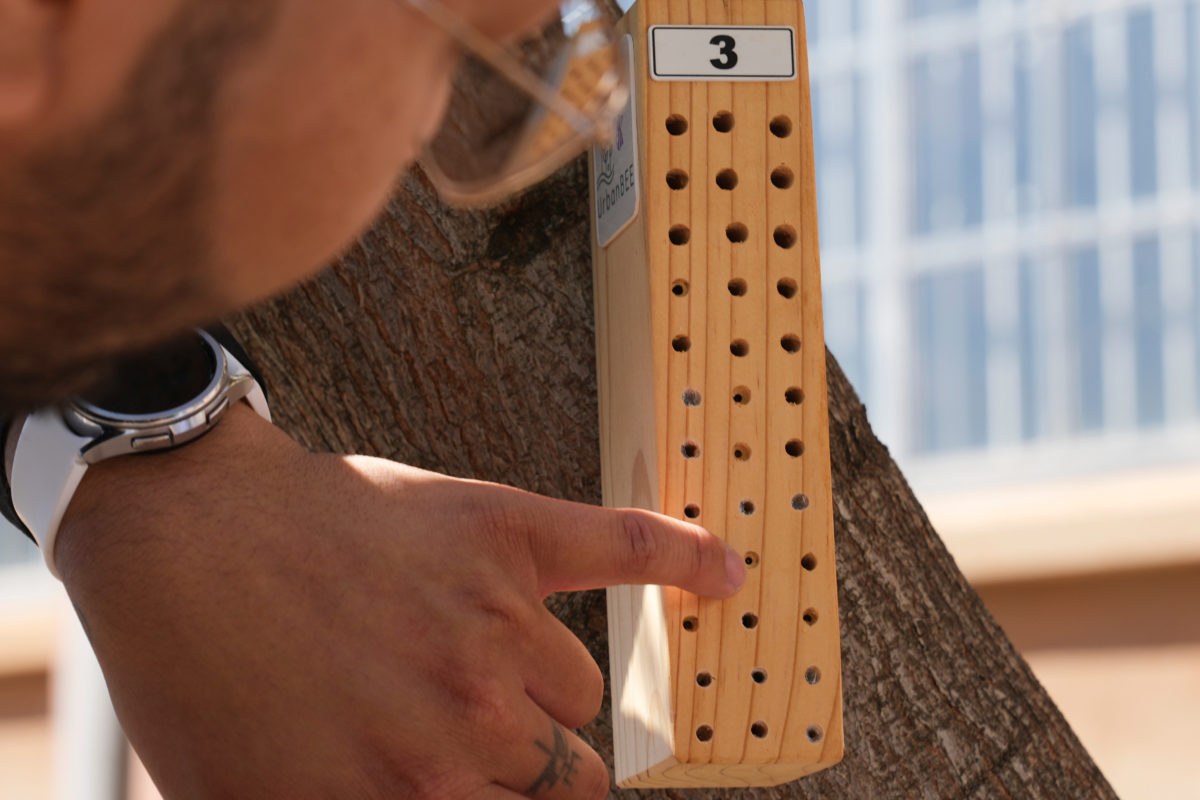
🐝 In Johannesburg and Cape Town, hundreds of volunteers are helping scientists study an almost invisible city dweller: the solitary bee. 510 bee hotels, small wooden blocks with drilled holes, hang in gardens in the two cities, and participants have photographed them every week since October 2025, the Associated Press reports. The project, UrbanBEE, explores how cities shape the diversity of wild bees and whether watching them reconnects people with nature. Parallel studies run in Budapest, Turin and Vienna, funded by the EU-backed Biodiversa+ partnership. 🌍 Early results show participants changing their gardens to attract more pollinators. Hotels are also being occupied earlier in warmer Johannesburg than in cooler, windier Cape Town. Most of South Africa's roughly 1,300 bee species live alone rather than in hives, which makes them hard to count.
🔬 Where the project comes from. UrbanBEE grew out of a pandemic-era project with 347 Johannesburg residents, led by Chevonne Reynolds of the University of the Witwatersrand (Wits). Each volunteer received a free bee hotel; from the sealed nest holes in their photos, researchers worked out occupancy and so the abundance of bees. That study, published in Landscape Ecology in 2025, found a strong link between income and bee abundance: wealthier households can afford large flower gardens that feed more bees. Genetic analysis of nest remains revealed at least 14 species of solitary bee in Johannesburg, according to the university.
🌍 Why Africa and Europe are compared. Comparing the cities is meant to show how climate, vegetation, development and socioeconomic conditions affect bee diversity, and whether collecting data changes how people value urban nature. The researchers hope for a standard method that other cities can adopt as the world warms.
🐝 Who checks in. More than 20,000 bee species are known worldwide, and most are solitary. They pollinate wild plants and crops as they stock their nests with pollen and nectar for their young. Some seal their brood cells with mud, plant fibres, leaves, colourful petals or a thin, cellophane-like membrane. If a leafcutter enters your hotel, you typically see a bright pop of green, says PhD candidate Sage Naidoo, who helps coordinate the South African campaign. On the Wits campus he pointed out a bee of the genus Allodapula, whose members can stay with their young in small social nests.
🏡 What it does to people. Weekly occupancy maps became informal scoreboards as neighbours compared whose hotel filled fastest. Banking analyst Celia Haupt waited about two months for her first guest until she moved the hotel into the morning sun; the project brought her closer to her daughter and a former schoolmate. Guinivere Pedro planted more flowers, left parts of her garden undisturbed and even took birding courses. "Now I know that not every flying insect is a fly," she told the AP. 🌼
Reynolds had already seen in the first project that a strong bond with nature grew between the volunteers and their bees, which she describes as an unrecognised kind of work animals do for human wellbeing. Firm final results from UrbanBEE are still to come.