🛢️ HeizRechner: how much heating oil is left in the tank, and what will the winter cost?
In brief
- 🛢️ The free website HeizRechner works out the level of a heating oil tank from its dipstick reading, for households in Germany, Austria and Switzerland.
- 🪵 It adds a firewood calculator for stacked and loose cubic metres and a cost comparison of fuels per kilowatt-hour.
- 🔒 Everything runs in the browser with no account, cookies or data transfer, the site says.
- 📊 The reference prices are based on German prices and Germany's CO₂ price.
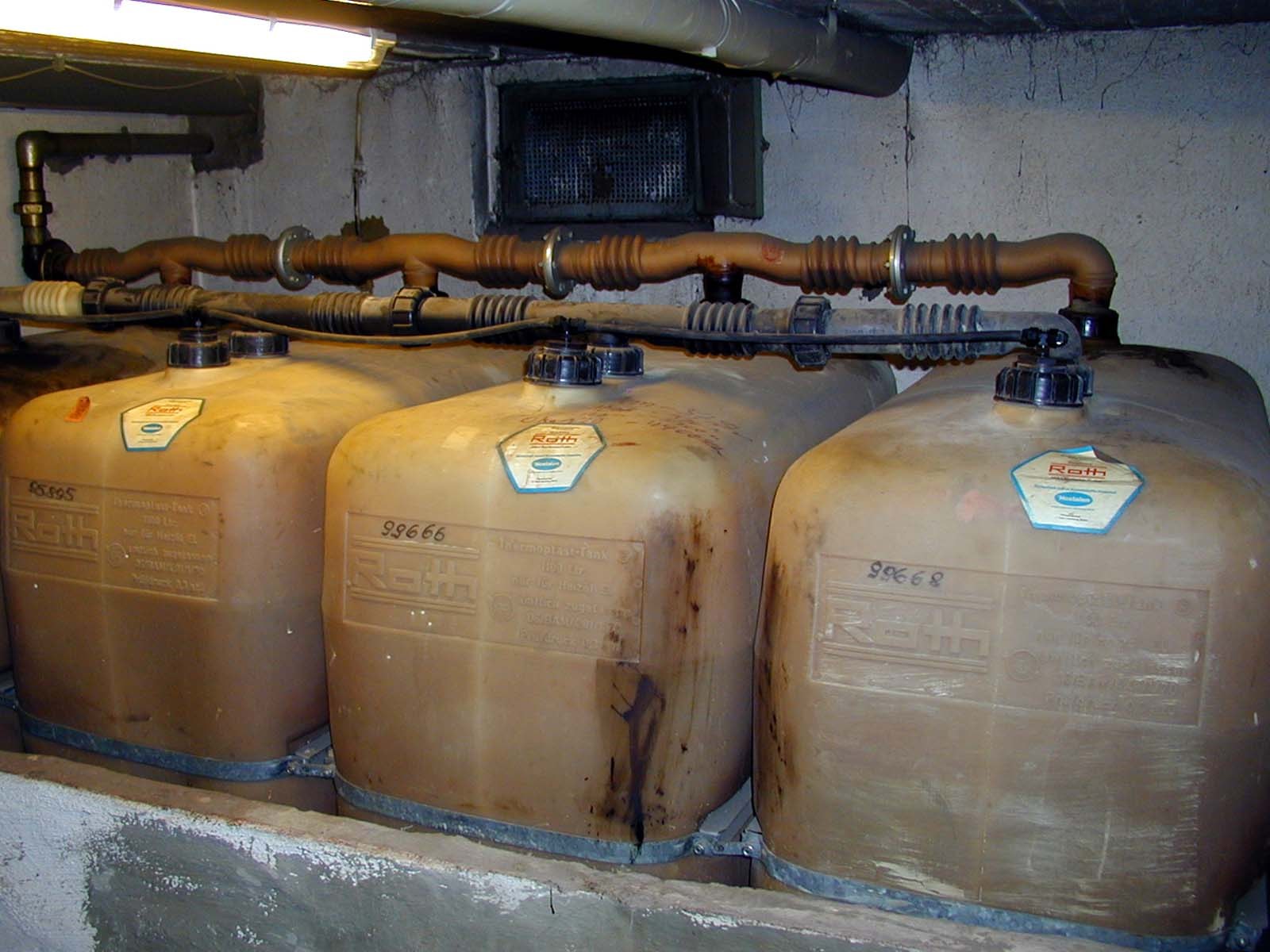
🛢️ People who heat with oil read the dipstick in autumn and then usually do the maths in their head. That is where mistakes happen, says the free website [HeizRechner](https://heizrechner.com/): in a horizontal round tank the volume does not grow evenly with the height. The site's tank calculator uses the German tank standard DIN 6608 to turn the measured height into the actual number of litres, the fill level, the expected weeks of supply and the amount needed to top up; its catalogue holds 22 tank models, including plastic battery tanks. 🪵 Two more calculators come with it: one for firewood, converting between stacked, loose and solid cubic metres for 15 kinds of wood, and a fuel check that compares heating oil, natural gas, pellets and logs per kilowatt-hour of usable heat. All calculations, charts and PNG reports run entirely in the browser, without login or cookies, according to the site. It is aimed at households in Germany, Austria and Switzerland, though its price examples apply to Germany.
📐 **Why the rule of three fails on a round tank.** The site works through its standard example: a horizontal cylindrical tank of 5,000 litres and 160 centimetres in diameter shows 52 centimetres on the dipstick. Calculated linearly, that would be 32.5 per cent, about 1,634 litres. Because the bottom of the tank is curved, the matching circular segment holds only 28.2 per cent, or 1,417 litres, 217 litres less. The site says the linear error can reach 274 litres. Anyone ordering on a mental estimate may order too little. The calculator also gives the amount needed to fill the tank to 90 per cent and, from winter consumption and the price per litre, a budget and the number of days the supply will last.
💶 **What fuels cost right now.** For a typical detached house needing 18,000 kilowatt-hours of heat a year, the site gives these reference values as of 25 November 2026: ENplus A1 wood pellets about 9.14 cents per kilowatt-hour of usable heat (€1,646 a year), dry beech 9.58 cents (€1,725), natural gas 13.04 cents (€2,348) and heating oil, including the German fuel emissions CO₂ price of €65 a tonne, 17.22 cents (€3,100). The figures rest on market prices such as €1.55 per litre of heating oil or €395 per tonne of pellets and on assumed efficiencies; for heating values the site names the Bavarian Technology and Support Centre TFZ, the agency for renewable resources FNR and the German Environment Agency. For Austria and Switzerland, with different prices and levies, they are only a rough guide.
🪵 **Converting firewood properly.** The wood calculator knows 15 kinds of wood with heating value, weight and drying time; beech, for example, with 2,100 kilowatt-hours per stacked cubic metre, which the site equates to about 210 litres of heating oil, and spruce with 1,500. Accompanying articles explain the conversion between stacked and loose wood, how to measure moisture and how much may legally go on a 750-kilogram trailer.
📚 **Guides alongside.** Ten articles cover, among other things, the CO₂ price and scenarios under the coming EU emissions trading system ETS 2, quality marks of pellets, the rules for wood stoves and a full-cost comparison with a heat pump over ten heating seasons. The home page shows no account offer and no advertising for a particular dealer.
🧭 **Who it is for.** HeizRechner is useful for anyone who wants to know the tank contents more precisely before ordering oil, or is wondering whether pellets or wood pay off against oil and gas. The results are calculated values: the real contents depend on the exact tank model, and prices change; a binding comparison needs current quotes from a dealer. 🔥