🌍 Sinking land raises flood risk in Africa's coastal cities, satellite study finds
In brief
- 🛰️ Satellite measurements show land sinking in many of 20 African coastal cities studied, by about 6 millimetres a year in Alexandria and about 5 in Lagos.
- 🌊 By 2050, more than 7 million people, 1 million buildings and about $180 billion in assets could be at risk of flooding, the study estimates.
- 📈 Global climate projections underestimate this: in Alexandria, local sea-level rise by 2050 is about 36 percent higher.
- 💧 Part of the sinking is human-made and can be managed.
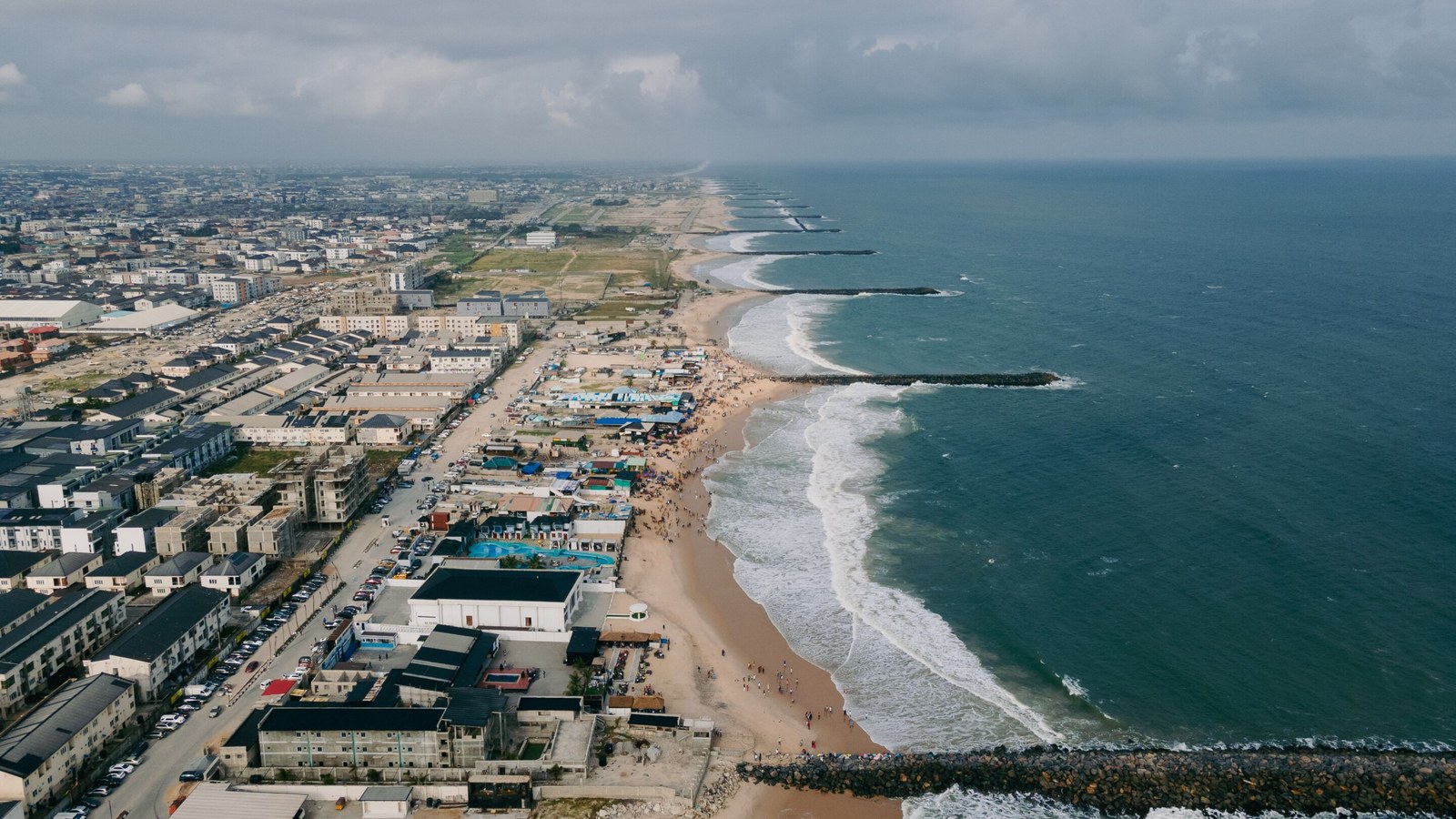
🌍 Many of Africa's large coastal cities are sinking, and that raises their flood risk well beyond what global climate projections assume. That is the finding of a Virginia Tech-led study published on 27 November in the journal Science Advances. The researchers analysed thousands of radar images from the European Space Agency's Sentinel-1 satellites and built high-resolution maps of land motion for 20 coastal cities. 🛰️ The fastest sinking was found in Alexandria, Egypt, with a median of about 6 millimetres a year, and Lagos, Nigeria, at about 5 millimetres; Luanda in Angola also sinks markedly, while other cities are stable or rising slightly. By 2050, the study estimates, more than 7 million people, 1 million buildings and about $180 billion in assets could be at risk of flooding. 💧 Because part of the sinking comes from groundwater extraction, compacting sediments and construction, the authors see room to reduce the risk through better land and water management.
📏 **What the satellites measure.** Radar satellites record the distance to the ground on every pass with millimetre precision. Thousands of such images show how individual patches of land rise or fall over the years. The study's maps reveal large differences not only between cities but also between neighbourhoods of the same city. The lead author is Oluwaseyi A. Dasho, a recent PhD graduate of Virginia Tech's Department of Geosciences; the senior author is geoscientist Manoochehr Shirzaei.
📈 **Where global models fall short.** Climate models give the broad picture of sea-level rise but treat local land motion only roughly. The researchers compared their measurements with the land-motion estimates in the Sixth Assessment Report of the Intergovernmental Panel on Climate Change (IPCC) and found substantial differences. In Alexandria, the observed sinking raises projected relative sea-level rise by 2050 by about 36 percent under an intermediate-emissions scenario, and the land area exposed to coastal flooding grows by about 15 percent. "These changes are often invisible in everyday life, but over decades they can substantially increase flood exposure," Dasho said.
🏙️ **Who is most exposed.** To look ahead to 2100, the team combined land motion with coastal water levels, elevation models, population estimates and building footprints. The most exposed are fast-growing metropolitan areas: Lagos, Alexandria, Douala in Cameroon and Monrovia in Liberia. Lagos is among the most vulnerable. The study estimates that about 2.6 million residents already lived in areas potentially exposed to extreme coastal water levels in 2020, rising to more than 4 million by 2100 under its assumptions.
💧 **What can be done.** Shirzaei stresses that subsidence is not simply another consequence of climate change. In many places it depends on local processes such as groundwater pumping, sediment compaction and urban development, which opens a chance to reduce part of the risk through better management of land and water. Dasho points out that many African coastal cities are growing fast while the measurements needed to understand their flood risk remain scarce; the study is meant to give city planners and decision-makers better tools.
🔎 **Context.** The figures come from the university's announcement of the study; the exposure numbers rest on model assumptions about future water levels and population. The team presented early results at the American Geophysical Union's annual meeting in December 2023, when the AGU magazine Eos reported subsidence above 10 millimetres a year in most of the cities, including Lagos, Alexandria and Douala. The figures now published are city-wide medians, and the rates differ strongly between neighbourhoods.