💧 Record heat in 2023 and 2024 shrank rivers and lakes around the world
In brief
- 💧 In the record heat years 2023 and 2024, rivers worldwide carried 5.7 percent less water and lakes and reservoirs held 9.5 percent less.
- 🌎 South America was hit hardest, with almost 18 percent less river water.
- 🔬 The Science study with Vienna hydrologist Günter Blöschl finds the water cycle reacts more sensitively to warming than thought.
💧 Two years of extreme heat have cost the world measurable amounts of water. In 2023 and 2024, both more than 1.5 degrees above pre-industrial levels, rivers carried 5.7 percent less water than usual on global average, and the volume in lakes and reservoirs was 9.5 percent lower. That is the finding of a study in the journal Science with hydrologist Günter Blöschl of TU Wien as one of the lead authors, as reported by science.ORF.at and the Austrian news agency APA. 🌎 South America was hit hardest: river levels fell by almost 18 percent and lakes and reservoirs by 16.5 percent. No period since 1991 saw comparable declines. In Europe, lakes and reservoirs were down almost 12 percent, while rivers carried slightly more water. 🔬 The researchers conclude that in a rapidly warming world the water cycle reacts more sensitively than often assumed. The problem is not that everything gets drier everywhere, Blöschl says, but that the swings grow: even regions considered rich in water can suddenly face severe drought.
🧪 **A natural experiment.** The researchers use the two exceptional years to test how resilient the planet's water resources are under extreme heat stress. There had never been two years this extreme and this well measured, Blöschl told APA. The analysis combined runoff measurements from 150 large river basins with satellite data on about 1.2 million lakes and reservoirs. Using machine learning, the team estimated global water availability from 1991 to 2025.
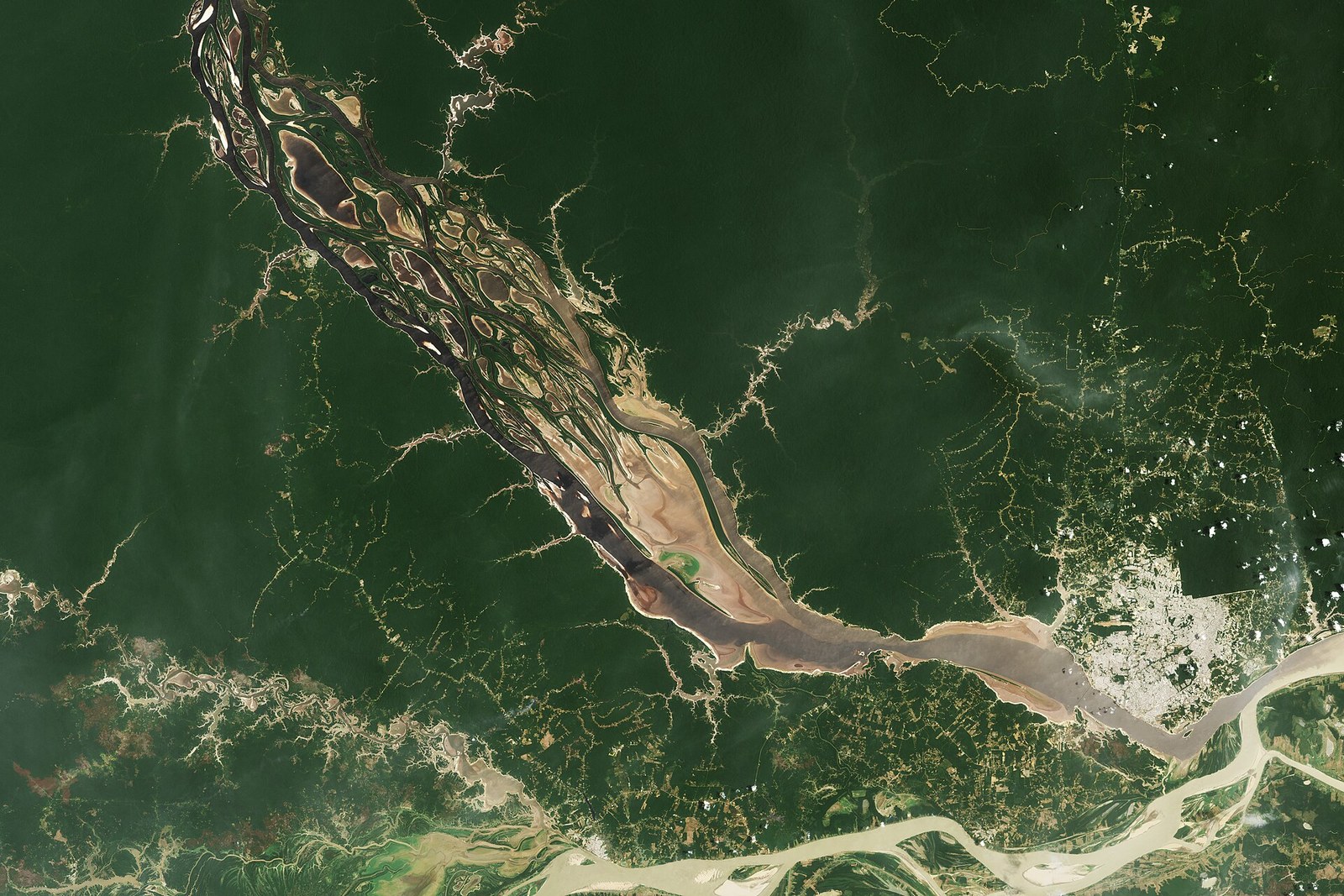
🌧️ **More evaporation does not mean more rain in the right place.** A warmer atmosphere can hold more water vapour, which is often taken to mean more rain overall, with dry regions getting drier and wet ones wetter. The years 2023 and 2024 tell a different story. Evaporation rose over large areas, but precipitation rose very unevenly, and in part more rain fell over the sea. In the traditionally wet Amazon region water volumes fell, while other parts of South America suffered heavy rain and floods at the same time.
🇪🇺 **What it means for Europe.** Compared with the 19th century, Europe is trending towards drier summers, according to Blöschl: hot summers bring less rain, warm winters more precipitation. That is a problem for farming and hydropower, he says cautiously, but rather favourable for water supply and groundwater recharge. The question has become more pressing after this year's heat and drought across much of Europe.
📉 **The limits of climate models.** According to the paper, climate models reach their limits when it comes to reliable forecasts of the water cycle. Combined with hydrological models, however, the feedbacks can be observed, and they appear to be stronger than expected, Blöschl says. For planners this means water scarcity cannot be read from long-term averages alone; the swings of individual years become decisive.