☣️ Steven Donziger: The Army's lead azide blast over Iowa was 'planned madness'
In brief
- ⚖️ Lawyer Steven Donziger argues in the Guardian that the Army's blast of 68 barrels of lead azide in Middletown, Iowa, was avoidable.
- 🧪 Citing the New York Times, he says a chemical neutralisation contract was signed in March and cancelled two months later.
- 📰 He distrusts the fast all-clear, recalling East Palestine, Flint and 9/11.
- 🌍 The EPA reports no airborne lead so far; lab results were still pending.
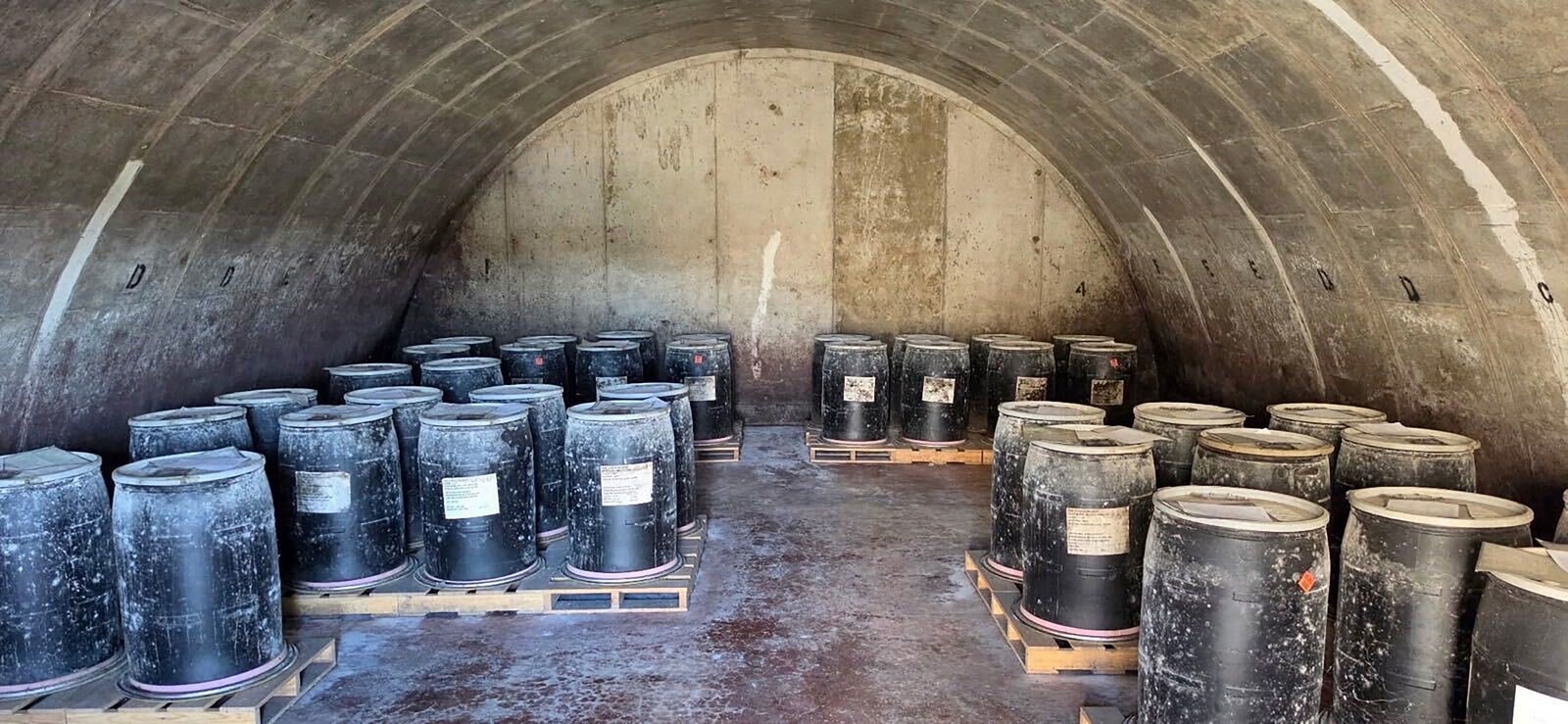
Steven Donziger, a US human rights and environmental lawyer who has fought Chevron for decades over oil pollution in Ecuador, calls the detonation of degraded lead azide at the Iowa Army Ammunition Plant in Middletown an avoidable poisoning. In an opinion piece in the Guardian published on 27 November, two days after the blast, he argues that the government knew as early as 2009 that the stored explosive was deteriorating, waited too long and then chose to blow it up although a chemical neutralisation method was available. ☣️ Donziger relies on an investigation by the New York Times: the Army, he writes, hired a Georgia-based company in March to neutralise the material with a chemical spray, then cancelled the contract two months later. He calls the all-clear given within hours of the blast scientifically unfounded and expects the authorities to play down the danger, as he says they did after the 2023 train derailment in East Palestine, in the Flint water crisis and after the 9/11 attacks. The Army and federal agencies see it differently: the Army says months of study found no safe way to move the unstable stockpile, and the Environmental Protection Agency said its real-time monitors detected no airborne lead. Laboratory results from post-blast samples were expected from Friday. 🌍
🏭 **The office tower image.** Donziger compares the decision to blowing up an entire office tower because asbestos was used in its construction. In his account the blast sent a plume of cancer-causing dust an estimated 100 miles (160 km) south-west, over farmland, forests, rivers, homes, hospitals and schools. He cites the EPA's position that no level of lead is safe: it impairs foetal brain development and reproductive systems and has been linked to lung, stomach and kidney cancers. The chemical method, according to the New York Times reporting he cites, has been validated by the National Academy of Sciences and the EPA and used on several large clean-ups.
🧪 **Why he does not trust the measurements.** At the time of writing, he says, not a single air or soil sample had been tested in an independent laboratory with a known result. Tests have limits too, in his view: they sample one place at one moment, never cover every harmful substance and never every affected area. He is particularly sceptical of the EPA under Lee Zeldin, which does most of the monitoring in Iowa; he writes that the Trump administration cut professional staff, hired former chemical industry lobbyists, and that Zeldin this year revoked the agency's finding that greenhouse gases endanger public health.
📰 **The precedents he invokes.** In East Palestine, Ohio, a train carrying vinyl chloride derailed in February 2023 and the remaining chemical was burned off. Residents, Donziger says, still report headaches, dizziness and breathing problems; the rail company agreed to a $22m settlement with the town and a $600m class-action settlement. In Flint, President Barack Obama drank tap water in 2016 before lab results were in; in East Palestine, Governor Mike DeWine did the same with then EPA head Michael Regan. After 11 September 2001, EPA chief Christine Todd Whitman declared the air in lower Manhattan safe within seven days; a 2003 report by the EPA's inspector general found no scientific basis for that statement. Donziger puts the number of people from lower Manhattan since diagnosed with 9/11-related cancer at 57,000 and points to a Northwell Health study showing a sharp rise in the last four years.
🌍 **The larger thesis.** For Donziger, Iowa fits a pattern. He calls the Pentagon the world's largest emitter of fossil fuels, notes roughly 750 US military bases abroad and a US share of more than 40% of global military spending, and recommends the film Earth's Greatest Enemy by Abby Martin and Mike Prysner, which portrays the US military as the planet's biggest polluter. He links this to the failure of the COP31 climate talks in Turkey and the US withdrawal from climate negotiations. He accuses major media of repeating the government's assurances without checking them, while long-term health studies take years and draw little attention. Drawing on his decades against Chevron over what he calls the 'Amazon Chernobyl' in Ecuador, he sees a corporate playbook in the government's response: treating the event as a public relations problem rather than an environmental and humanitarian one.
⚖️ **What the Army and agencies say.** According to the Army, the 68 barrels, nearly 9,700 pounds (about 4.4 tonnes) of lead azide, were destroyed in two simultaneous detonations at about 9 a.m. local time on Wednesday, ABC News reports. Acting Army Secretary Adam Telle listed a water wall, foam barriers and gel blocks meant to contain the effects. Maj. Gen. Eric Shirley of the Army Sustainment Command said the blast 'exceeded expectations' and had earlier said months of research found no other safe way. The EPA says it collected 1,591 samples of air, water, soil and dust before the blast and more than 1,000 afterwards, including at schools, playgrounds and daycares, and is also testing for volatile organic compounds and particulate matter. The Army's guidance put possible surface deposition at up to 148 square miles outside the plant; the Iowa Environmental Council and the Sierra Club had warned in court that the dust could reach communities more than 100 miles away.
🏛️ **The court and the politics.** The Eighth Circuit Court of Appeals rejected the groups' emergency motion. It acknowledged the 'very real risks' but said the degraded explosive could otherwise blow up uncontrolled, without the safety measures the permit requires. Governor-elect Rob Sand called the lead-up 'chaotic and unclear' and demanded immediate transparency. Whether Donziger's fears are borne out will only show in the laboratory results and later studies; his account is an argument, not a measurement.