💧 Brazilian students turn charred bones of the giant pirarucu fish into a water filter for Amazon communities
In brief
- 💧 Students and their teacher in Manacapuru, Amazonas, heat pirarucu vertebrae to up to 900 °C and grind the char into a filter powder.
- 🧪 The powder absorbs heavy metals and other pollutants; Reuters gives no test results.
- 🌳 Making it needs no felled trees and puts fish waste to use.
- 🌊 Riverside communities often drink hazardous water when droughts cut rainfall.
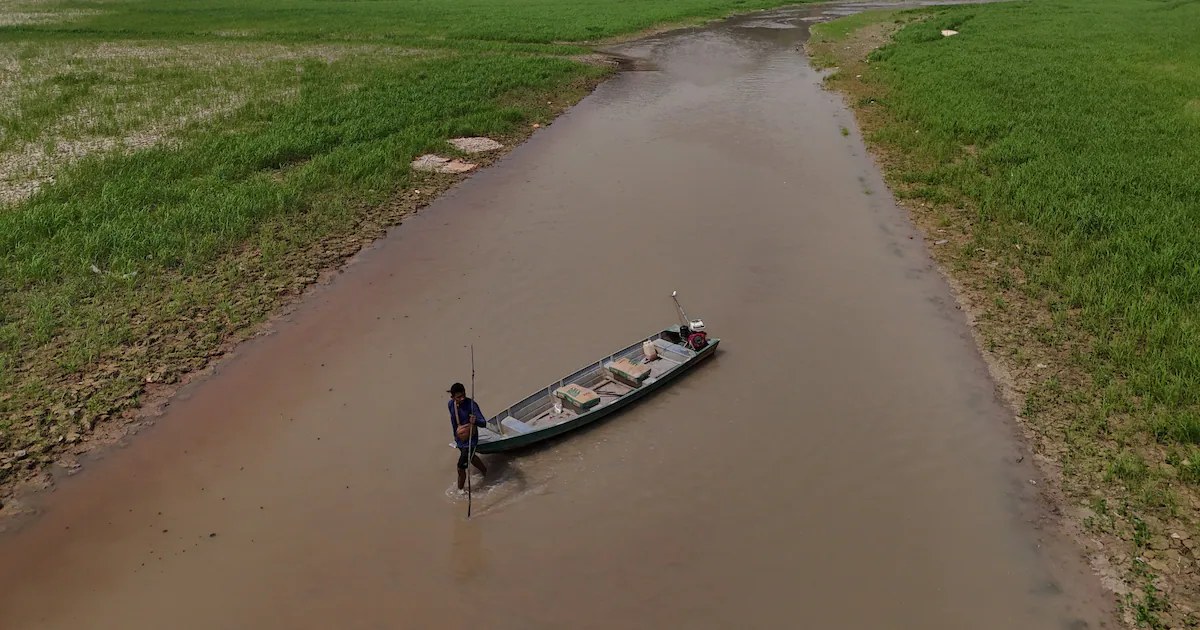
High-school students and their biology teacher in Manacapuru, a town on the Solimões River about 100 km west of Manaus, have developed a locally made clean-water filter for remote communities in the Amazon region, Reuters reports. The filter medium is charcoal from the bones of the pirarucu, a giant river fish that typically grows to 2 metres. Its chunky vertebrae are heated to as much as 900 °C, and the charred bones are ground into a powder that absorbs heavy metals and other pollutants. Teacher Galileu da Silva Pires calls it a sustainable form of carbon that does not require felling trees. 🌍 The need is real: when droughts remove rainwater and shrink river levels, pollutants become concentrated, so riverside communities are often exposed to hazardous drinking water, and the Solimões is currently low after a dry spell. Reuters does not say how well the filter works or whether it has been tested in a village.
**How it works.** Pollutants such as heavy metals cling to the surface of fine carbon powder, which is why charcoal is a common water-filter material. What is unusual here is the source of the carbon. Instead of wood, the students use pirarucu bones, which are left over after the fish has been prepared for eating. Reuters notes that charred fish bones have been recognised before as a way to filter water without cutting down trees for timber. The use of pirarucu bones could also help with a second problem in the region: the pile-up of fish waste once the meat has been eaten.
🎓 **The people and the place.** The project comes from the Jose Mota school in Manacapuru, where Pires teaches biology. He says students can turn a problem that has existed for decades into a solution with natural resources, and that the same work could be used in communities elsewhere. Student Ana Flavia Costa Lopes, 18, told Reuters that making 'something of value' and getting better, filtered water feels great. The Solimões, which Reuters describes as the upper stretch of the Amazon River, is low at the moment after a period of drought.
🌧️ **Why drought matters.** Communities on the riverbanks of the Amazon region depend on rain and river water. During droughts, rainwater is no longer available and low water levels leave pollutants more concentrated in what remains, which is when drinking water becomes hazardous, according to Reuters.
📋 **What is still unknown.** The Reuters report is a short feature about the school project. It names no filtration figures, such as how much of a given metal the powder removes, how much water a filter treats, how often the powder must be replaced, or what a unit costs. It also does not say whether any community already uses the filter. Until those answers are published, the filter is best read as a promising school invention, not as a tested water-treatment product.