🌋 Toxic gas at the supervolcano near Naples: scientist urges residents near the Solfatara to move away
In brief
- 🌋 The Campi Flegrei near Naples are releasing ever more gas; the Solfatara crater alone emits about 1,000 tonnes of carbon dioxide a day, according to the scientists.
- ⚠️ Concentrations can turn lethal in some zones and indoors, the director of the Vesuvius Observatory warned the Italian parliament.
- 🏠 Moving out stays voluntary, but the more people leave the danger zone the better, she said.
- 🔬 The observatory wants tens of millions of euros for new instruments.
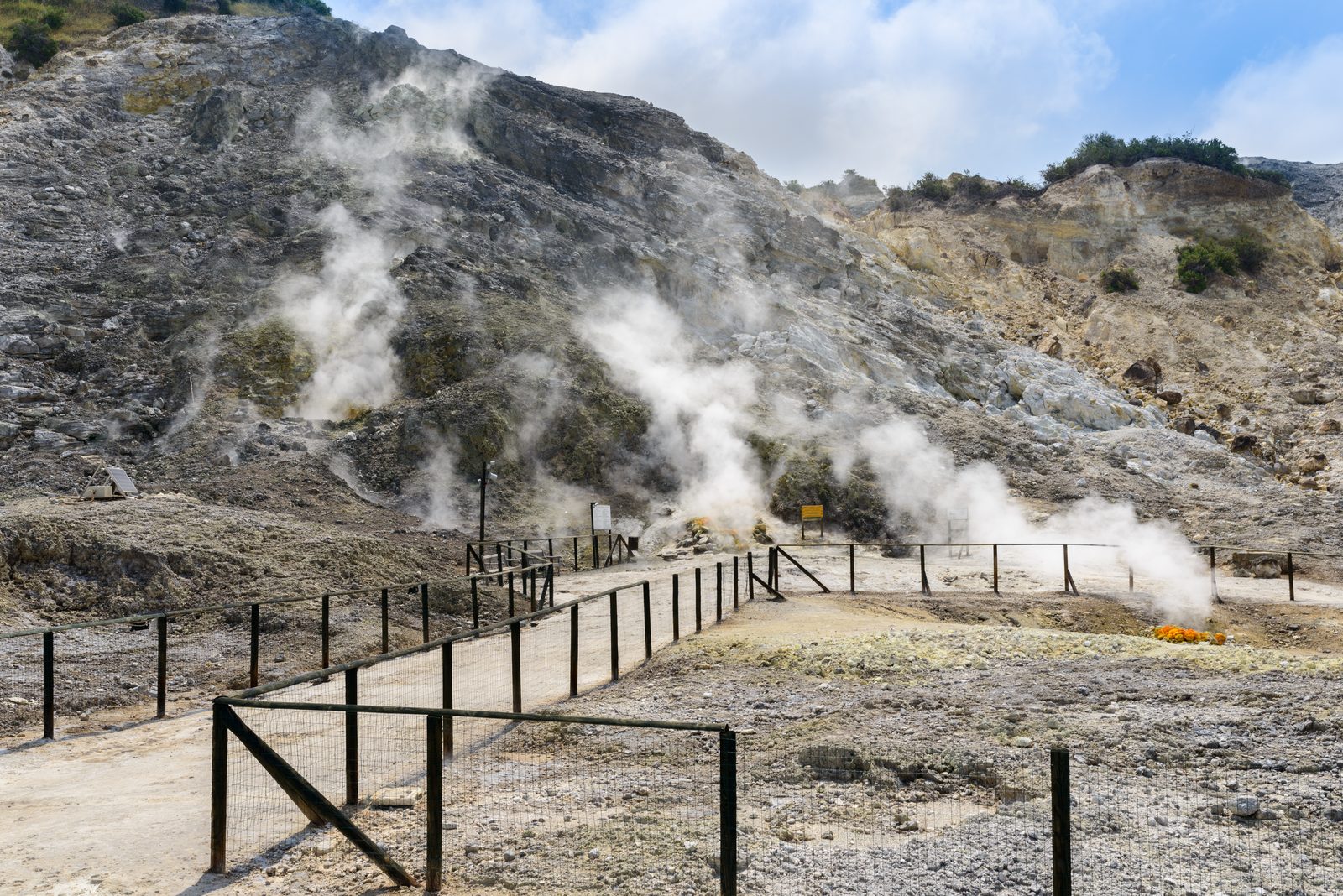
🌋 At the Campi Flegrei supervolcano near Naples, a second risk is growing beside the earthquakes: volcanic gas. Lucia Pappalardo, director of the Vesuvius Observatory of Italy's National Institute of Geophysics and Volcanology (INGV), told the environment committee of the Chamber of Deputies in Rome on 25 November that degassing drives the current phase of unrest and keeps increasing. Its main outlet is the Solfatara, a crater next to the port town of Pozzuoli, whose centre releases about 1,000 tonnes of carbon dioxide a day. In some zones, and above all in enclosed rooms, concentrations can become critical and even lethal. ⚠️ Thousands of people live only about 200 metres from the crater. A government emergency decree offers the residents of a nearby social housing estate voluntary relocation. Asked by a deputy about their future, Pappalardo said it is a dangerous zone and the more people move away from it, the better. She also called for more money to monitor the volcano, whose underground was last surveyed in three dimensions in 2001. 🔬
📈 **An unrest that keeps speeding up.** The Campi Flegrei, or Phlegraean Fields, are a vast caldera west of Naples, a collapsed volcanic basin where the ground has been rising and sinking for decades. The phenomenon is called bradyseism. Pappalardo showed the deputies how sharply it has intensified: of about 35,000 earthquakes in the past 20 years, some 24,500 came in the last four, and the quakes have grown stronger as well. The most energetic quake on instrumental record reached magnitude 4.7 on 31 July and was followed by more than 220 further events. The ground has been rising since 2005, currently by about one centimetre a month. At the centre of the caldera the total exceeds 170 centimetres, more than during the last major crisis of 1982 to 1984.
💨 **Why the gas is so dangerous.** Carbon dioxide is heavier than air and collects in cellars, hollows and poorly ventilated rooms. Across the whole area about 3,600 tonnes of carbon dioxide escape every day, plus other gases, according to the figures from the hearing reported by the Hamburger Abendblatt. The Solfatara itself shows how deadly this can be: the crater has been closed to visitors since 2017, when three tourists fell into a crack and suffocated in the gas. According to the civil protection department, gas emissions have already forced some schools to suspend activities and closed a tunnel of the local rail line.
🏠 **Relocation: voluntary, but encouraged.** Italy's civil protection minister Nello Musumeci had already said on 22 October that the area around the Solfatara can never be considered completely safe and that the social housing of the public housing company Acer right next to it should be cleared. Its residents are to move to a part of Pozzuoli threatened neither by gas nor by bradyseism. Decree number 205, a special plan for the Campi Flegrei that parliament is now converting into law, relies on voluntary moves and on the results of technical inspections of damaged buildings. Cristina Gerardis, legal adviser of the civil protection department, told the committee that relocation is hard to carry out but sometimes absolutely necessary. The priority is to make buildings safer; moving people is meant for cases where that is not technically or economically viable.
🏚️ **How vulnerable the houses are.** The special plan launched in 2023 covers 9,078 private buildings. Of 1,167 examined in depth, 6 percent fell into the very high and 42 percent into the high vulnerability class. Among public buildings, 227 were recorded and 88 technical inspections begun, with a focus on schools and key facilities. The decree makes the president of the Campania region extraordinary commissioner until the end of 2036, with a staff of up to 93.
🔬 **What the scientists want.** Pappalardo pointed to gaps in monitoring and research. Modern instruments that could locate the magma chambers more precisely, detect fracture zones and spot a possible rise of magma earlier would need investment of several tens of millions of euros. The last three-dimensional survey of the caldera dates from 2001, before the current unrest began. She also asked for regular rather than optional meetings with the commissioner and for an observatory representative on his staff: the volcano will keep changing over the next ten years, and every measure needs a scientific basis.
🟡 **No acute eruption warning.** According to Gerardis, nothing currently points to a significant development in the short term; the volcanic alert level has stood at yellow since December 2012. Critics still consider the existing emergency plans insufficient: in a disaster, experts say more than three million people in the Naples area would be affected, and not every municipality has a civil protection plan yet.