🧊 Glaciers that end in lakes lose ice almost twice as fast as land-based ones
In brief
- 📏 Global satellite analysis 2000-2020: lake-terminating glaciers lose 66 cm of ice a year (water equivalent), land-terminating 40 cm, marine-terminating 36 cm.
- 🏞️ Lakes in contact with glaciers rose by more than 3,500 (about 35%).
- 📈 Their area grew about 600 km2 and their water volume about 66 km3.
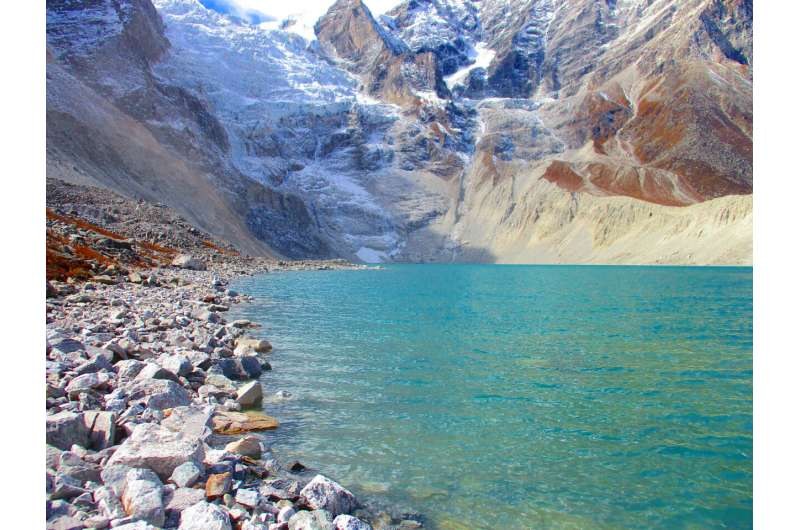
🌍 Glaciers that end directly in a lake melt faster than others. That is the result of a study in Nature Climate Change, with the involvement of Graz University of Technology, that mapped all glacial lakes worldwide using satellite images from 2000 and 2020. On average, lake-terminating glaciers lost 66 centimetres of ice a year (water equivalent), land-terminating glaciers 40 centimetres and marine-terminating glaciers 36 centimetres. The number of lakes in direct contact with glaciers rose by more than 3,500, about 35 percent, in 20 years. Their total area grew by about 600 square kilometres and their estimated water volume by about 66 cubic kilometres. Growth was especially strong in Alaska and the southern Andes.
🛰️ The method: artificial intelligence identified the lakes in the images and staff checked the results by hand. Lakes were then sorted into those touching the glacier ice and those already separated from it. Machine-learning models estimated how strongly each factor explains a glacier's mass balance, its gain and loss of ice.
🌡️ As for the mechanism, where a glacier meets a lake the water can melt the ice from below, and chunks of ice break off into the lake (calving). Of what the models explain, about 46 percent is down to topography (altitude and slope), 43 percent to climate (temperature and precipitation) and about 11 percent to the lakes themselves. The paper's title, "Climate and glacier geometry dominate global glacier-lake interactions", makes the same point.
📐 For scale, spread over Vienna the added water volume would cover the city about 160 metres deep. The numbers apply to 2000-2020 and may not carry over to the future. Because lake-terminating glaciers differ in other ways too, the study cannot fully separate the effect of lakes from other glacier traits; the 11 percent is a model estimate, not a direct measurement. The release gives no uncertainty ranges or the exact number of glaciers analysed.