🐧 First northern rockhopper penguin conceived by artificial insemination hatches at Japanese zoo
In brief
- 🐧 Japan's Adventure World says it bred the world's first northern rockhopper penguin conceived by artificial insemination.
- 🧬 A DNA test confirmed the sperm donor as father; the chick hatched on October 28.
- 🌍 The species is listed as endangered on the IUCN Red List.
- 📅 Visitors should be able to see the chick around March 2027.
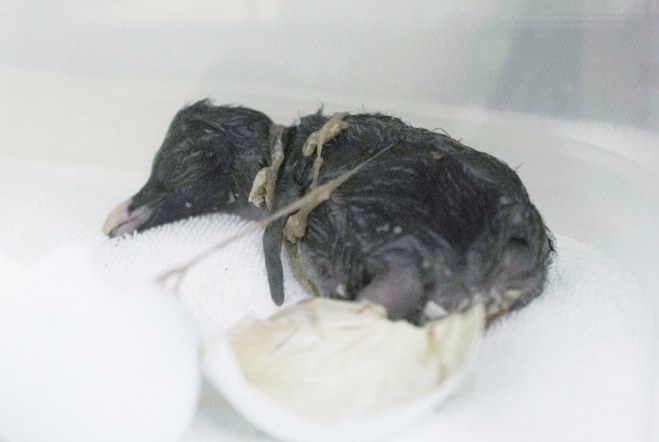
🐧 At Adventure World, a zoo and theme park in Japan's Wakayama prefecture, a northern rockhopper penguin conceived by artificial insemination has been born for the first time. The zoo announced it on X on November 27, calling it, based on its own research, the world's first such success for this species. 🧬 The chick hatched on October 28. Because the parents could also have mated naturally, the zoo had the parentage checked: a DNA test has now shown that the male whose sperm was used is the father. Artificial insemination in penguins is technically difficult; according to the zoo it has so far succeeded in only 4 of 18 species. 🌍 The northern rockhopper penguin is listed as endangered on the Red List of the International Union for Conservation of Nature (IUCN). The chick is growing up healthy in an area closed to the public and is due to make its public debut around March 2027, once it can swim.
📺 **A hatching watched by thousands.** The zoo streamed the hatching live on its YouTube channel; Adventure World says more than 19,000 people watched at the same time at the peak. This breeding season the park had three fertilised eggs from a pair labelled R003 and R006: the chicks hatched on October 25, 27 and 28. Only the third egg could have come from the insemination, and it is this chick that the DNA test now identifies as the offspring of the sperm donor.
🔬 **Why confirmation took a month.** In its press release of October 28 the zoo left open whether the chick really came from the insemination, because natural mating by the same pair could not be ruled out. Only a paternity test could settle it. The zoo describes the result as a world first according to scientific papers and breeding records in Japan and abroad, but explicitly based on its own research.
🍼 **Raised behind the scenes.** The chicks spent their first days in an incubator and were hand-fed before joining their parents in a non-public area. The zoo says it has researched artificial insemination in several penguin species for many years.
🪨 **The species.** Northern rockhopper penguins are recognised by yellow crests above the eyes, an orange bill and red eyes. They live in the South Atlantic and the southern Indian Ocean and get their name from hopping from rock to rock instead of walking. The IUCN rates them as endangered because of their limited breeding range, deteriorating breeding habitat and comparatively low and fluctuating numbers. The Global Penguin Society estimates the world population at around 500,000 breeding pairs, the EFE agency reports. For zoos that want to secure populations outside the wild, artificial insemination can help keep genetic diversity without moving animals between institutions.