🐟 Blue sucker can live up to 130 years, three times older than thought, but young fish are missing
In brief
- 🔬 Researchers aged about 50 blue suckers from Montana with ear stones and radiocarbon: maximum age around 130 years instead of the estimated 40.
- 🕰️ Some living fish hatched in the late 1800s.
- 📉 Montana data over three decades show almost no young fish entering the population; dams may play a role.
- 🗺️ The species is imperiled in 22 of the 23 states where it lives.
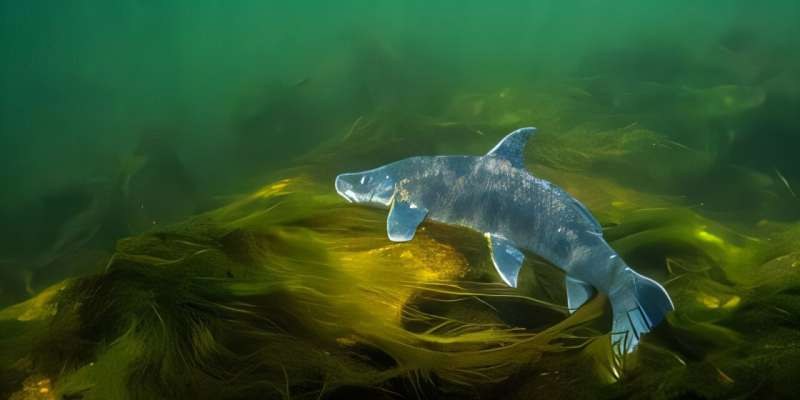
🌊 The blue sucker (Cycleptus elongatus), a fish of the sucker family, can live up to about 130 years. Earlier estimates were around 40. That is the finding of a study in Communications Biology led by Alec Lackmann (University of Minnesota Duluth) with Montana Fish, Wildlife & Parks and the University of Hawai'i. The team examined about 50 fish from a population in the upper Missouri River in Montana, collected from 2023 to 2026. Some of the living fish hatched in the late 1800s. The species is native to 23 US states and is listed as imperiled in 22. Three decades of Montana data show virtually no small blue suckers entering the population, which points to failed recruitment.
🔍 Here is how the age was determined: the researchers removed otoliths (ear stones) from the skull, cut thin sections and counted the annual growth layers under a microscope, much like tree rings. The ages were then validated with bomb radiocarbon: nuclear testing in the mid-20th century sent atmospheric carbon-14 sharply up, and organisms alive then carry that marker at a precise time in their tissues. Comparing the measurements with this time stamp validated the counted ages. Blue sucker otoliths are very small, smaller than those of buffalofishes, which made the work harder.
📚 The blue sucker is the fourth sucker species found to include centenarians, after bigmouth, smallmouth and black buffalo; all four discoveries date from 2019 onward. Before this study no validated age-based life-history data existed for the species.
🚧 The evidence has limits. The sample comes from one Montana population, so it may not hold across all 23 states. The researchers describe a dam-related cause of the missing young fish as possible, not established; they suspect habitat fragmentation.