🌡️ IEA: for the first time, the world needs more energy to cool buildings than to heat them
In brief
- ⚡ The International Energy Agency's World Energy Outlook 2026 finds that energy demand for cooling buildings has overtaken demand for heating for the first time.
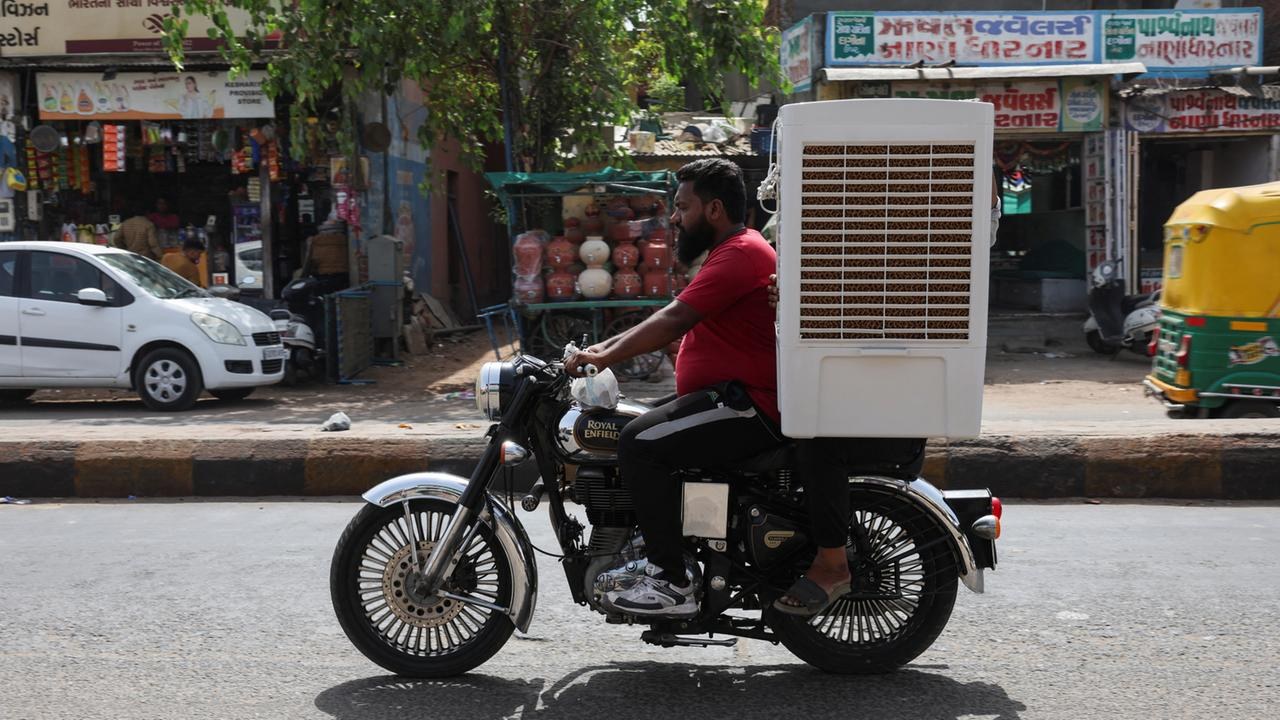
- 🏠 Reasons: rising temperatures and incomes. In emerging economies outside China, 85% of households face heat at times, fewer than 20% of them own an air conditioner.
- 🌏 Consumption grows fastest in India and Southeast Asia.
- 🛢️ The IEA also calls the Hormuz crisis the largest energy supply shock in history.
🌍 For the first time, the world uses more energy to cool buildings than to heat them. The International Energy Agency (IEA) reports this in its World Energy Outlook 2026, published on 19 November. Rising temperatures and rising incomes are behind the turn: more people in hot countries can now afford an air conditioner, and hotter summers make them run longer. Consumption grows fastest in India and Southeast Asia, followed by Latin America, the Middle East and Africa. Because the electricity for cooling often still comes from coal and gas, the trend can raise greenhouse gas emissions and thus warming further. The outlook places the milestone in a larger story: the disruption of shipping through the Strait of Hormuz after the Iran war, which the IEA calls the largest energy supply shock in history. Governments respond by spreading suppliers and routes, leaning more on domestic sources such as solar and nuclear power, and electrifying faster. The IEA stresses that its scenarios are not forecasts.
❄️ **The cooling numbers.** In the stated-policies scenario (STEPS), demand for cooling grows by about 1,700 terawatt-hours by 2035; in an extreme case with strong heatwaves it would be another 40 percent higher, roughly 700 terawatt-hours more. In all scenarios cooling accounts for more than 40 percent of the growth in useful energy to 2035. The weather is already pushing: in parts of Europe, cooling degree days in May and June were 60 to 150 percent above the previous year, according to the IEA's Electricity Mid-Year Update. The gap between heat and equipment is large: in emerging and developing economies outside China, 85 percent of households are at times exposed to high temperatures, but fewer than 20 percent of them own an air conditioner. The IEA expects that share to reach 32 percent by 2035 and 45 percent by 2050.
🖥️ Computing adds its own heat. AI-optimised servers give off much more waste heat than conventional ones, so liquid cooling is gaining ground; Thailand temporarily halted 49 data-centre projects in September to draw up rules on electricity and water use.
⛽ **The shock around it.** According to heise's reading of the outlook, oil losses from the Gulf region added up to about 2.8 billion barrels by the end of October, and diesel prices at times rose above 200 US dollars a barrel. Before the crisis about 20 million barrels of oil a day passed through the strait. If shipping risks persist for long, bypass pipelines, other suppliers and lower demand from importers could push that to 8.5 million barrels a day by 2030 and below 2 million by 2035; the Middle East would still remain the world's largest oil exporter. IEA head Fatih Birol told Reuters the energy world would never be the same as before the Iran war.
☀️ **Where the responses point.** Governments share three directions: wider spreading of suppliers, routes and fuels; priority for domestic resources, from which solar power and nuclear energy, efficiency and biofuels benefit, and in parts of Asia coal as well; and faster electrification. Since 2019 electricity demand has grown twice as fast as total energy demand, and electricity's share of final consumption approaches 30 percent in all scenarios. That needs grids: heise cites at least 25 million kilometres of new and 15 million kilometres of renewed lines within ten years. If the conflict were clearly resolved, a wave of new LNG supply from the late 2020s could create a buyer's market with lower oil and gas prices. Access to electricity and clean cooking, which made progress in 2025, is at risk from costlier fuels. On climate, current and stated policies lead to 2.5 to 2.9 degrees of warming in the IEA's scenarios, far from a 1.5-degree path; separately, the UN Environment Programme expects 2.8 degrees by 2100.