⚡ COP31: Germany launches a global pledge against the greenhouse gas SF6 in power grids, 35 countries on board
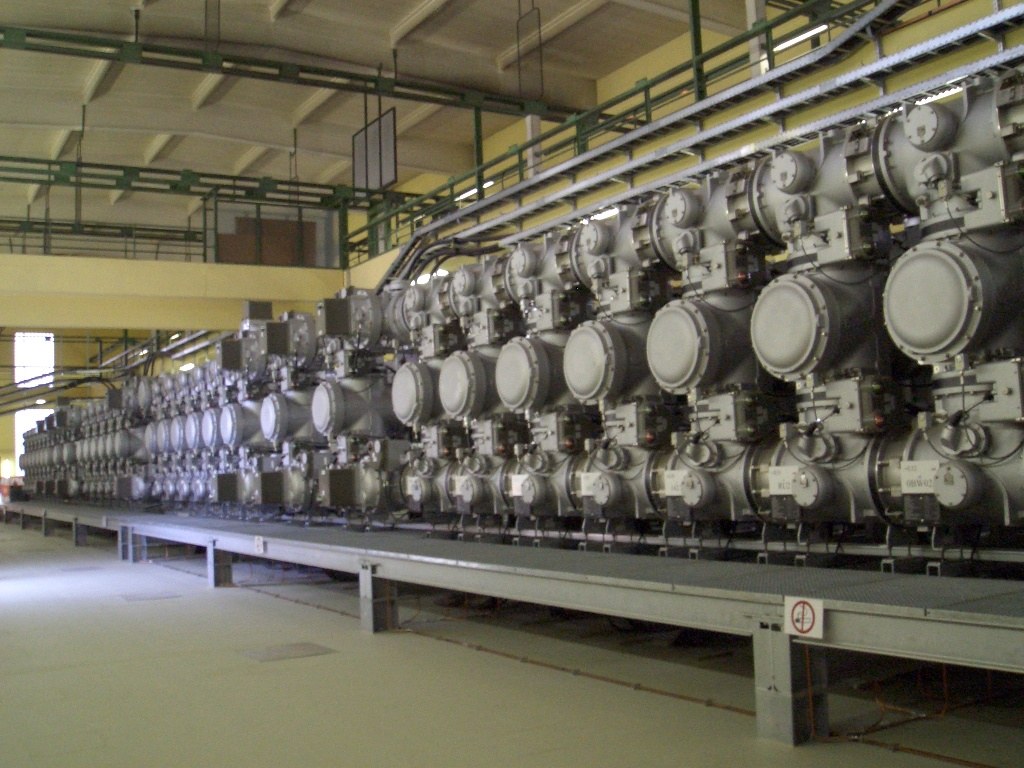
In brief
- ⚡ Environment minister Schneider presented the voluntary Global SF6 Pledge in Antalya; the EU joined the same day.
- 🌡️ SF6 insulates switchgear and warms about 24,000 times as strongly as CO2 over 100 years.
- 🧰 Governments promise better data, lower emissions and support for SF6-free technology.
- 💶 Germany funds 15 million euros over several years; the World Bank and GIZ implement.
🌍 At the COP31 climate conference in Antalya, German environment minister Carsten Schneider presented an international initiative against the greenhouse gas sulphur hexafluoride (SF6) on 19 November. SF6 is used as an insulating and arc-quenching gas in nearly every power grid, yet it is the most potent greenhouse gas known: over 100 years it warms about 24,000 times as strongly as CO2 and stays in the atmosphere for more than 1,000 years. In the voluntary Global SF6 Pledge, governments commit to improve data on SF6 stocks and emissions, minimise emissions through sound management and promote SF6-free technology. According to the European Commission, 35 countries representing roughly a third of the global economy have now signed on; the EU joined the same day.
🧰 **The four building blocks.** The German environment ministry (BMUKN) describes the initiative in four steps. First, create data: many countries do not yet know their SF6 stock, and better recording, measuring and reporting is the basis. Second, manage the stock: working installations need not be removed, and the focus is first on older, leaking equipment plus recovery and recycling of the gas. Third, deploy SF6-free technology where it is available; the pledge is open to any technology and supplier. Fourth, mobilise finance: with the World Bank as a partner, funding gaps are to be closed and projects prepared and bundled.
🔌 **Why now.** In switchgear, SF6 interrupts electric arcs and prevents short circuits and fires. According to BMUKN, global emissions are rising, mainly from leaks in transmission and distribution grids. Because grids are being expanded fast and electrification is at the centre of the COP31 Action Agenda, climate-friendly equipment should be used from the start, since what is installed today stays in service for decades. Schneider warned, according to Anadolu, that relying on SF6 while expanding grids risks locking in avoidable emissions for at least 50 years. The trade outlet gasworld cites its own earlier analysis that about 80% of global SF6 consumption is tied to electricity transmission and distribution.
🛠️ **What already exists.** BMUKN says SF6-free switchgear is on the market for medium voltage and for high voltage up to 145 kilovolts and is in use at large grid operators; pilot projects are running for the highest voltage levels. The EU has a binding framework: under the F-gas Regulation (EU) 2024/573, new medium-voltage equipment up to 24 kilovolts has had to be SF6-free since January 2026, followed by high-voltage equipment above 52 up to 145 kilovolts in 2028, medium voltage above 24 up to 52 kilovolts in 2030, and equipment above 145 kilovolts or with a short-circuit current above 50 kiloamperes in 2032. From 2035, only reclaimed or recycled SF6 may in principle be used for maintenance, with narrowly limited exceptions.
💶 **Who takes part.** Before the launch, BMUKN says, the EU, France, Canada, Cambodia, Kenya, Nigeria, Senegal, Spain, Uganda and the United Kingdom had announced support; a first supporters' meeting took place on 4 November in Kigali at the meeting of the parties to the Montreal Protocol. The ministry funds the initiative behind the pledge with 15 million euros over several years. It is implemented by GIZ, which runs the secretariat, the World Bank (ESMAP, SCALE) and the UN Climate Technology Centre and Network; further backers include the Climate and Clean Air Coalition, the Green Grids Initiative and the German Environment Agency. Over the coming months, working groups with governments, manufacturers, grid operators and financial institutions are to build on the pledge. It is voluntary; the sources read give neither a binding reduction target nor a deadline.
🌍 **Context.** The sources give slightly different values for the warming effect: BMUKN and gasworld about 24,000, the European Commission about 25,000 CO2 equivalents over 100 years; on the time in the atmosphere, BMUKN says more than 1,000 years and the EU says thousands.
Sources
- Germany launches pledge to phase out use of potent greenhouse gas SF6 in power sector (Anadolu Agency)
- Weltklimakonferenz: Neue Initiative gegen schädlichstes Klimagas SF6 und für neue Technologien (Bundesumweltministerium (BMUKN))
- COP31: EU joins 'Global SF6 Pledge' to fight world's most potent greenhouse gas (European Commission, DG Climate Action)
- Germany launches global push to cut SF6 from expanding power grids (gasworld)