🧊 World Labs opens Atlas: 3D scenes and camera-controlled video from text and photos via API
In brief
- World Labs opened its Atlas world model to everyone on 12 November, with web tools and a pay-as-you-go API.
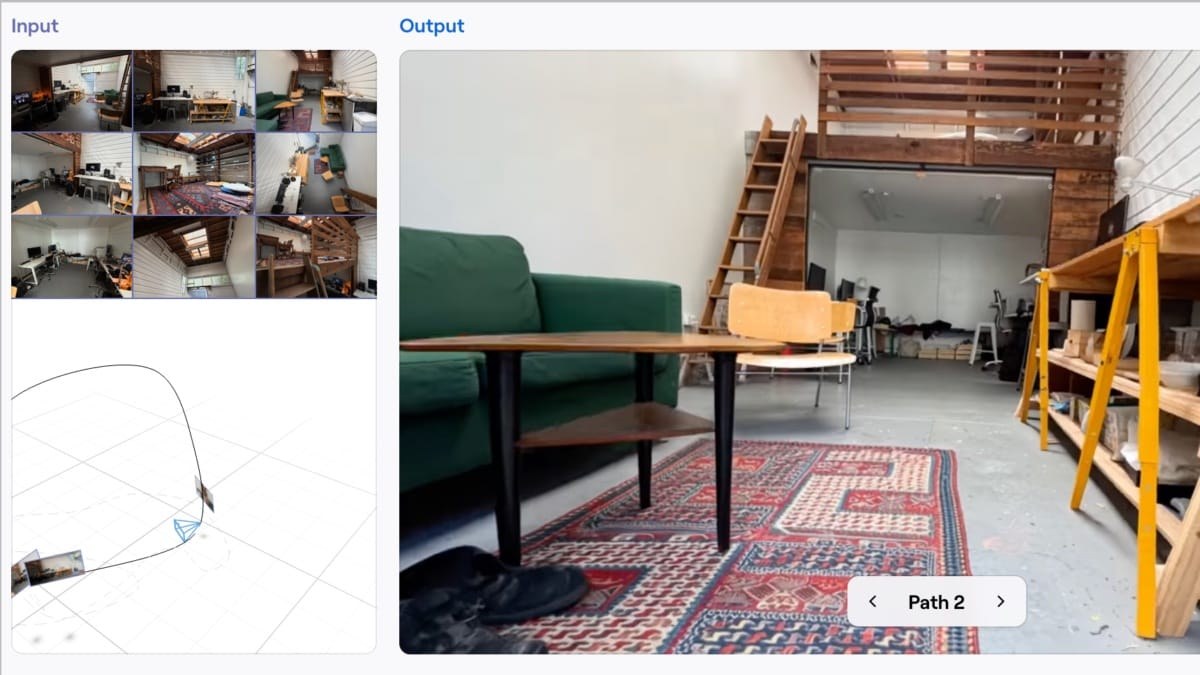
- Atlas turns text or up to 64 photos into 3D scenes and camera-controllable video that export as splats and meshes.
- The accuracy claims come from World Labs itself; there is no model card or paper.
World Labs made Atlas, its new world model, publicly available on 12 November. Developers can turn text descriptions or photos into 3D scenes and into video with a set camera path, and export them. There are web tools such as Viewfinder and Chisel and a pay-as-you-go API with prepaid credits; new users get 10 dollars of credit each for the API and the web apps. Most performance claims come from the vendor.
**What is included.** Viewfinder builds a scene from one or more photos, Chisel from reference images or text. Two smaller tools, Relight and Splats to Mesh, relight scenes or convert them to meshes. For the API there is a copy-and-paste prompt that lets an AI coding assistant walk a developer through setup. According to the report Atlas is a multimodal autoregressive diffusion transformer pretrained from scratch on text, images, video and 3D data, linking every image and depth map to a camera position so scenes render consistently from different viewpoints.
**Pricing and workflow.** At 720p, the highest API resolution, a view costs 0.04 dollars for the first frame and 0.008 for each later one; turning views into refined Gaussian splats costs 5 dollars. Developers chain API calls: one estimates camera positions and depth from photos, another renders novel views or a video along a camera path, and follow-up calls produce splats and textured polygon meshes or simplified colliders for game engines and simulators. From a single image Atlas can fill in what lies outside the frame; with overlapping photos it reconstructs a location.
**What is backed and what is not.** On Rapidata's public leaderboard Atlas led 19 video and world models at following camera-movement instructions, and human raters preferred it in 76.7 percent of head-to-head matchups. In World Labs' own tests across seven datasets its 3D reconstruction error was on average about 12 percent below the next-best model, Pi3X, though it did not lead on every dataset. World Labs has published neither a model card nor a paper, and no outside group has reproduced the results. Free-tier outputs cannot be used commercially.
**Context.** World Labs was co-founded by Fei-Fei Li; its earlier Marble model has been public for a year and Atlas builds scenes in the same 3D format. In September AMD agreed to acquire World Labs in an all-stock deal valued at about 8.2 billion dollars, which closed on 16 November; Li is now AMD's chief scientist. AMD has not said what happens to the products. Unlike models that stream pixels, Atlas provides 3D output for game engines and Blender. The first announcement stressed simulated environments for training robots; the new developer docs do not mention robotics.