🎲 Games Fair: a free game collection with no ads, no account and no network access, built in Rust
In brief
- 🧩 Games Fair bundles Solitaire, Sudoku, 2048, Mines, Breakout, Charades and more games in one app.
- 📴 According to the project, every game runs entirely on the device: no ads, no purchases, no account, no network access.
- 💻 Downloads exist for iPhone, Android, Linux and Windows; macOS, HarmonyOS and the browser can be built from source.
- ⚖️ The app is free software under GPL 2.0 or later, published by the App Fair Project.
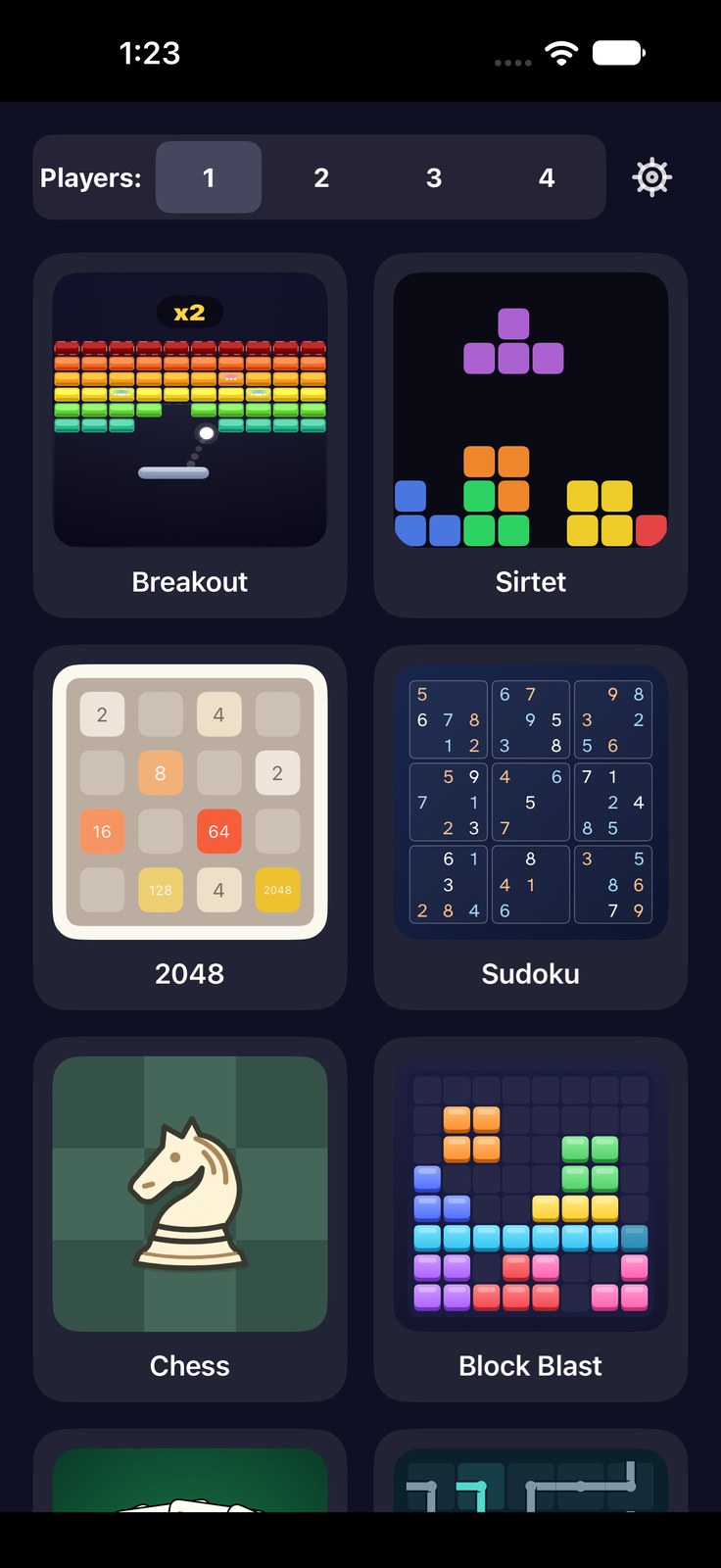
🎲 Games Fair is a free, open-source collection of classic puzzle and arcade games in a single app. The project page lists Solitaire (Klondike), Block Blast, Breakout, falling blocks, Sudoku, 2048, Mines, Charades, Flipside and Pipes; the repository already describes more, including Chess, Match Three and party games for up to four people on one device. 📴 The point of the app is what it leaves out: no advertising, no in-app purchases, no account and, according to the publisher, no network access at all. Progress is saved when you leave a game and restored when you return. Menus and instructions come in 13 languages. 💻 It is published by the App Fair Project and built with Day, a Rust framework that draws each platform's native controls from one codebase. The [project page](https://games-fair.github.io/Games-Fair/en) offers install files for iPhone, Android, Linux and Windows. It suits people who want a quick round without ads or data collection; anyone looking for online leaderboards or network multiplayer will not find them here.
🃏 What is in the collection. The games are familiar formats with small conveniences. In Solitaire, the "Winnable Deals Only" option has a solver play each deal through to a win before it reaches the table, and a hint button shows a move on a winning line. In Mines the first tap is always safe and a long press plants a flag. Sudoku offers four difficulty levels, pencil marks, unlimited undo and a best time per level, according to the repository. Block Blast is played on an 8×8 board, and clearing the whole board earns a 5,000-point bonus. Pipes generates solvable puzzles in three sizes.
🤳 Games for several people. Charades is the party game with the phone held to your forehead: friends give clues, a nod counts as correct and tipping your head back passes, read from the tilt sensor. Without a sensor there are buttons. English has 21 themed decks according to the project page, and each other language has its own animal and food decks. On phones and tablets a "Players: 1 / 2 / 3 / 4" filter narrows the catalogue by head count; the repository lists games such as Whack-a-Mole, Snakes, Paint Fight, Basketball Hoops and Impostor for three to ten players. Chess can be played against the computer or by two people on one device. These newer games are described in the repository; the project page still names ten games, so the downloadable packages may lag behind the code.
🦀 The technology behind it. Games Fair doubles as a showcase for Day, a Rust framework that produces several interfaces from one code base: UIKit on the iPhone, Material on Android, WinUI on Windows, GTK or Qt on Linux, AppKit on the Mac, ArkUI on HarmonyOS and a WebAssembly build for the browser. Each game is its own Rust crate with a saved state. According to the repository, the animation loops go to sleep whenever nothing is happening, which saves battery, and a test checks that no game reaches past the edge of phone screens as narrow as 320 points.
📥 How to get it. The project page currently offers an iOS file (.ipa), Android packages (APK and AAB), Linux as AppImage and Flatpak (GTK and Qt versions) and a Windows installer. Developers can build and launch it themselves with the Day command-line tool, also for macOS, HarmonyOS and the browser; the command is in the [GitHub repository](https://github.com/Games-Fair/Games-Fair). The repository says the App Fair Project builds, signs and submits the apps of its catalogue to the app stores; the project page does not say whether the current version is listed there yet.
⚖️ Licence and limits. The app is free software under the GNU General Public License, version 2 or later; anyone renaming and redistributing it only changes the title in one configuration file, the instructions say. The limits follow from the concept: without a network there are no online opponents, no sync between devices and no leaderboards. Anyone who wants those is better served elsewhere; anyone who wants Solitaire or Sudoku without ad breaks gets it here for free.