📱 Commentary: Singapore telecoms are heading for a two-and-a-half-horse race
In brief
- 📱 Ven Sreenivasan sees a two-and-a-half-horse race after the StarHub-M1 merger.
- 💶 The all-share deal is worth S$1.1 billion and is due to complete in 2027, subject to approval.
- 📊 The new group (4.1 million mobile customers) would come close to Singtel (4.5 million).
- ⚖️ Simba's future is the open question after regulatory breaches.
- 🔎 Prices may hardly move for now, the author argues, but freebies could quietly shrink.
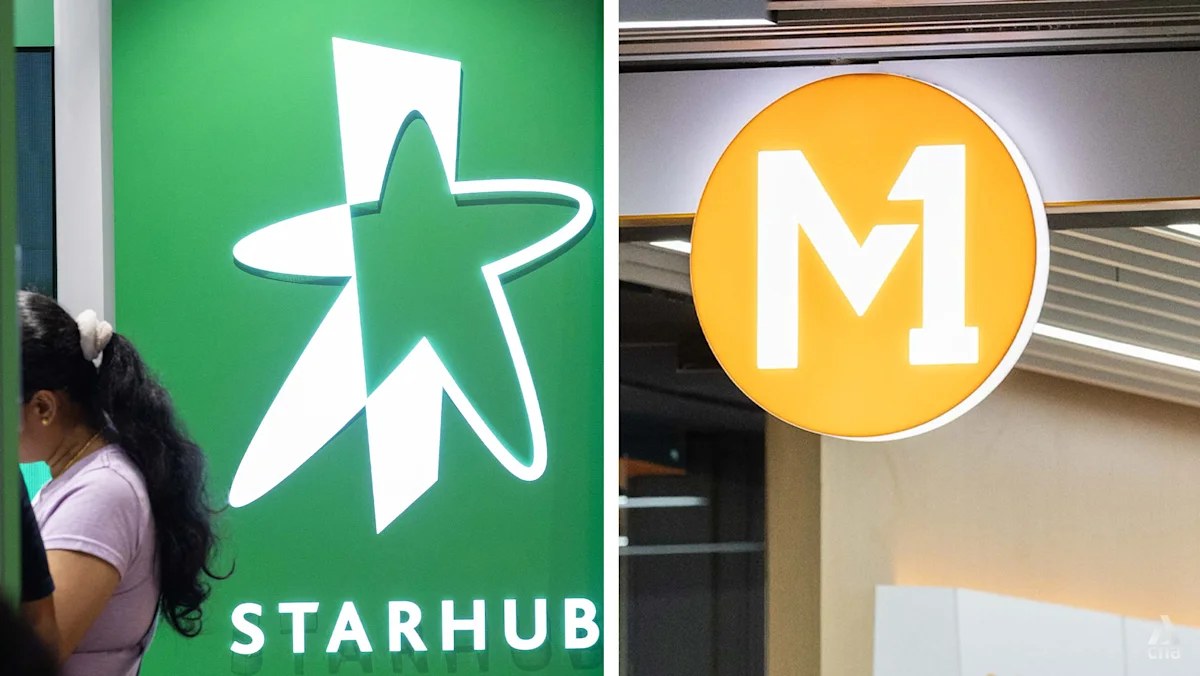
📱 In a commentary for CNA, former editor and financial journalist Ven Sreenivasan argues that 2026 has shifted Singapore's telecom market for good: it is now shaping up as a two-and-a-half-horse race. The trigger is the merger of StarHub and M1, until now the second and third-biggest operators, confirmed on 24 November. The all-share deal is worth S$1.1 billion and should complete in 2027 after regulatory approval. Alongside the combined group and market leader Singtel there is Simba, whose future is clouded by regulatory breaches. 💶 Sreenivasan thinks operators may find it hard to move prices much for now, because customers are used to cheap plans. Changes could come quietly through fewer freebies.
📉 **Why the author thinks a reset was due.** Economics teaches that competition is good, Sreenivasan writes, but he asks whether there can be too much of it. Since 2020, providers have slashed mobile plan prices following the entry of Simba, formerly TPG. Virtual network operators such as MyRepublic and Circles.Life followed, all fighting for a market of just six million users.
📊 He points to results: StarHub's mobile service revenue fell six per cent year on year in the third quarter amid rivals' heavily discounted plans, and including the first half the decline is nine per cent. Singtel's Singapore mobile service revenue rose 3.8 per cent from the previous quarter in its second quarter, a second consecutive gain, but only after seven quarters of decline.
🗣️ Industry leaders have also pointed to consolidation elsewhere in the region. In May, Singtel chief Yuen Kuan Moon was reported as saying that four operators would not be sustainable in Singapore, more than in the larger, already consolidated markets of Thailand, Indonesia and India. StarHub chief Nikhil Eapen has now called the chapter of liberalisation closing.
🧩 **Who is left.** Besides its 4.1 million mobile customers, the future group would have more than 750,000 broadband users, compared with 700,000 at Singtel. Simba has 1.4 million mobile subscribers. On the same day StarHub also exercised an option to buy Circles.Life's Singapore mobile business, shortly after acquiring MyRepublic's mobile arm. Even after Simba's bid for M1 collapsed spectacularly in May, experts generally still expected consolidation, according to Sreenivasan.
⚖️ **The Simba question.** While assessing that bid in May, the Infocomm Media Development Authority (IMDA) said it had found a potential breach involving unauthorised use of spectrum bands. Simba's parent Tuas said last week it does not contest the breaches. Possible action ranges from fines to suspension or cancellation of spectrum rights or the licence, and IMDA is reviewing the submission. Given the sizeable customer base, the author considers a hefty fine plus a governance overhaul more probable than a cancelled licence. Simba should be able to pay, he argues, since Tuas reported a 277 per cent jump in full-year net profit. Still, a large penalty could weaken its ability to build out 5G: as a latecomer it holds the smallest share of 5G spectrum, a gap it had hoped to close with M1.
💶 **What customers can expect.** IMDA will no doubt look at how consolidation affects competition and prices, Sreenivasan writes. StarHub says plans of StarHub, M1 and their sub-brands stay unchanged until the merger completes. Simba's S$10 offers set the floor, in his view. Yet two giants of almost equal size have little reason to keep bleeding, and the Circles.Life purchase takes the market's loudest discounter off the board.
🌍 About a year ago the author wrote that further competition need not come from local players. That possibility has since shrunk significantly, he now says: a saturated market and thinning revenues point to fewer but stronger operators.