✈️ Arthur Goldstuck: South Africa's airports aim to cut security checks to five to ten minutes
In brief
- 🛫 Airport operator ACSA is seeking suppliers for new screening technology at its nine airports, including 3D baggage scanners and automated lanes.
- 🧳 Laptops and liquids could then stay in bags, as at Heathrow.
- ⏱️ The tender's target: a five to ten minute wait for economy passengers.
- 📅 Columnist Arthur Goldstuck warns that delivery takes three years, so nothing changes this holiday season.
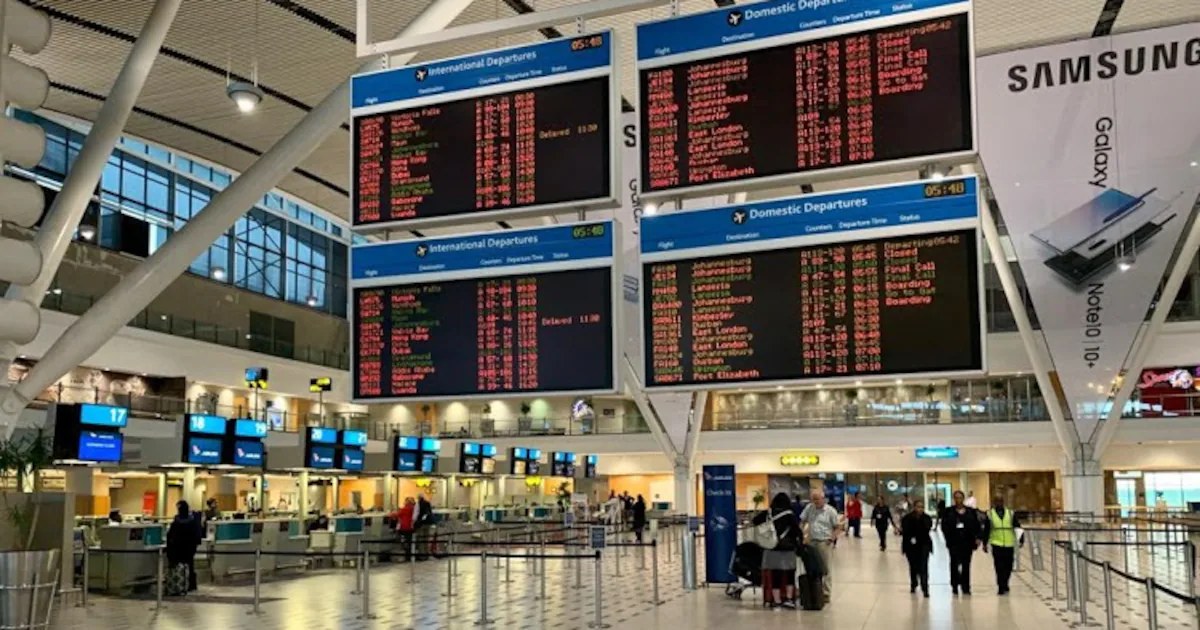
South African technology analyst Arthur Goldstuck describes in his Business Day column how security checks at South Africa's airports are meant to speed up. ✈️ The state operator Airports Company South Africa (ACSA) invited suppliers on November 6 to propose a new generation of screening technology for its nine airports: 3D baggage scanners based on computed tomography, automated screening lanes and new full-body scanners. ACSA says its current equipment has reached the end of its life span and breaks down often. Travellers could then leave laptops and liquids in their bags, as at London Heathrow or Amsterdam Schiphol. ⏱️ The tender names an ideal waiting time of five to ten minutes for economy-class passengers. Goldstuck tempers expectations, though: the tender allows three years for delivery and installation, so nothing changes this holiday season. And Schiphol shows that fast scanners alone are not enough when staff are short.
🔬 **What the new scanners change.** Conventional X-ray machines produce two-dimensional images that officers have to interpret, often idiotically, as Goldstuck puts it: passengers are again and again asked to unpack harmless objects. CT scanners instead produce three-dimensional images that operators can rotate and inspect from different angles without opening the bag. Detection software helps find prohibited items, with a bit of luck and training, the columnist adds.
🧺 **More than the scanner.** Automated systems return empty trays to the start of the lane so they do not pile up at the end. Several passengers can prepare their belongings at once, as at most American airports, so nobody waits behind a traveller wrestling with a laptop. Goldstuck repeatedly nods to the departure halls of OR Tambo in Johannesburg. ACSA is also looking at centralised screening rooms, where officers examine baggage images remotely and can be allocated flexibly across several lanes.
🇬🇧 **The models.** According to the column, Heathrow completed a £1bn security upgrade in January. Passengers there may carry individual liquid containers of up to two litres instead of the old 100 millilitres; the airport says this removes almost 16 million plastic bags a year, and in July it reported waiting times consistently below five minutes. Schiphol also lets passengers keep electronics and liquids in their bags but keeps the 100 millilitre limit. There, security staffing problems and passport-control delays still disrupt journeys despite fast scanners, a cautionary tale for ACSA.
📋 **What the tender asks for.** Besides passenger scanners, full-body screening equipment is to be replaced and checks on goods entering restricted areas upgraded. The equipment must fit into existing screening areas, so no major rebuilding is planned. Three years of delivery and installation are followed by two years of warranty and five years of maintenance. Goldstuck also points to the commercial interest: passengers who spend less time in queues have more time for shops and restaurants. He is particularly taken with one line of the tender, which wants screening to be "light and heart-warming" for passengers and free of stress.
⚖️ **A second attempt.** What the column does not mention: ACSA had already cancelled an earlier tender for new detection equipment at nine airports, covering body scanners, X-ray systems and automated tray return, shortly before award. According to a March 2026 report in The Citizen, security company Mafoko Security Patrols, said to be the intended awardee, challenged the cancellation in court; ACSA cited a material irregularity in the process.
🔎 **How to read it.** Goldstuck is CEO of the research firm World Wide Worx and editor-in-chief of Gadget.co.za. His column draws on ACSA's procurement document; the Heathrow figures are the airport's own, as he reports them.