🚀 SpaceX catches the Starship upper stage with its tower for the first time after an orbital flight
In brief
- 🛰️ On the 15th Starship test flight, the launch tower caught the upper stage after 22.5 hours and 14 orbits.
- 🌊 The booster was also meant to be caught but aborted automatically and exploded over the ocean.
- 🎯 Recovering both stages on one flight and repeating it reliably is the next milestone.
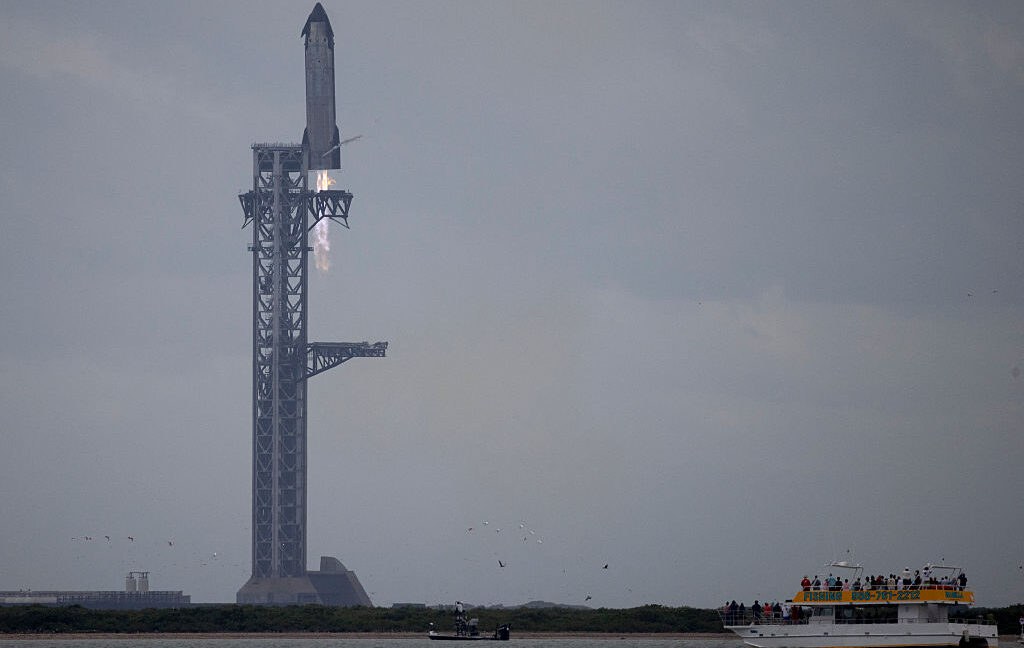
📅 On Saturday, November 14, 2026, SpaceX caught the upper stage of its giant Starship rocket (the "Ship") with the launch tower for the first time after an orbital flight, on the vehicle's 15th test flight. The rocket lifted off on Friday at 16:47 local time at Boca Chica, Texas, deployed 26 Starlink satellites and completed 14 orbits. After 22.5 hours it hovered back to the tower, whose mechanical arms grabbed it. The second planned maneuver, catching the Super Heavy booster, failed: the booster aborted automatically, diverted to the ocean and exploded. Elon Musk wrote that it had been "slightly low on fuel." SpaceX needs both stages to be reusable to cut launch costs sharply.
📏 At 124 meters tall, Starship is the largest rocket ever built and has two parts: the Super Heavy booster and the Ship upper stage. SpaceX aims to reuse both completely. The company has caught the booster with the tower's arms, nicknamed "chopsticks," on three earlier test flights. The upper stage, which only reached orbit for the first time in September, has now been grabbed for the first time.
⏱️ The flight in outline: liftoff on Friday at 16:47 local time (19:47 GMT). The booster was due back at the tower six and a half minutes later. Instead an automated abort triggered, and it hovered over the water and exploded. Musk said on X it had been "slightly low on fuel." The Ship carried on, released 26 satellites of the Starlink constellation and circled the Earth 14 times before returning to the launch site. Before the flight SpaceX said it would only try to catch the Ship after assessing the vehicle carefully in space; otherwise it would have come down in the ocean like the booster.
🎥 Ars Technica's reporter at the site described the maneuver: the upper stage emerged from the cloud deck, flew horizontally almost to the end, then swung upright on three Raptor engines. Two nubs on the sides of the rocket, each protruding only about one foot, are its only purchase on the tower's arms. Less than a minute after coming into view, the Ship was held by the tower.
💬 Assessment: Malcolm Macdonald, president of the Royal Aeronautical Society, told the BBC that not recovering the booster is a setback, but successfully recovering the Ship is a substantial step forward. Both halves of the recovery problem have been demonstrated, he said, just not yet on the same flight. The next milestone is putting them together and proving it can be done reliably, repeatedly and economically.
🌙 The flight matters for NASA. SpaceX has a contract to convert the Ship into a lunar lander, and Blue Origin is working with its New Glenn rocket and its own lander as a second route. NASA's Artemis III mission, planned for summer 2027, has four astronauts in the Orion spacecraft attempting to dock with both landers; a crewed Moon landing is planned for 2028, a timeline the BBC calls highly ambitious.