💳 Mexico moves to end cash payments at petrol stations and toll booths
In brief
- 📜 Mexico's finance ministry on 27 November named petrol stations and toll motorways the first strategic sectors of its Digital Economy Law.
- 💳 Both are to move gradually to digital-only payment: cards, bank transfers, QR codes or NFC.
- 📅 Authorities have 15 working days to set the rules, duties and deadlines; until then cash is still accepted.
- ⛽ The government's main stated aim is to make the illegal fuel trade traceable.
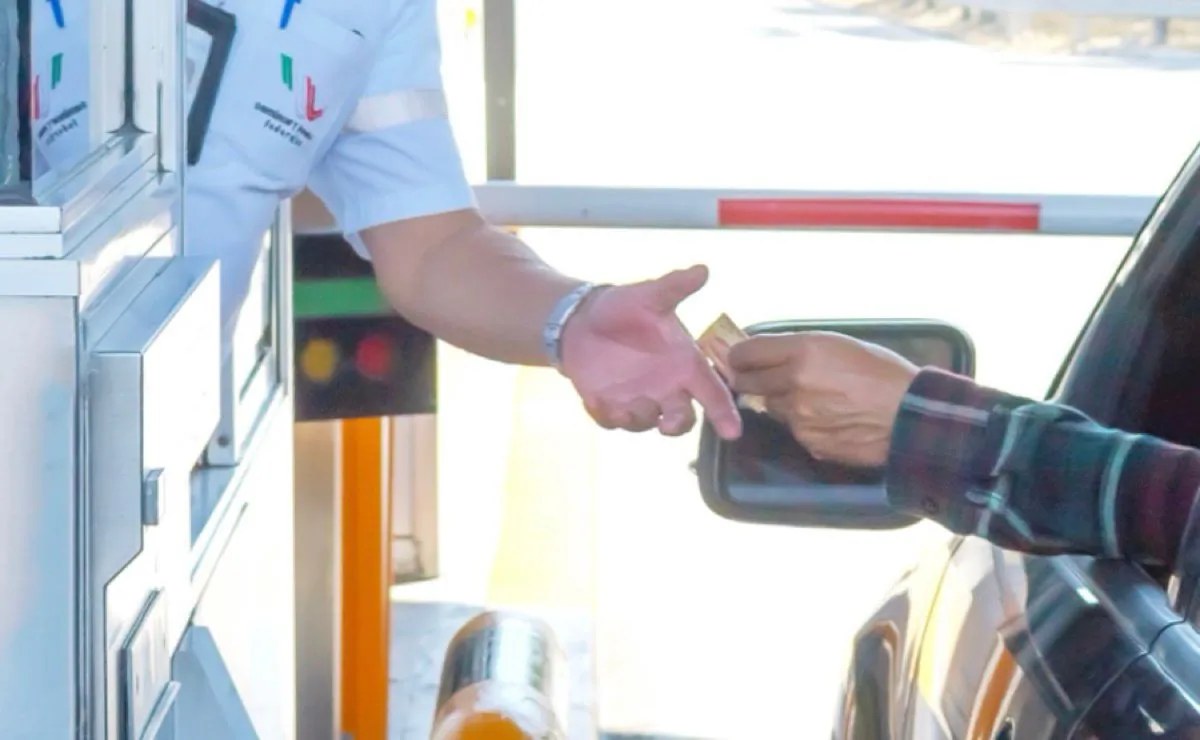
💳 Mexico has taken a concrete step towards cashless everyday payments. On Friday, 27 November, the finance ministry (SHCP) published agreement 177/2026 in the official gazette, the Diario Oficial de la Federación. It names petrol stations and toll motorway operators as the first strategic sectors of the new Digital Economy Law (Ley de Economía Digital). Both are to switch to a model in which only digital payment is accepted: debit or credit card, bank transfer, QR code or contactless NFC. 📅 Nothing changes for drivers right away. The agreement has been in force since 27 November, but the responsible authorities have 15 working days to issue the actual rules: conditions, obligations and deadlines for a gradual transition. Only those rules will say from when pumps and toll booths stop taking cash. ⛽ For petrol stations the government's main argument is the fight against the illegal fuel trade, because digital payments leave verifiable records. At toll booths, electronic systems are meant to cut queues and waiting times. President Claudia Sheinbaum stresses that cash is not being banned in general.
📜 **What the agreement says.** The document explicitly ties the choice of petrol stations to the illegal and irregular fuel trade, which in the ministry's words showed the need for more traceable payments to check whether transactions are legal. Verifiable payment records are described as a complement to steps the state has already taken, including tighter volume-control rules in the tax code and a new hydrocarbons sector law with its regulations. According to the text, digital payments should also strengthen supervision along the whole fuel supply chain, give customers more ways to pay and spare station operators the costs and risks of handling cash. That is how El Universal, which quotes the document, reports it.
🛣️ **Toll booths.** For the motorways the agreement names a different goal: faster traffic, shorter queues and less waiting through electronic toll systems. Much of the infrastructure exists already. According to figures compiled by the tech site Xataka México in September, the 129 toll plazas run by the state operator Capufe have electronic tolling on all 1,050 lanes; card terminals and QR codes are to be added so that drivers do not depend on a single method.
🏛️ **How it got here.** President Claudia Sheinbaum announced in March, at the 89th banking convention, that payments at petrol stations and toll booths should become fully digital. In September the government put forward the Digital Economy Law as part of the 2027 budget package. It lets the finance ministry name areas in which digital means may be the only accepted payment; until now Mexico's monetary law makes banknotes and coins legal tender that cannot be refused in general. José Antonio Peña Merino, head of the Agency for Digital Transformation and Telecommunications (ATDT), confirmed in October that the law would be applied to these two sectors first. On 24 September Sheinbaum said at her morning press conference that the aim was not to ban cash but to make digital payments easier; she linked the start at petrol stations to tax and security reasons, El Financiero reports.
📊 **How far Mexico has come.** Carlos Vallejo, a partner at the consultancy QUA Energy Consultores, told El Universal that about 70 per cent of fuel purchases in Mexico City are already paid digitally, and that 2027 will be a transition year in which customers get used to what will become the only way to pay. Nationally the gap is wider: central bank data cited by Xataka México show that about 80 per cent of purchases and payments are still made in cash. Pemex data put the number of petrol stations at 13,046 in mid-2026. The banking regulator CNBV counted 146.9 million debit cards and just over 47 million credit cards in the second quarter.
⚠️ **Open questions.** Critics point out that older people and rural communities use digital financial services far less, and that mobile coverage on some roads is patchy, which makes QR payments harder. The government wants to counter this with accounts that can be opened by phone and wider use of the central bank's free QR payment system CoDi, which Peña Merino says should later also cover electricity bills and payments to the tax authority SAT. How strict the transition deadlines will be depends on the rules that must now follow within 15 working days.