♻️ BASF sells its entire battery recycling business to Aachen start-up Cylib
In brief
- ♻️ Aachen start-up Cylib takes over all of BASF's battery recycling activities in Europe and North America, including two sites in Schwarzheide.
- The price is confidential; closing is expected in the second or third quarter of 2027, subject to regulatory approval.
- BASF will focus its battery-materials business on cathode materials.
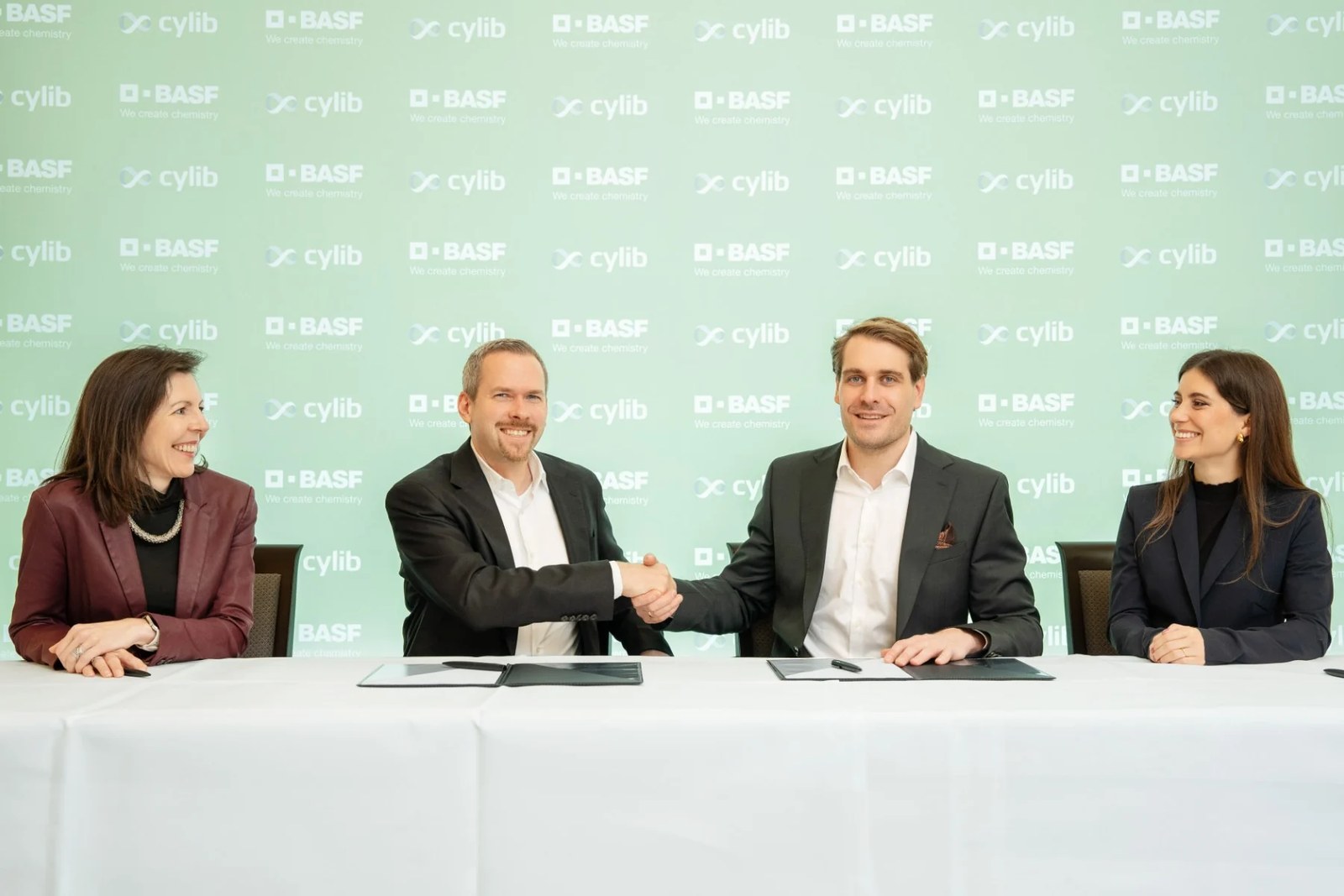
Cylib, a start-up from Aachen founded in 2022, is taking over the whole battery recycling business of the chemicals group BASF in Europe and North America. It covers customer and partner contracts, intellectual property and the two plants in Schwarzheide, Brandenburg. Both sides agreed not to disclose the price; closing is expected in the second or third quarter of 2027, pending regulatory approval. BASF is leaving recycling because it wants to align its battery-materials portfolio exclusively with cathode materials.
**What changes hands.** The deal includes the plant in Schwarzheide that turns used batteries into so-called black mass, the finely ground mixture from which metals can be recovered. BASF opened it in June 2025; it can process up to 15,000 tonnes of lithium-ion batteries and production scrap a year, which the company equates to about 40,000 electric-car batteries. Also included are a prototype plant for the chemical recovery of the metals, customers in the US and a network built with partners to collect, discharge and dismantle end-of-life batteries. How many BASF employees will move to Cylib is not yet known.
**Who Cylib is.** The company is a spin-off of RWTH Aachen University and uses a water-based process that, by its own account, recovers about 90 percent of the raw materials in lithium-ion batteries, with a focus on early lithium recovery and on graphite. So far the full process chain ran in a pilot plant in Aachen. In summer Cylib took over a site in Wernberg-Köblitz in Bavaria, whose mechanical preparation line handles up to 10,000 tonnes a year; the chemical stage is to follow at a larger plant under construction in Dormagen. In mid-November the company announced bank financing from Sparkasse Aachen and, days later, a stake from the Federal Agency for Disruptive Innovation (SPRIND). Co-founder Lilian Schwich told Handelsblatt: "The start-up days are over for us."
**Why BASF is selling.** BASF has invested about 550 million euros in battery materials in Schwarzheide in total; the federal and state governments subsidised the project with about 175 million euros, and Brandenburg added about 5 million euros for the recycling plant. The recycling was meant to supply lithium, nickel, cobalt and manganese to the neighbouring cathode plant, which stays with BASF. The group had already adjusted its investment plans in batteries to changed market conditions. It is also reviewing strategic options for the currently idled sites in Battle Creek, Michigan, and Harjavalta, Finland. Still open is how Cylib will combine the two processes and run them profitably; investor Herbert Mangesius called Cylib a "central consolidator of the Western battery recycling industry" to Handelsblatt.