🪧 Thousands march in San Juan against record power rates and the rising cost of living
In brief
- 🪧 Thousands protested on Friday in Puerto Rico's capital San Juan over record electricity rates, a rising cost of living and failing basic services.
- ⚡ Monthly power bills for some households recently rose about 18 percent to 271 US dollars; the rate is nearly double the US mainland average.
- 🛣️ Some 30 groups called the protest; demonstrators took over a main highway, which had to be closed.
- ⚖️ On Wednesday the Supreme Court narrowly approved cancelling the contract with grid operator Luma.
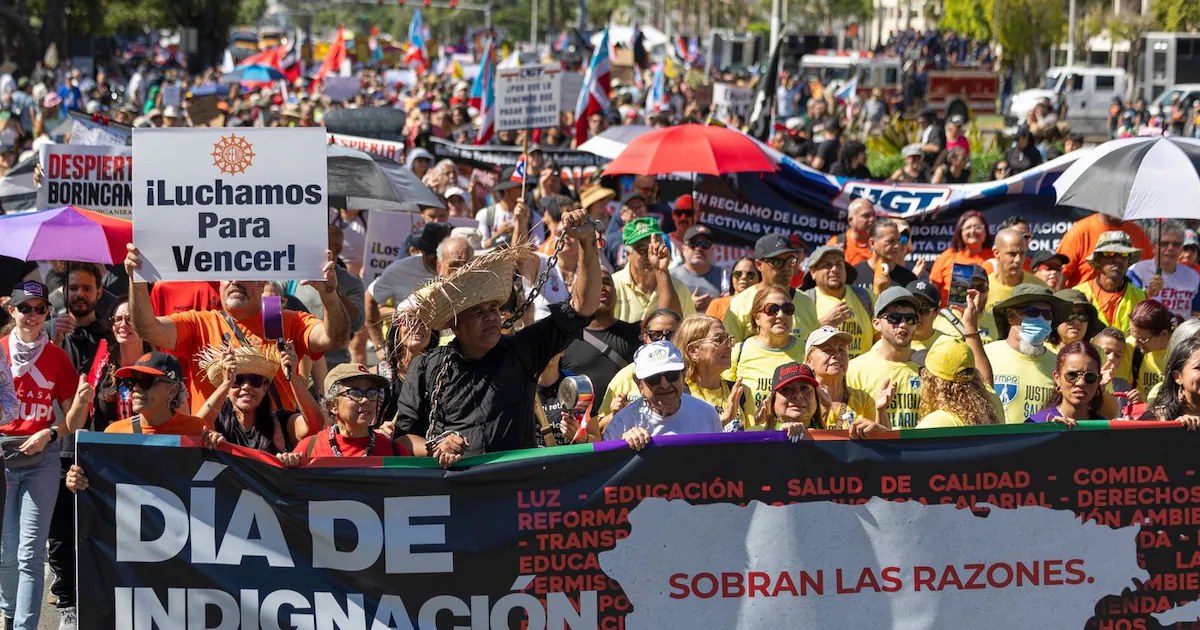
🪧 Thousands of people took to the streets of Puerto Rico's capital San Juan on Friday. They protested against record electricity rates, a sharply higher cost of living and unreliable power and water services. Some 30 organisations, from unions to religious groups, called the protest, which organisers named the "Day of National Outrage". Crowds gathered on Black Friday in front of the largest shopping mall in the Caribbean. According to the Associated Press it is one of the largest protests in the US territory since Governor Jenniffer González took office in January 2025. The crowd grew through the day, and demonstrators took over one of the island's main highways, which was then closed. ⚡ Power is the main trigger: monthly bills for some residential customers recently rose about 18 percent, from 229 to 271 US dollars. The new rate of 33.86 US cents per kilowatt-hour far exceeds the US mainland average of 18.3 cents. Many protesters directed their anger at Luma Energy, the private company that runs transmission and distribution. On Wednesday Puerto Rico's Supreme Court narrowly approved cancelling the government's contract with Luma; what follows is still open.
👵 Voices from the street. Retirees, university students and bus drivers were among the marchers, and hundreds arrived by bus from dozens of towns across the island. Radames Garcia Badillo, 74, told the AP that the outrage was "absolute": his neighbourhood loses power at least once a week for several hours, and because everything has become so expensive people buy less. For retirees, every dollar has to stretch. Veronica Ishtar, a 22-year-old visual arts student who sketched the protesters, said her neighbourhood lost power 12 times this week alone and that she struggles to pay her bill. "This is not normal, and it should not be normalized," she said.
📊 The numbers behind the anger. The mainland comparison comes from the US Energy Information Administration: households there pay an average of 18.3 cents per kilowatt-hour. Puerto Rico, at 33.86 cents, pays almost twice as much, although incomes on the island are well below those of most states. On top of that come outages that shape daily life.
🏗️ A grid that has not recovered. Hurricane Maria largely destroyed the island's grid in 2017, after years of poor maintenance and missing investment had already weakened it. Repairs are still going on. Luma Energy has run transmission and distribution since 2021 and has been the target of protests for years. Cancelling its contract was a campaign promise of Governor González, who welcomed Wednesday's court ruling. Puerto Rico's Association of Industries warned that the cancellation could discourage private investment and endanger projects under way. Many residents now wonder who will run the grid while the outages continue.
📣 What comes next. The organisers pledged to keep up the pressure; one demonstrator promised a "combative Christmas". Hernaliz Vázquez, executive director of Sierra Club Puerto Rico, said the rage now had to be channelled and the indignation of people who do not know what to do had to be organised. Eva Prados, an attorney, politician and human rights advocate, said power bills were unsustainable, businesses were closing and the government was not guaranteeing basic services. Puerto Rico, she said, is waiting for "concrete solutions".