🌋 Mariana Trench: geologists find traces of the deepest known explosive volcanic eruption
In brief
- 🌋 A robotic submersible recovered pyroclastic rock from up to 6,500 metres deep in the Mariana Trench, evidence of explosive eruptions.
- 🧭 The sites lie in the trench itself, not 200 to 300 kilometres away where volcanoes above subduction zones usually stand.
- 🔬 Lead author Robert Stern describes the find in Frontiers in Earth Science; the eruption, vents and age are still unknown.
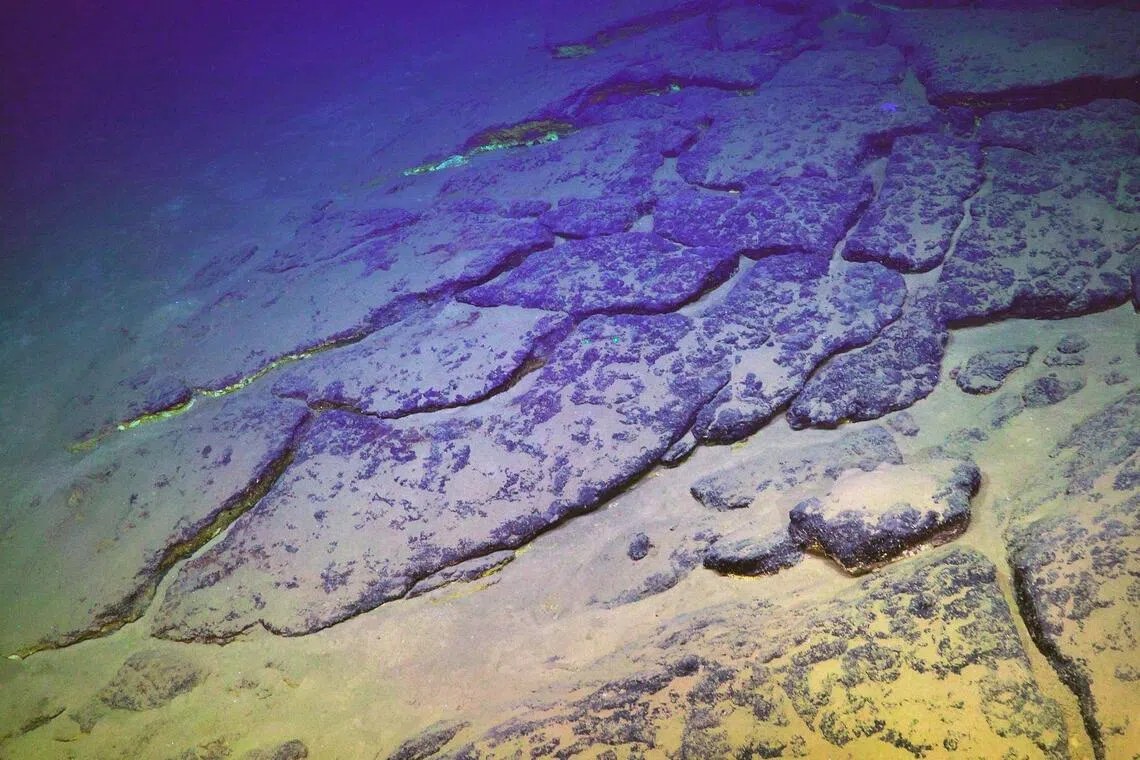
🌋 An international team of marine geologists has found evidence of the deepest known explosive volcanic eruption on Earth in the Mariana Trench in the western Pacific. Using the remotely operated vehicle Jason/Medea, the researchers studied the trench walls around the Challenger Deep, the deepest known point of the seabed. At depths of up to 6,500 metres they collected pyroclastic rocks: broken rock fragments and volcanic glass, the typical product of explosive eruptions. The news agency Reuters reported the find. "The key findings are the discovery of recent igneous activity near the trench," said lead author Robert Stern, professor emeritus at the University of Texas at Dallas and visiting researcher at UCLA. Pyroclastic rocks are known from eruptions on land and in the shallow ocean, he said, but not from such depths. The study appears in the journal Frontiers in Earth Science. 🧭 The location is striking too: above subduction zones, where one plate dives beneath another, large volcanoes usually stand 200 to 300 kilometres from the trench. These rocks lay in the trench itself. Nobody saw an eruption, the vents have not been found yet and the age of the rocks is unknown; in geological terms they appear recent.
🚢 Ten dives, 550 kilometres of forearc. The vehicle explored a 550-kilometre stretch of the so-called forearc, the part of the upper plate between the trench and the line of volcanoes on the seafloor. "The ROV was our principal research tool used for looking at and collecting samples from the seafloor down to 6,500 meters," Stern told Reuters. Of ten dives, seven went into the forearc around the Challenger Deep; three took place in shallower water near Guam because of the weather.
🧪 What the samples contain. The recovered rocks consist of broken pieces of rock and volcanic glass cemented in a relatively strong matrix of finer-grained material. "This is unmistakably the product of a volcanic eruption," Stern said. More detailed figures come from a poster abstract that students at the University of Texas at Dallas and Canada's Queen's University submitted together with Stern for a 2026 meeting of the Geological Society of America. According to it, the expedition, cruise TN438, took place in late 2024, and the team calls the area the Challenger Deep Forearc Segment. Of 164 mostly igneous samples, 40 were young pyroclastic rocks from 5 to 6.5 kilometres of water depth. In six samples studied so far, glass makes up roughly 70 per cent; the minerals are about 90 per cent plagioclase and about 5 per cent each olivine and pyroxene, pointing to basaltic glass. Thin sections show several brecciation events on top of each other, so-called "double breccias", for which the abstract says there is no scientific explanation yet.
⚙️ Why pressure changes everything. At this depth the hydrostatic pressure on the seabed is 50 to 65 megapascals, equivalent to 500 to 650 atmospheres. On land, expanding steam drives an explosion. Under this pressure, however, dissolved gases such as water and carbon dioxide remain supercritical fluids with a small volume instead of swelling into steam, the abstract explains. Explosive eruptions down there must therefore work differently from those near the surface. "The intense pressures at the depths that these submarine volcanoes erupted makes the eruption style different than it would be on land or in shallow water," Stern said. The team is now trying to work out how the explosions happened.
📏 Context. The Challenger Deep itself reaches about 10,935 metres, according to the Scripps Institution of Oceanography. Until now the deepest known eruption of any kind was one on the Mariana back-arc at about 4,500 metres, which researchers also described in Frontiers in Earth Science in 2018; that one, however, consisted of fresh lava flows, not an explosion. The new find lies much deeper and shows explosive activity where no volcanism was expected at all. Why the Challenger Deep is so deep remains unexplained, according to the team; young volcanism in the forearc is a new piece of that puzzle.
🔎 What remains open. The researchers saw no eruption and have not yet found the vents the material came from. The age of the rocks has not been determined either; chemical analyses of the samples are under way.
Sources
- Researchers discover deepest known underwater volcanic eruption (2018) (Frontiers)
- What Processes Formed Challenger Deep Forearc Segment Pyroclastic Breccias? (GSA 2026 abstract) (Geological Society of America)
- Hard Rock Geology above the Challenger Deep (Scripps Institution of Oceanography)
- Evidence of deepest explosive volcanic eruption found in Pacific's Mariana Trench (The Straits Times (Reuters))