🛰️ NASA halts science on the Perseverance rover and the Mars Odyssey orbiter after radio and reaction-wheel faults
In brief
- 📡 Perseverance: the main radio fell silent on 30 October, the backup transmits at half power; science is paused.
- 🔧 Odyssey: a reaction wheel stopped and the instruments are off; without wheels its fuel lasts only one to two months.
- 📅 NASA hopes the rover is back at the end of November and the orbiter in the last week of November.
🪐 NASA has paused science on two Mars missions, for different reasons. On the Perseverance rover, the main radio used to pass large amounts of data to orbiters stopped sending its signs of life on 30 October; onboard fault protection switched to the backup radio and put the rover into safe mode. It later turned out that the backup radio also transmits at only about half power. Both radios are idle, the rover talks directly to Earth at a much lower data rate, and science is on hold. On the Mars Odyssey orbiter, a reaction wheel stopped in early November and the science instruments are off. The team hopes to have both spacecraft back to work by the end of November. That is the status of NASA's update of 19 November.
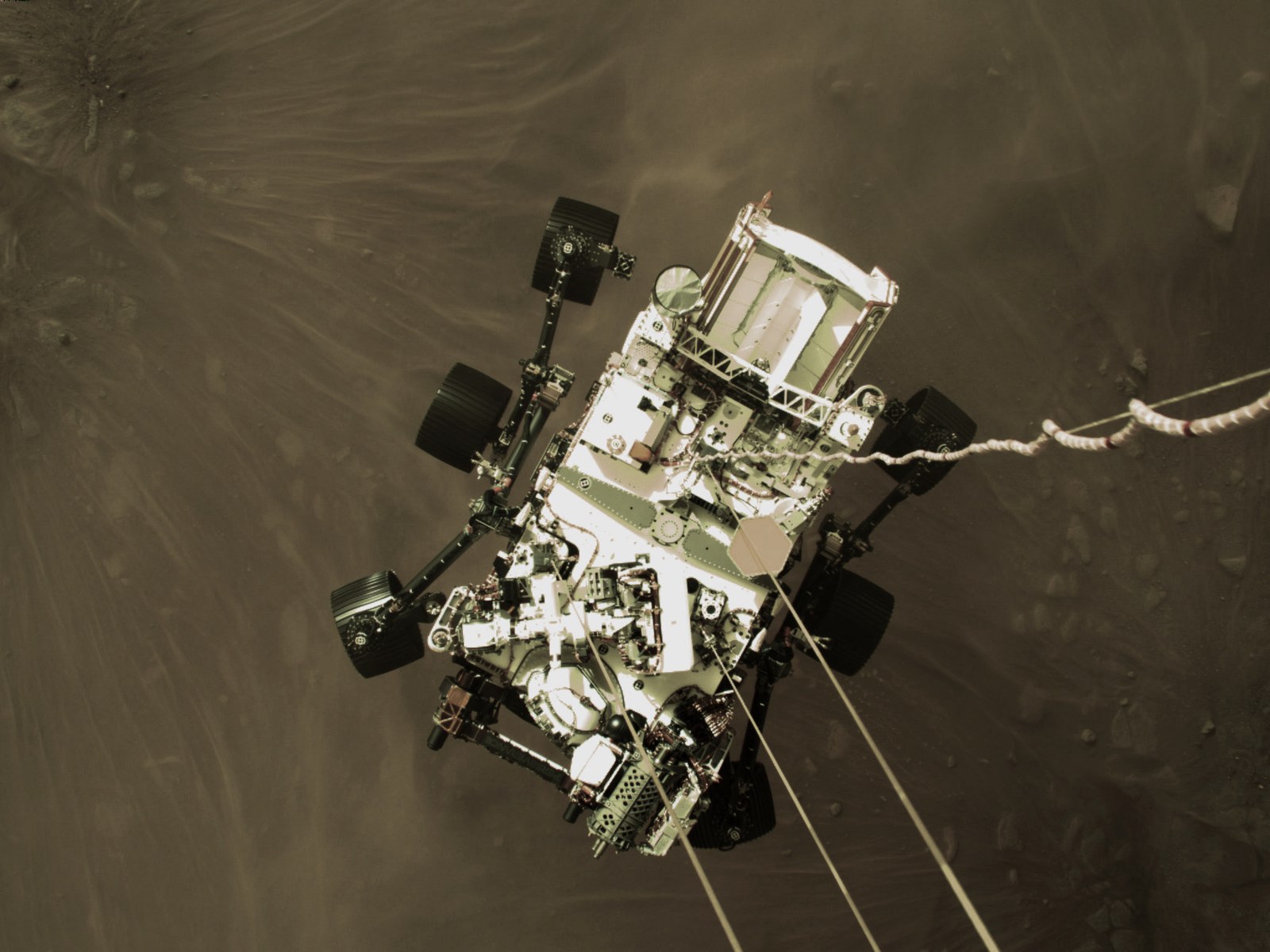
📡 **Perseverance in detail.** When the main radio stops sending regular electronic "heartbeats" to the main computer, fault protection powers it off and swaps to the duplicate backup. On 30 October, 25 heartbeats in a row were missing, about 100 seconds of silence. Project manager Steven Lee of the Jet Propulsion Laboratory explained that the main computer resets a counter with every ping and swaps after a set number of missing ones. After recovering the rover from safe mode, engineers found that the backup radio was transmitting at about half its expected power. The team has therefore stopped using both radios and communicates in X-band through the high-gain antenna with the Deep Space Network dishes. That direct link has a much lower data rate; to keep bandwidth free for diagnostic data, science and instrument operations are paused and the cameras capture no new images. The mission website shows no new raw images; according to Space.com, none have been uploaded since 7 November. A JPL team is looking at the backup radio first, then the primary.
🏁 **The timing.** Space.com notes that Perseverance set a new off-Earth driving distance record on 11 October, passing the 45.16 kilometres of the Opportunity rover; the fault appeared 19 days later. NASA calls the rover stable and in contact with its team.
🔧 **Odyssey in detail.** The orbiter was in safe mode from 4 to 6 November; engineers then found that one of its reaction wheels had stopped spinning. Odyssey originally had four, one failed in 2013, and at least three are needed to orient the spacecraft. Without wheels it must point itself with hydrazine thrusters, and after 25 years in Mars orbit it has fuel for only one to two months of that; the estimates are being refined. In one test the wheel moved when commanded, and further tests are to show whether it is recoverable. Odyssey is out of safe mode, but its instruments stay off. The aim is for the orbiter to return to science and relay work in the last week of November after the tests.
🌍 **Why it matters.** Odyssey launched in April 2001 and has orbited Mars since October 2001, on a mission designed to last about two and a half years. It has operated at Mars longer than any other spacecraft, made the first global maps of the surface's composition and, as part of the Mars Relay Network, relays data from surface missions, including the first post-landing images from Phoenix, Spirit, Opportunity and Curiosity. Whether the wheel can be saved and how long the missions stay idle remains open; NASA promises further updates. The sources read contain nothing newer than the 19 November update (heise reported on it on 23 November).