⚛️ European XFEL X-ray laser reliably produces flashes with a wavelength of just 0.04 nanometres
In brief
- 🔦 European XFEL and DESY generated stable laser flashes at 30 keV photon energy, about 0.04 nm.
- 📏 That is shorter than the spacing between atoms; 800 flashes a second, about 60% of the light reached the end of the 1 km beamline.
- When researchers can use this routinely is open.
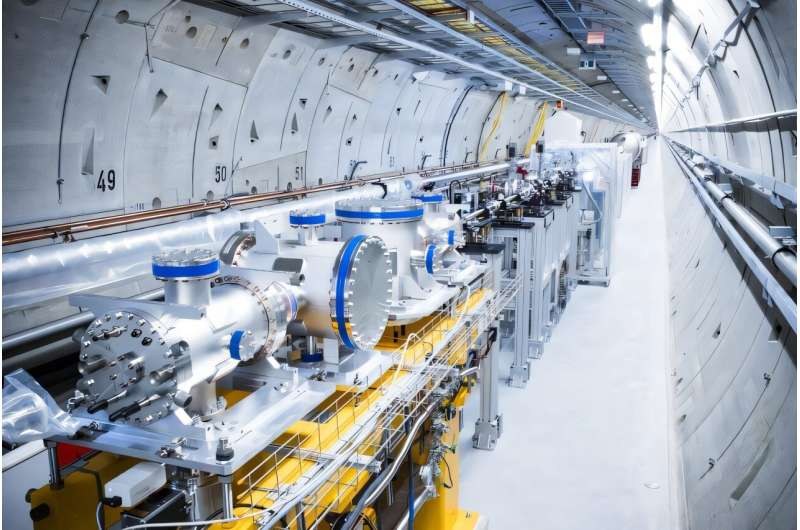
🧪 The European XFEL X-ray laser near Hamburg has reliably produced light flashes with a photon energy of 30,000 electronvolts (30 keV), equal to a wavelength of about 0.04 nanometres. That wavelength is far shorter than typical distances between neighbouring atoms in solids and allows studies with higher spatial resolution. The flashes came 800 times per second. They travelled along a beamline about one kilometre long; almost 60 percent of the light reached its end after passing the steering optics. The team from DESY and European XFEL reports the result in the journal Optica and raises its own record.
🧮 The result came from several years of simulations of electron-beam dynamics and accelerator tests. The team names high electron-beam quality, reached by optimising the accelerator, as the key enabling factor. Ye Chen of DESY led the accelerator side with Frank Brinker. The amount of light was measured with an X-ray gas monitor and other instruments along the beamline. Anders Madsen, lead scientist at the MID instrument at European XFEL, is a coauthor; such instruments are where short wavelengths are meant to enable experiments.
📄 The paper is titled "Fundamental-mode lasing at 30 keV in an X-ray free-electron laser".
Much stays open: the release gives no pulse energy, pulse duration or bandwidth and does not say when the shorter wavelengths will be routinely available to visiting scientists. It calls the result a significant step. Further work, for instance on superconducting undulators, runs separately. The "world record" refers to the facility's own earlier best.