💶 Qatar pledges €15 billion for German companies over five years during emir's state visit
In brief
- 💰 Qatar's emir announced €15bn of investment in Germany over the next five years during a state visit to Berlin.
- 🏭 Merz named artificial intelligence, semiconductors and aviation; the government also cites key industries and defence.
- 🛡️ The two countries also plan closer security and defence cooperation; projects are not yet named.
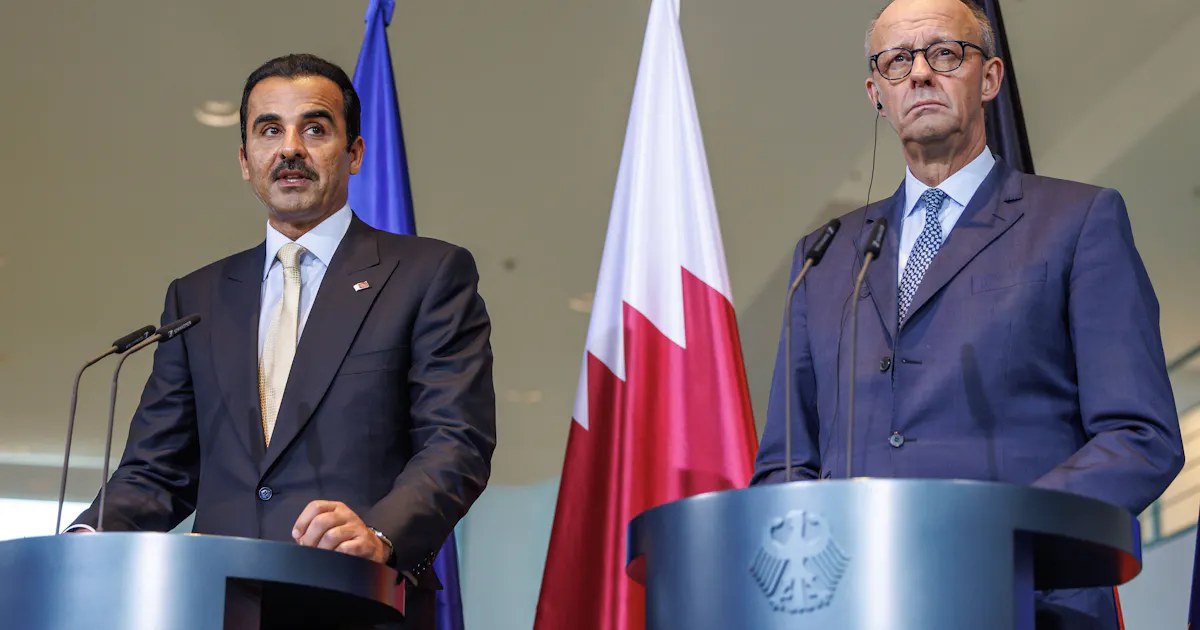
🏛️ During a state visit to Berlin on Friday 20 November, the emir of Qatar, Sheikh Tamim bin Hamad Al Thani, announced investments of €15 billion in Germany over the next five years. In a joint declaration signed at the Chancellery with Chancellor Friedrich Merz, the German government says the money is meant to help German companies grow and compete globally, above all in key industries and in defence. Merz named artificial intelligence, semiconductors and aviation as fields. The two countries also want to cooperate more closely in security and defence, including the defence industry and protection against cyber attacks. In total they signed five agreements and declarations of intent. Which projects the money will go to, and what Germany commits to in return, is not yet known.
The pledge follows a familiar pattern. In 2018 the same emir announced in Berlin that he would put ten billion euros into the German economy over the next five years, giving almost the same reason, trust in the strength of the German economy. This time he again spoke of trust in the strength of industry. The Berliner Zeitung asks what became of the earlier pledge: Qatar's chamber of commerce puts existing investments at more than €25 billion, the same mark that organisers of a German-Qatari business forum named in September 2018. Trade between the two countries stood at more than €1.8 billion in 2025, according to Qatari minister of state Ahmad bin Mohammed Al Sayed. Qatar already holds stakes in groups such as VW, Siemens, RWE, Deutsche Bank and Hapag-Lloyd. Sectors are not yet projects, the paper notes; Al Sayed said joint visions would be turned into concrete schemes.
The cooperation also has a geopolitical side. Qatar was the target of Iranian attacks on its liquefied natural gas facilities, and according to the joint declaration President Frank-Walter Steinmeier reaffirmed Germany's solidarity “in view of the unjustified attacks by Iran”. At the same time Qatar mediates in the deadlocked conflict between the United States and Iran, which Merz praised. He also called the reconstruction of Syria a shared priority. The emir said peace and security can only be reached through a political agreement. He invited Merz to the Doha Forum in early December; the talks also touched on a concept modelled on the CSCE that is meant to build trust and create a regional security architecture in the Middle East. In the evening Steinmeier hosted a state banquet.
Gas is about money too. According to an adviser to the emir, Ahmed Ghaith Al Kuwari, Qatar has pledged since the 2022 energy crisis to supply up to two million tonnes of liquefied gas a year under contracts running at least 15 years. A joint declaration of intent on energy cooperation has each side encourage economic players to consider investments in the energy sector.
Criticism comes from several organisations that called for nationwide peaceful protests against the state visit on Friday and Saturday. The Society for Threatened Peoples urged Merz to raise human rights violations openly. Stephan Roll of the Berlin think tank SWP examined in a study from February 2026 how Saudi Arabia, the United Arab Emirates and Qatar use their sovereign funds to gain influence; he points to conflicts of interest with Germany and Europe, for example in climate negotiations, in dealing with Russia and in the war in Sudan.