⚛️ IAEA: North Korea has expanded its uranium enrichment plant at Yongbyon
In brief
- 🏭 IAEA chief Rafael Grossi said on November 18 that the original Yongbyon plant has been extended with a new annex.
- 📅 Construction began in mid-September and the annex was externally complete by late October; Grossi gave no details.
- 🛰️ The agency has had no access since 2009 and relies on satellite imagery.
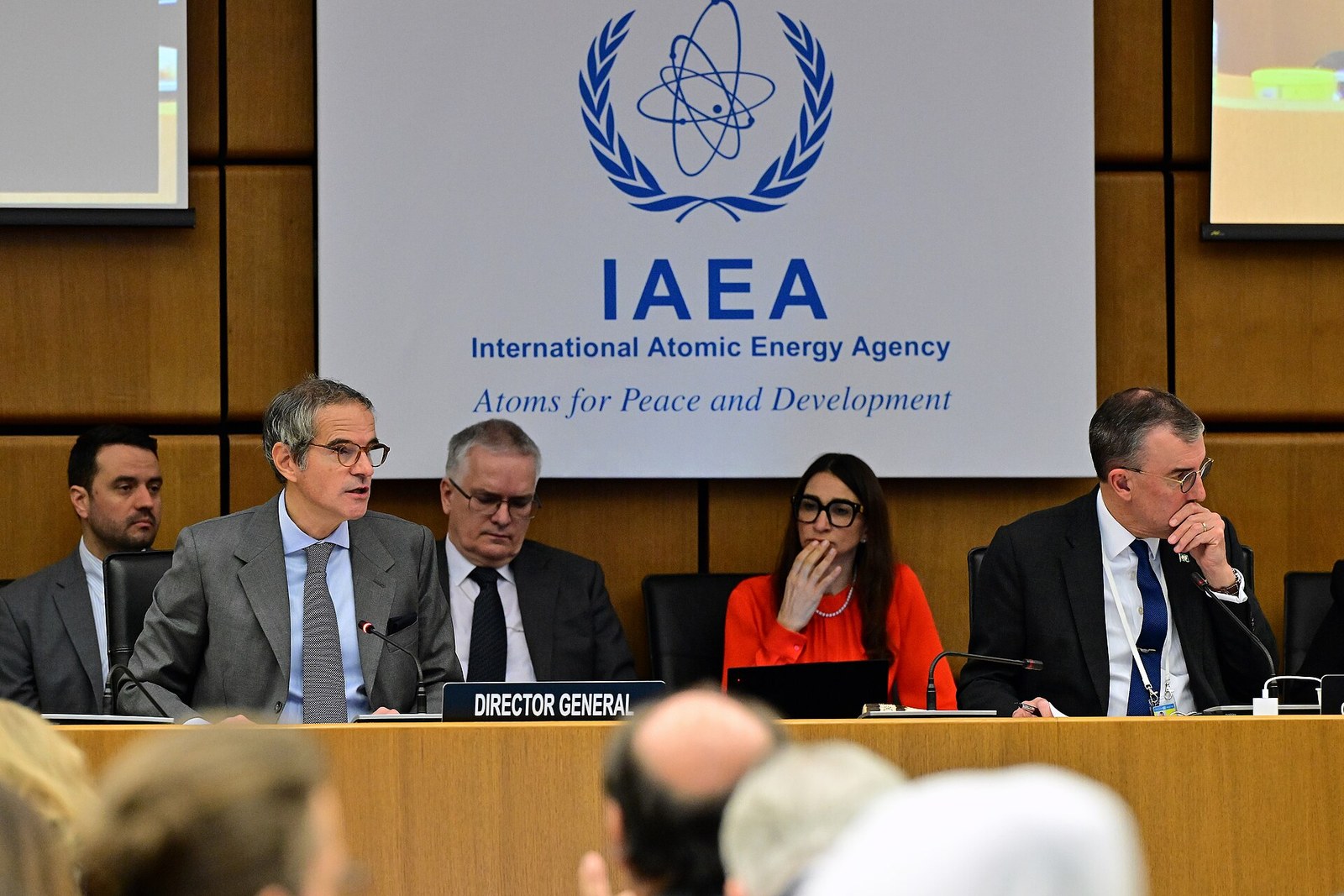
🌍 North Korea is expanding its uranium enrichment further. International Atomic Energy Agency (IAEA) Director General Rafael Grossi told the agency's Board of Governors on November 18 that since mid-September 2026 a further extension to the original enrichment facility at Yongbyon has been under construction, and that the new annex was externally complete by late October. Grossi gave no further details and called the program's expansion "extremely worrying." The IAEA has been barred from North Korea since its inspectors were expelled in 2009 and monitors the country mainly by satellite. The statement comes as the APEC summit takes place in China, where President Donald Trump has floated meeting leader Kim Jong Un; Secretary of State Marco Rubio said no meeting is scheduled.
🏛️ Grossi spoke at the quarterly meeting of the IAEA's Board of Governors about the ongoing operation of the enrichment facilities at Yongbyon and Kangson. Kangson lies just southwest of Pyongyang, Yongbyon farther north of the capital. "Since mid-September 2026, a further extension to the original Yongbyon enrichment facility has been under construction with the new extension externally complete by late October 2026," he said. The continued expansion of the program remains "extremely worrying," he added. He did not say whether the annex is already operating.
🔬 Enriched uranium is used as fuel for nuclear power plants and for the reactors of warships and submarines, but it can also be used in nuclear weapons. Bombs can be built from either highly enriched uranium or weapons-grade plutonium, and Yongbyon has facilities to produce both. North Korea calls the complex "the heart" of its nuclear program. Because it has no access, the IAEA watches the sites through satellite imagery and open-source information. In April Grossi had already confirmed "a rapid increase" in activity, and in September the IAEA's General Conference passed resolutions on concerns about the North Korean program.
🕰️ North Korea revealed its first covert enrichment plant in September 2024; leader Kim Jong Un called then for "exponentially" expanding the arsenal. Foreign Minister Choe Son Hui said last week that nuclear weapons are "the strongest guarantee" of the country's sovereignty and rejected a G7 demand for complete disarmament. Kim Yo Jong, Kim's sister, has said the country's nuclear-armed status is "absolute" and called those expecting denuclearization "idiots." According to DW the Iran war reinforced North Korea's view that it needs nuclear weapons to defend itself against the US and South Korea.
🧭 The timing is politically delicate. Trump traveled to China for the APEC summit and hinted at a meeting with Kim. US Secretary of State Marco Rubio later said no meeting has been scheduled but that the president is prepared to begin a new dialogue with Pyongyang. North Korean state media have so far released only images of Kim at a ski resort and Mount Paektu and made no mention of a trip to Shenzhen.