⚡ Venezuela and Siemens Energy launch alliance to repair the failing power grid
In brief
- 🤝 Two documents opening the cooperation were signed in Caracas on Wednesday.
- 🔌 They cover the national grid and the oil industry's own power generation.
- 🏢 Siemens Energy chief Christian Bruch attended in person.
- ⚖️ Venezuela recently opened its power sector to private and foreign investors.
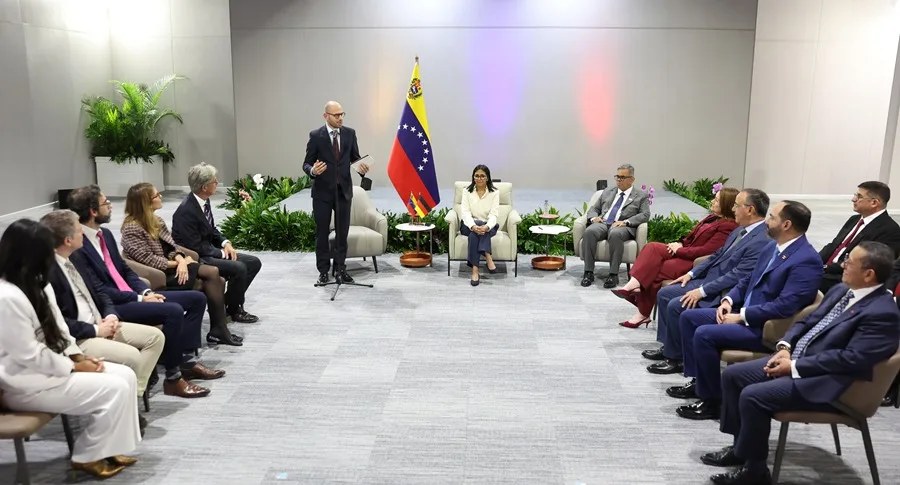
⚡ Venezuela and Germany's Siemens Energy formally started an alliance on Wednesday to restore the country's battered electricity sector. Two records were signed in Caracas in the presence of acting President Delcy Rodríguez and the company's chief executive, Christian Bruch. The partners on the Venezuelan side are the state power company Corpoelec and the state oil firm PDVSA. 🛠️ Rodríguez said work would begin right away. The country has struggled with an electricity crisis for more than a decade, and blackouts have increased over the past year, prompting protests in several states. The reports give no figures, timetable or scope of work.
📝 **The two records.** One is titled a record of the start and realization of the strategic alliance to recover the oil industry's electricity system. The other concerns rehabilitation and maintenance of the national network. The news agency EFE based its account of the signing on a broadcast by state channel VTV.
🗣️ **What the signatories said.** Bruch, global chief executive of Siemens Energy, said the alliance aims to improve the system together with Corpoelec and PDVSA so that there is “more progress” in the country. Rodríguez said that because of sanctions, Venezuela had been unable for more than ten years to obtain parts and equipment for the sector. Those restrictions were eased this year amid a close relationship with the United States. According to Infobae, she also noted that Siemens has been in Venezuela for more than 70 years and that much of the thermal power fleet is Siemens equipment, calling the signing historic. Public Works Minister Juan José Ramírez used the same word, saying the country would gain access to new technology and aims for the system's complete stabilization.
⚖️ **The legal framework.** The parliament, controlled by the ruling Chavista camp, approved a reform of the electricity law on November 10; Infobae reports that Rodríguez enacted it on November 19. Under the law, power generation may be carried out by the state operator as well as by mixed and private companies that hold the required authorization. Concessions for private firms can run for up to 25 years. The rules also oblige oil companies to guarantee a continuous and reliable power supply for their core activities, through self-generation, cogeneration or contracts with third parties. The reform is one of several legal changes opening strategic sectors to foreign capital.
🔦 **A dispute over causes.** The opposition and experts blame the failures on corruption and poor maintenance. The government points instead to sanctions, weather events and alleged sabotage. The crisis has deepened recently as demand grows and the oil sector opens up. Hugo Chávez, then president, nationalized the power sector in 2007.