🧮 Anthropic mathematician claims AI-assisted proof of the Riemann hypothesis; first outside check of the code passes
In brief
- 💬 Levent Alpöge of Anthropic says he and Claude proved the (generalized) Riemann hypothesis.
- 🧪 The proof exists as Lean code; a first outside check by Andrew Sutherland found all 175,000 files compile.
- 📄 Experts call it so far a claim: no human-readable version exists (it would run to over 250,000 pages).
🧠 On Friday 20 November Levent Alpöge, a mathematician at the AI company Anthropic, published a statement saying that “working with Claude” he has found a proof of the Riemann hypothesis, the best-known unsolved problem in mathematics. Precisely, it is the generalized Riemann hypothesis, a stronger statement. The proof is written in Lean, a programming language in which a computer checks every logical step. No version readable by humans exists; written out, it would fill more than 250,000 pages. A first outside check on Friday evening by MIT mathematician Andrew Sutherland found that all 175,000 files of the Lean code compile, rely only on the usual foundational assumptions of mathematics and prove the intended statement. Experts stress that it is still a claim: specialists must confirm the formalization and eventually understand the argument. Anthropic had gone public on the stock market the day before.
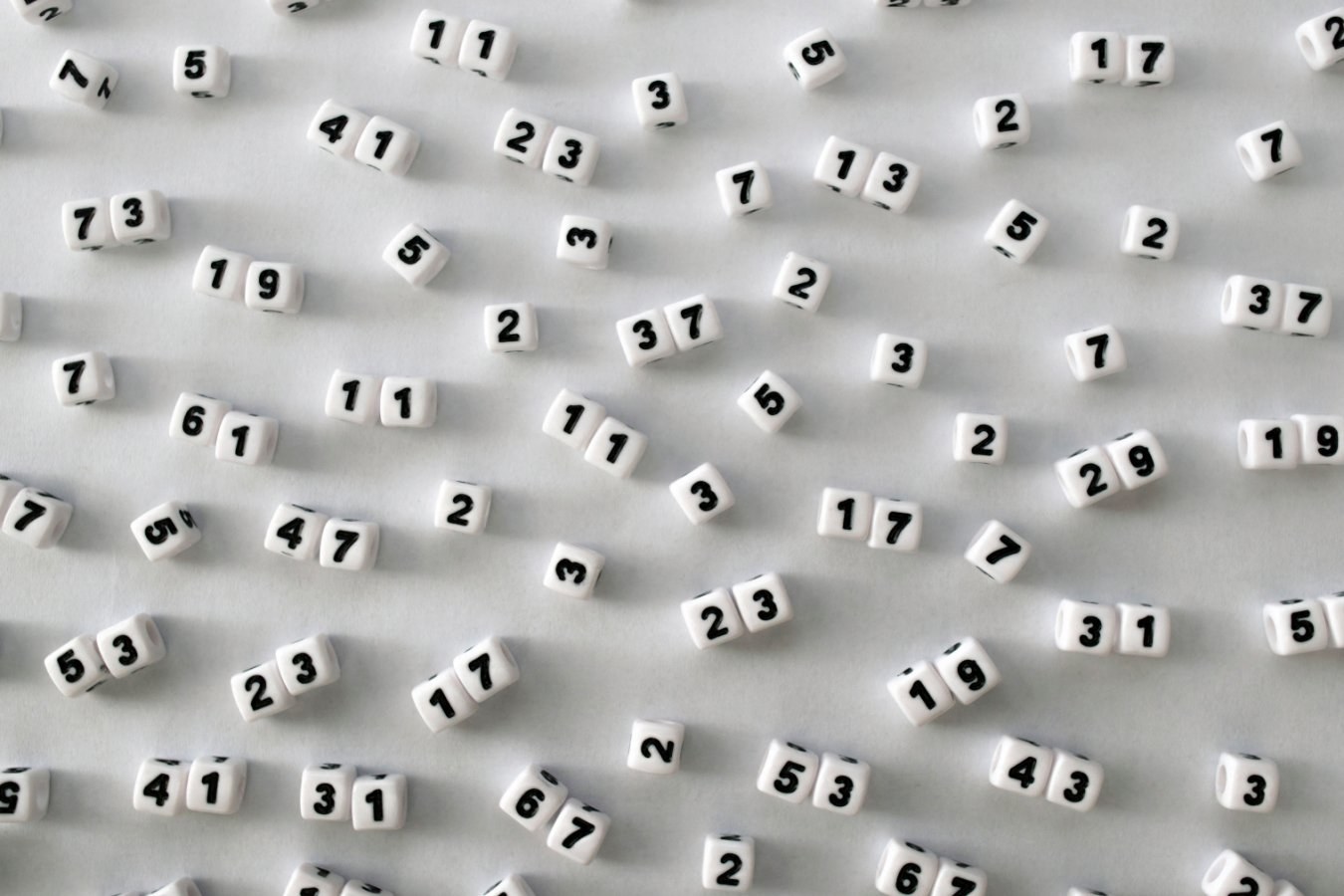
📜 The Riemann hypothesis was proposed by Bernhard Riemann in 1859 and has stood unsolved for 167 years. It claims that the distribution of the prime numbers, which looks random, follows a deeper order, and it revolves around the Riemann zeta function. It is one of the Clay Mathematics Institute's Millennium Prize problems, with $1 million on offer for an accepted solution. The generalized version covers further properties of the primes. Many results hold so far only on the assumption that it is true; if it were proved, they would suddenly be theorems, says James McKee of Royal Holloway. Most mathematicians believed it was true, McKee says; what is exciting is the rapid progress towards automated proofs.
🖥️ Alpöge posted a four-page PDF and the formalized version, but not the argument in human language. The argument is “incredibly long at the moment”, he writes, though he expects it to be simplified massively, “probably immediately”. He considers it inappropriate to post an unreadable mass of text. The page count is an estimate by number theorist Thomas Bloom of the University of Manchester. According to the FAZ, the latest published Claude version came out on 9 November. Kevin Buzzard of Imperial College first said: “Let's see if it compiles first.” Sutherland did that on the evening of 20 November on his website, according to the FAZ: he found no logical errors, gaps or inconsistencies.
🔬 What remains is checking the substance. James Davenport of the University of Bath called it “merely a claim” for now: experts must verify that the code compiles in full, contains no unproved intermediate steps and matches the established formulation. Even then, one would first know that the statement is true, not why. James Maynard of the University of Oxford, a Fields medallist, thinks the proof is probably correct and, if it holds, a historic milestone beyond the recent AI breakthroughs. Thomas Prellberg of Queen Mary University of London is optimistic but points to earlier AI success claims, several of which OpenAI had to withdraw.
🔢 Alpöge was involved in two striking AI results this summer. At the end of July he announced the refutation of the Jacobian conjecture, with a counterexample only 216 characters long. In September OpenAI announced a solution of the Navier-Stokes problem after Alpöge and Tristan Buckmaster of New York University had reported three stepping stones to it hours earlier; OpenAI's announcement was controversial. In mid-October OpenAI reported progress on a sub-problem of the Riemann hypothesis, and Anthropic had announced earlier work in August that fell short of a full proof.
📈 On the timing, Alpöge writes that there was a “constraint to respect”, which he settled after speaking to Anthropic CEO Dario Amodei; the IPO was on 19 November. Der Standard writes that his chronology of how the proof came about dispels the suspicion that the release was tied to the share price. There is a further twist: Ravi Vakil, president of the American Mathematical Society, published on a blog the 940-page manuscript of Alessandro Masullo of Stanford University, who is said to have found a proof months ago without AI. Brian Conrad has been reviewing it for months; nobody has confirmed it so far, and other mathematicians have voiced doubts.
Sources
- Anthropic-Mathematiker behauptet, das größte offene Problem der Mathematik gelöst zu haben (Der Standard)
- Jahrtausend-Problem: Anthropic-Forscher will Riemannsche Vermutung bewiesen haben (Frankfurter Allgemeine Zeitung)
- Anthropic mathematician claims AI-assisted proof of the Riemann hypothesis (New Scientist)