🔒 US Treasury subdomains taken over for $3 each via dangling AWS IP records
In brief
- 🔒 Intruder took over five US Treasury subdomains that pointed to released AWS addresses.
- 💲 Cost: about $3 per valid takeover; 28 takeovers in 48 hours.
- 🛠️ Hits were reported through bug bounty programmes and fixed; AWS plans no change.
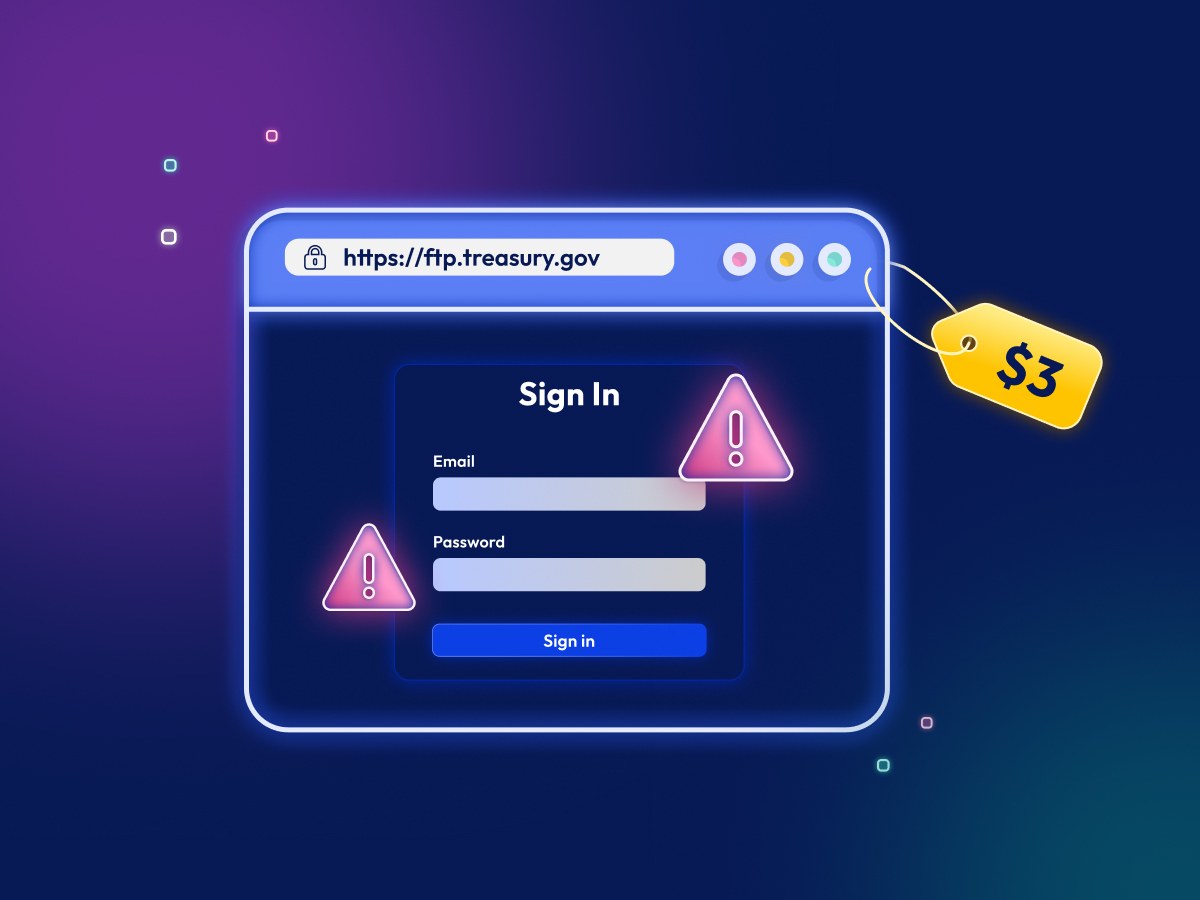
The security firm [Intruder](https://www.intruder.io) has shown that dangling DNS records can still be exploited in 2026: if a record points to an Amazon Web Services Elastic IP that its owner has released, an attacker can land on it by repeatedly allocating and releasing addresses. According to Intruder, each valid takeover cost about $3. Among them were five US Treasury subdomains. 🔒 The findings went to bug bounty programmes and were fixed; AWS says it will not change the process.
**How the test ran.** Intruder built a target list from public bug bounty scopes: wildcard entries came from the bbscope API, subfinder expanded them into subdomains, and every A record outside private ranges went into a database. 🧪 A new AWS account may hold five Elastic IPs per region; the researchers had the limit raised automatically to 25 per region. A Python script allocated 25 addresses, kept any that matched a target record and released the rest.
**Rotating through regions.** Allocating again in the same region often returned the same address, as AWS seems to hand out recently released addresses first. The script therefore rotated regions and came back later. In 48 hours it cycled through 450,000 unique addresses, about 0.56 percent of the roughly 80 million published IPv4 addresses. That produced 28 live takeovers, almost half at government bodies; the most notable were five US Treasury subdomains. Other hits were at a university, two government bodies, a financial services company and a large networking vendor, the rest at Intruder customers.
**What an attacker could do.** Whoever holds the IP decides what the subdomain serves. Because government sites signal trust with .gov and HTTPS, a taken-over page looks genuine, and an attacker can even obtain a valid TLS certificate. Phishing, harvesting credentials from old automations and, where cookies are set with Domain=treasury.gov, session theft in other applications of the domain are possible. 🛡️
**The AWS ban.** After 48 hours Amazon issued an abuse warning that blocked allocating and associating Elastic IPs in all regions. The addresses could still be transferred to a new account in the same organisation, which could be created without fresh verification. Intruder concluded that a banned attacker could simply use another account, and stopped the test.
**Maths and limits.** At about 9,400 addresses per hour one account would need roughly a year for the whole space, ten accounts about five weeks, Intruder says. The reachable space is realistically smaller since many addresses are auto-assigned or held long term. A targeted attacker faces a smaller haystack, about 2.2 million addresses for a region such as eu-west-2, but searches more slowly because the same addresses keep returning.
**Response and timeline.** The findings went to the bug bounty programmes on 25 August; affected Intruder customers were told directly. AWS replied on 8 October and confirmed on 17 November that it will change nothing: it says the takeover depends on customers' DNS records rather than a flaw in its service, and that rapid allocate-and-release counts as a policy violation with controls against it. Intruder proposed a monthly cap on Elastic IPs and bans at organisation level and considers the weakness still open. Advice for everyone: review DNS records and remove dangling ones. 🧹