⚛️ EPFL theory explains how fusion plasma flips into high confinement: ITER needs at least 43 megawatts
In brief
- ⚛️ EPFL's Swiss Plasma Center presents a theory for a 40-year-old puzzle: how tokamak plasma jumps into the better-confined H-mode.
- 🌡️ It predicts the heating power needed: at least 43 MW for ITER, about 26 MW for SPARC.
- 🧪 So far it rests on simulations compared with data from existing tokamaks, published in Physical Review Letters.
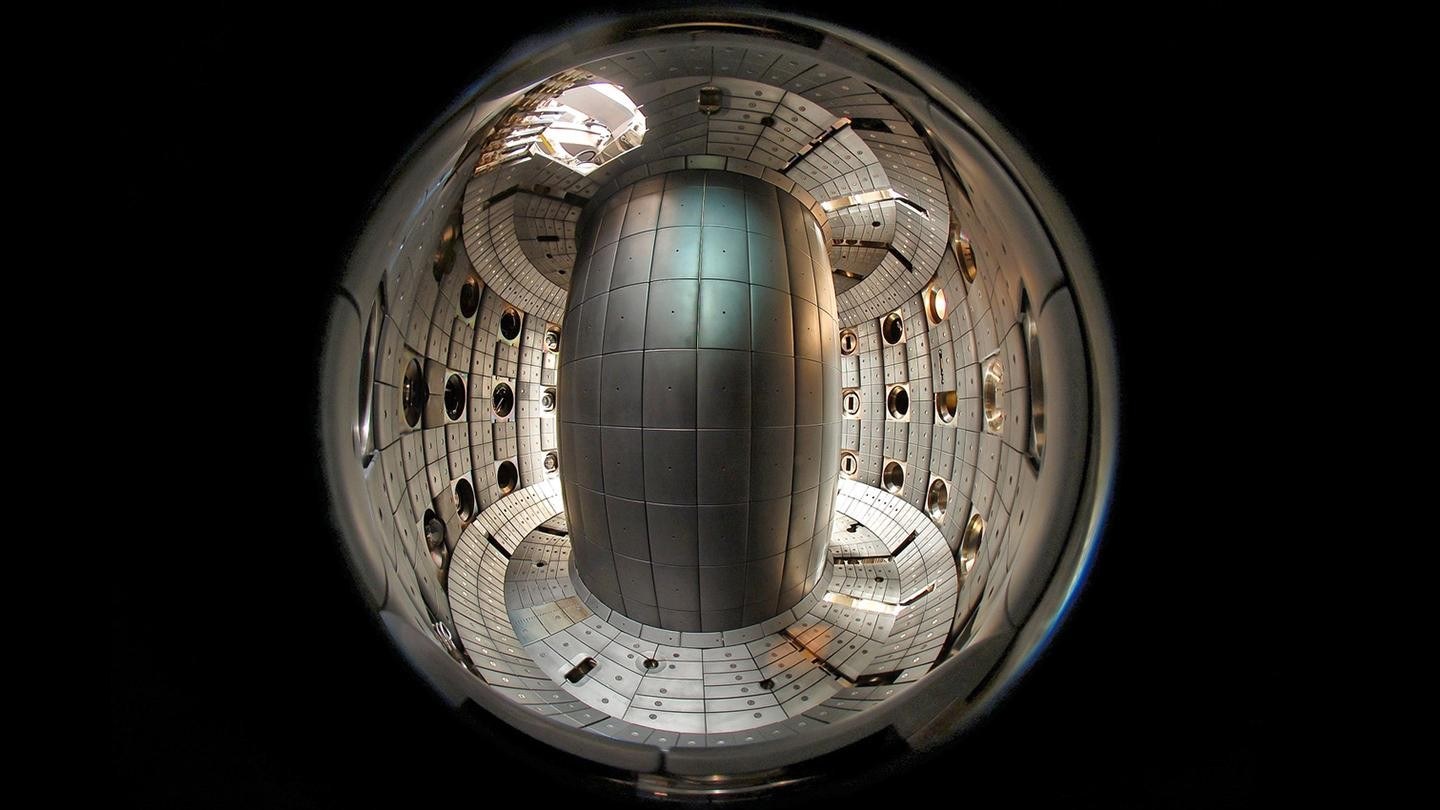
Researchers at EPFL's Swiss Plasma Center have developed a theory that explains how plasma in a tokamak, the doughnut-shaped magnetic chamber used to try to make fusion energy, suddenly switches to a state of much better energy confinement. This “H-mode” was discovered in 1982, but there was no single theory for how the heating power needed to trigger it depends on plasma density and on the direction of the magnetic field. ⚛️ The team, led by doctoral assistant Brenno De Lucca, found that turbulence in the plasma's outer region generates flows that move at different speeds and suppress the turbulence itself. Applied to future machines, the theory predicts that ITER needs at least 43 megawatts of heating, below its planned 73 megawatts, while SPARC needs about 26 megawatts, close to its planned 25 megawatts and so with little room for error. 🌡️ The work was published in Physical Review Letters on 13 November; it is theory and simulation checked against existing machines, not a test on ITER or SPARC.
🌀 **Why the switch matters.** In a tokamak a gas is heated to extreme temperatures until it becomes plasma. Turbulence carries heat outward and makes it hard to hold the conditions fusion needs. Above a threshold of heating power, turbulence at the edge collapses and energy stays in the plasma about twice as long. That is exactly the state future machines such as ITER, the largest international fusion experiment, in France, rely on.
❓ **What was missing.** The threshold does not change smoothly with density, and it is usually lower when the magnetic effect on the ions points from the core toward the so-called X-point at the edge of the magnetic figure. The jargon calls that the favourable configuration. No existing theory explained both at once.
💻 **How the team went about it.** The researchers simulated in three dimensions how plasma in a tokamak behaves as heating power rises. They identified the physical processes behind the transition, built a mathematical model and compared its predictions with measurements from existing tokamaks. According to the preprint, turbulence from electromagnetic drift waves spontaneously creates a sheared flow that suppresses heat transport. That the threshold depends on the direction of the magnetic field was reproduced in simulations for the first time; the cause is particle collisions that break time-reversal symmetry.
📐 **The formulas.** The equations describe how the threshold power changes with density and other operating conditions. They explain why the power requirement rises with density in one regime and falls in another, so that there is a density at which the heating need is lowest. According to the preprint they match or beat the accuracy of existing empirical rules of thumb.
🔢 **ITER and SPARC in detail.** EPFL gives at least 43 megawatts for ITER against 73 planned, and 26 megawatts for SPARC, the compact high-field tokamak of the US company Commonwealth Fusion Systems, against 25 planned. The preprint (version of 26 October) gives 44 ± 11 megawatts for ITER and 27 ± 7 megawatts for SPARC, with uncertainties taken from the fit errors. Even the upper end for ITER, 55 megawatts, would stay below the 73; the range for SPARC, by contrast, reaches past the planned 25 megawatts.
⚠️ **Limits.** In EPFL's own TCV tokamak, the measured minimum power and density were above the predicted values, possibly because radiative losses were not subtracted and because of the heating method used. The predicted dependence on isotope mass is weaker than the observed trend. The work provides, EPFL says, a physics-based criterion for estimating the operating requirements of future devices; whether the prediction holds will only show on the future machines. The authors are Brenno De Lucca, Paolo Ricci, Benoît Labit, Davide Mancini, Louis Stenger and Zeno Tecchiolli (Physical Review Letters 137, 205101). It was funded by EUROfusion, the Swiss State Secretariat for Education, Research and Innovation and the Swiss National Science Foundation; the computing was done at the Swiss National Supercomputing Centre CSCS.