🌍 Economist Igor Mantsurov: Ukraine cannot win the air war by interception alone
In brief
- 📰 Igor G. Mantsurov of the Institute for System Statistical Studies argues in Kyiv Post that Russia builds more ballistic missiles than the West makes interceptors.
- 🔢 He puts Russian output at up to 110 ballistic missiles a month against 65 to 80 Western anti-ballistic interceptors.
- 💶 He wants four protected lines in Ukraine's 2027 budget, financed from the EU loan, with state missile testing.
- 🗳️ Parliament votes on the budget this week; these are the author's own calculations.
📰 In an opinion piece for Kyiv Post, Igor G. Mantsurov, director of the Institute for System Statistical Studies (ISSS), argues that Ukraine cannot beat Russian missiles by intercepting them. By his estimate Russia makes up to 110 ballistic missiles a month, while the US and Europe together produce 65 to 80 anti-ballistic interceptors, and expanded Western production is planned only for 2028-30. His conclusion is that Ukraine must reduce the number of launches by striking Russia's production chain and must test its own missiles properly. He wants the 2027 budget, voted on this week, to carry protected lines for this. All figures are his calculations from the ISSS database.
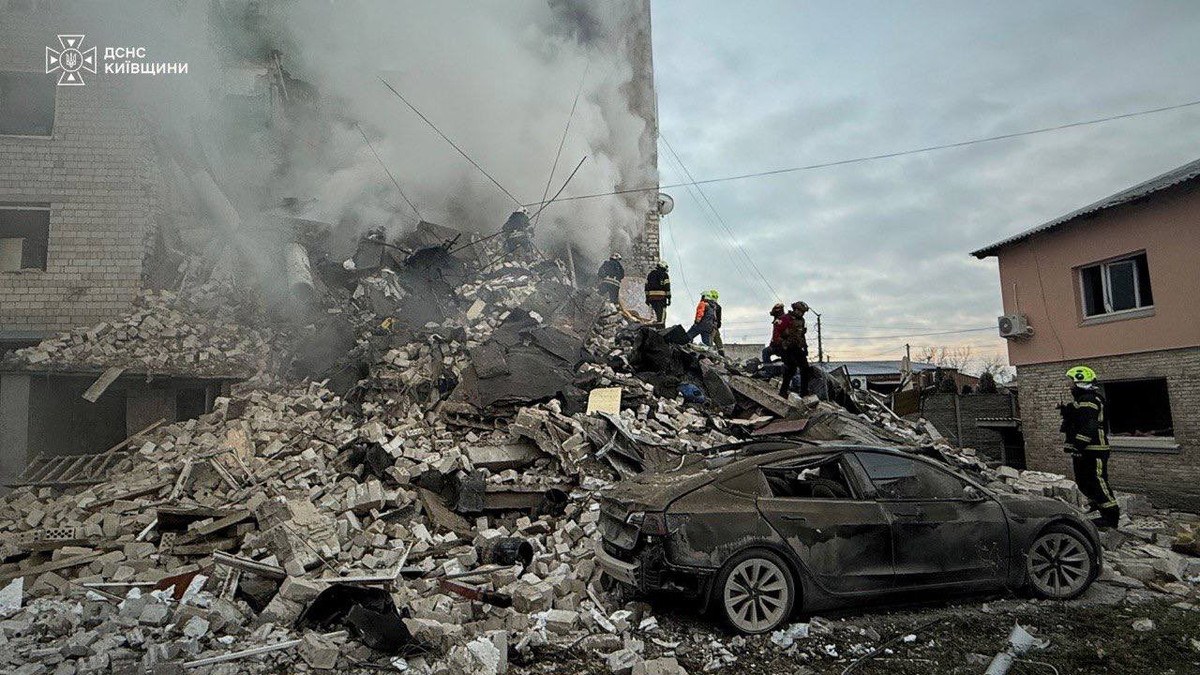
Mantsurov starts from one night: on 24 May 2026 Russia launched 90 missiles and 600 drones, which Ukrainian military intelligence (HUR) estimated cost Moscow about $361 million, less than 0.2% of its annual defense spending. In the first half of 2026, he writes, strikes killed at least 1,396 civilians and wounded 7,978, and direct damage this year exceeds $10 billion.
**The arithmetic of interception.** According to ISSS estimates built from more than 40 assessments, Russia produces 200 to 260 cruise and ballistic missiles a month and holds about 700 ballistic missiles. Ukrainian intelligence expects 440 to 720 missiles a month in 2027; his own estimate is 350 to 400 because of bottlenecks in propellant, electronics, machine tools and skilled labor. Stopping one Iskander-M, about $3 million, takes two PAC-3 MSE interceptors at $4.6 million each, so $9.2 million. In October Russia fired about 150 ballistic missiles; intercepting that pace for a year would need roughly 3,600 PAC-3 MSEs, while Lockheed Martin delivered 620 in 2025 to all customers. Cheap interceptor drones, about $3,000 against a $50,000 Shahed, stay an advantage, but he says they are of limited use against the more than 4,000 jet-powered Geran-4/5 drones Russia used in October and do not stop ballistic missiles.
**Testing and cost per target.** Mantsurov says the state does not know with certainty which of its missiles work: there is no publicly verified data on most domestic strike systems and no state comparative testing, and serial production rests largely on manufacturers' presentations. He argues unit price is the wrong metric and cost per destroyed target, which depends on penetrating defenses, hitting and achieving the effect, is what counts. He cites RUSI for a salvo of 100 to 150 long-range drones costing $2 to 12 million yielding about 10 hits. He proposes scientific support for testing from the National Academy of Sciences of Ukraine at Hr.500 million (about $10.6 million) a year.
**The budget proposals.** Ukraine spends 43.6% of GDP on defense and security, Russia 8.6%; Russia's 'National Defense' line rises 32% in 2027. Ukraine's draft spending on weapons and repair, about Hr.2.2 trillion ($47 billion), rises 0.6% nominally, which he calls a real cut of about 7%, with the ministry's needs 53% covered. Without raising the deficit ceiling, he proposes four protected lines drawn from the defense part of the EU Ukraine Support Loan (about Hr.1.7 trillion): domestic missile production (Hr.70-90 billion), low-tier air defense including against jet drones (Hr.45-55 billion), state testing to NATO standards (Hr.3-5 billion) and strike capabilities against Russia's missile production chain in the classified part. Conditions: no reallocation without the Budget Committee's consent and serial contracts only after state testing. He says members of the Rada national security committee support the proposals.
**How to read it.** This is one expert's argument and calculation, published as opinion; the author and ISSS are not neutral on budget choices, the figures are estimates and Kyiv Post says the views are the author's. Others may weigh interception, production and testing differently.