🕯️ Malaysian rights campaigner and political scientist Chandra Muzaffar dies at 79
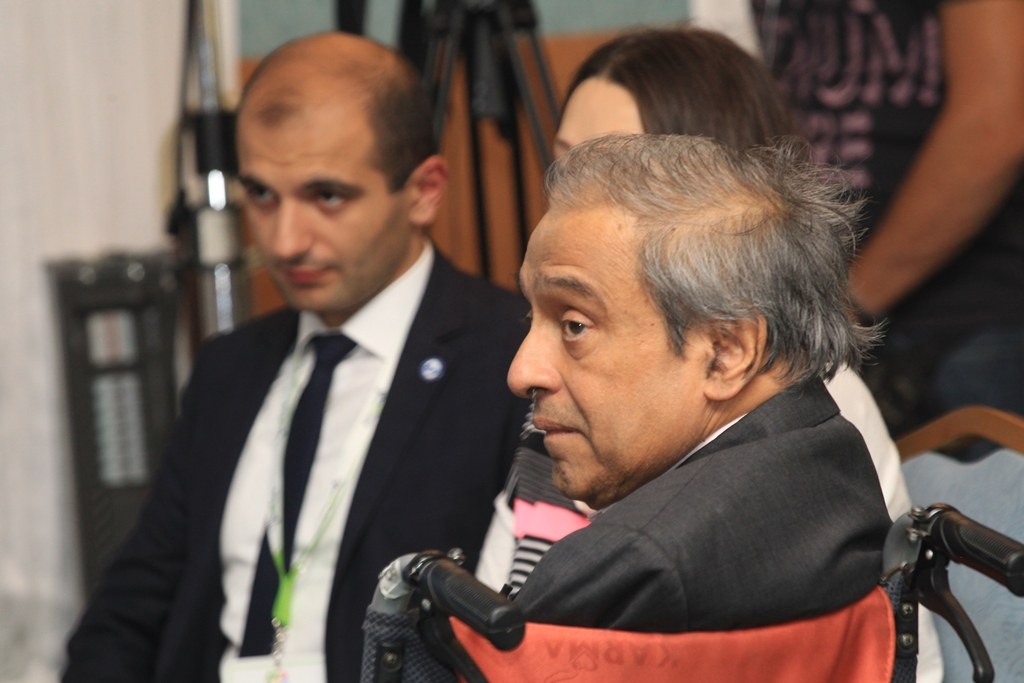
In brief
- 🕯️ Malaysian political scientist and activist Chandra Muzaffar died on 27 November at the age of 79.
- 📰 He founded the human rights group Aliran in 1977 and led it until 1991.
- ⚖️ In 1987 he was detained without trial in Operation Lallang.
- 🏛️ In 1999 he became deputy president of the party that later became today's governing PKR.
🕯️ Chandra Muzaffar, one of Malaysia's best-known public intellectuals, died on Friday at the age of 79. According to Free Malaysia Today and Malaysiakini, his death was confirmed by PKR figures, among them former MP Amin Ahmad. The reports gave no cause of death. 📰 The political scientist founded the human rights group Aliran with six others in 1977 and was its longest-serving president, until 1991. As its president he was among nearly 120 people arrested in Operation Lallang in 1987 and held under the Internal Security Act. 🏛️ After deputy prime minister Anwar Ibrahim was sacked, Chandra entered politics in 1999: he became founding deputy president of Parti Keadilan Nasional, the forerunner of PKR, which today leads the government with Anwar as prime minister. He stepped down in 2001 and left the party. He then led the International Movement for a Just World until his death and remained an independent, often critical commentator, including of PKR.
🎓 **Background and path into scholarship.** Chandra was born on 10 March 1947 in Bedong in the state of Kedah. Through his mother he was a fourth-generation Malaysian; his father, P. N. Pillai, had emigrated to Malaya in the 1930s. At four he contracted polio, which limited his mobility for the rest of his life. He studied politics at the University of Singapore, took a master's degree at Universiti Sains Malaysia in Penang and earned his doctorate in social sciences in Singapore in 1977. According to Malaysiakini he taught political science at Universiti Sains Malaysia from 1970 to 1983.
✍️ **Aliran and a voice across ethnic lines.** Aliran's current president, Anil Netto, told FMT his death was a huge loss. Chandra led the group through the difficult 1980s, when human rights were not yet part of Malaysians' general awareness, Netto said. He started Aliran Monthly, an English-language magazine with independent commentary on politics, corruption, social justice and democratic reform. "He displayed a lot of courage in highlighting issues such as oppressive laws like the Societies Act 1966 at that time," Netto said. Chandra and the other founders laid the foundation for a multi-ethnic reform movement, something very few groups did then.
🗳️ **A brief turn in party politics.** In the 1999 general election Chandra stood in the Bandar Tun Razak constituency. He won 21,049 votes, according to Malaysiakini, and narrowly lost to the MCA's Tan Chai Ho, who held the seat with a majority of 1,224. In 2001 he resigned as deputy president. Two years later his former party merged with Parti Rakyat Malaysia to form PKR.
🌍 **Dialogue between civilisations.** In 1997 Chandra helped set up the Centre for Civilisational Dialogue at Universiti Malaya and became its founding director. In 2009 he was appointed chairman of the board of trustees of the Yayasan 1Malaysia foundation. He wrote or edited more than 30 books; his early works "Protector" and "Islamic Resurgence in Malaysia" are regarded as foundational texts. He is survived by his wife, Mariam Hashim, and their daughters Anisa and Samirah Muzaffar.