🗣️ Loud diplomacy towards South Africa: ex-AU diplomat Olabisi Dare defends Nigeria's envoy
In brief
- 🗣️ Olabisi Dare, a long-serving African Union diplomat, defends in Premium Times the loud stance of Nigeria's High Commissioner Femi Fani-Kayode in South Africa.
- 🌍 His thesis: years of quiet diplomacy did not end the violence against Nigerians in South Africa.
- ⚖️ He still rejects any recall: after the loud signal, the diplomats should return to talks behind closed doors.
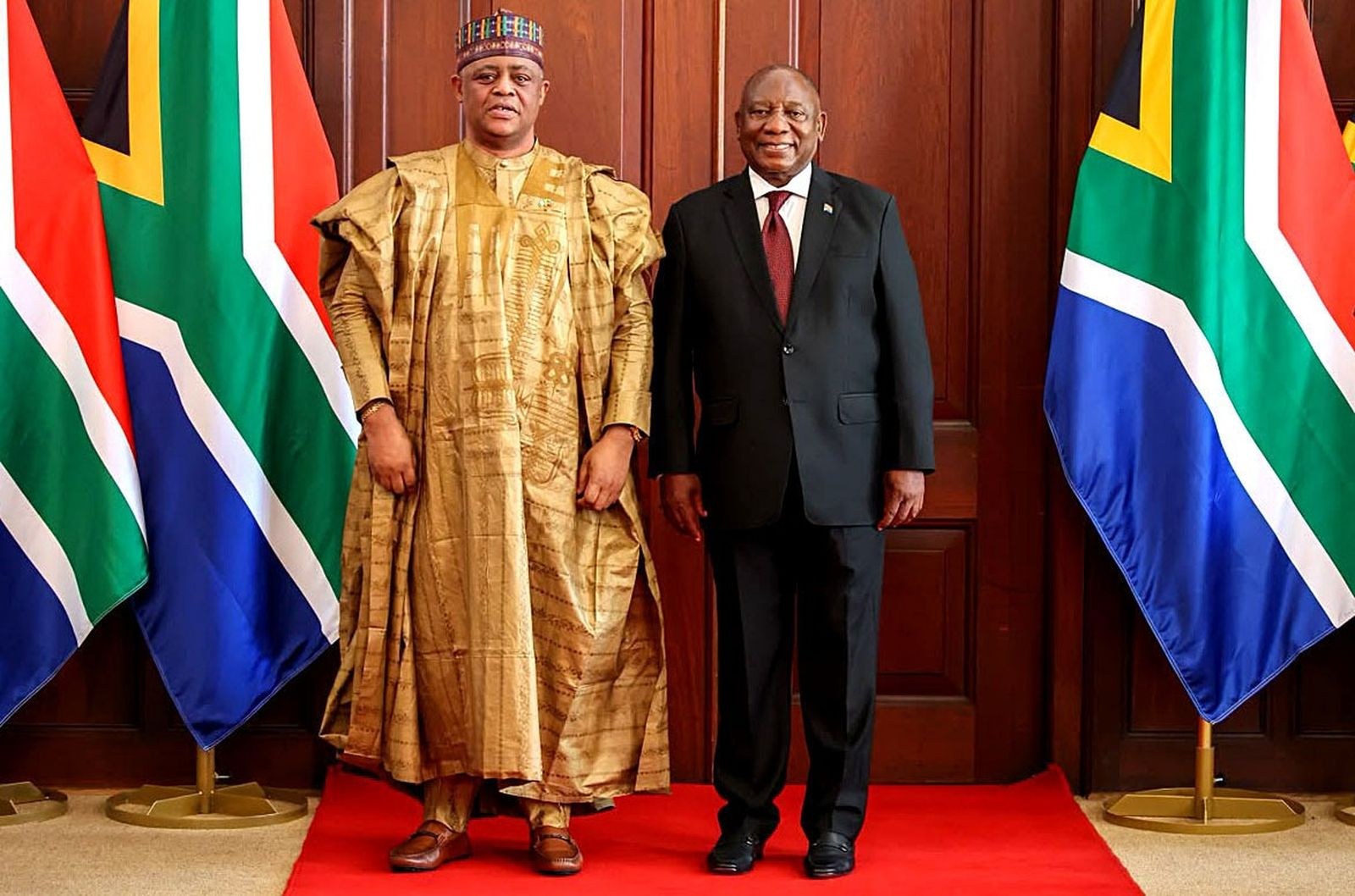
The row between Nigeria and South Africa over Nigeria's new High Commissioner, Femi Fani-Kayode, has started a debate among Nigerian diplomats. Fani-Kayode presented his letters of credence to President Cyril Ramaphosa in Pretoria on 13 November and then complained on X that Nigeria's speech was the only one of 15 cut from the livestream. Ramaphosa's spokesperson contradicted him in public, and South Africa's foreign ministry DIRCO summoned him on 17 November. 🌍 In Premium Times, former diplomat Babafemi Badejo mocked this style as "Jankara diplomacy", after the noisy Lagos market. Now **Olabisi Dare**, a Nigerian career diplomat with more than 27 years of experience and former head of humanitarian affairs at the African Union Commission, answers him. Badejo is right about the Vienna Convention, Dare writes, but wrong on timing: for years Nigeria negotiated quietly and correctly in Pretoria while Nigerians in South Africa were killed and their shops looted. Quiet cables stopped none of it. Fani-Kayode, he argues, did not invent his country's grievance; he gave voice to it. Yet Dare rejects a recall of the envoy, which he says would be a victory for escalation. His formula: let the loud moment pass, then let the diplomats return to quiet talks, with a South Africa that knows Nigeria's patience is not infinite. 🗣️
📜 **What the row was about.** Fani-Kayode, a former aviation minister who had earlier been slated for Germany, is Nigeria's first substantive High Commissioner to South Africa in four years. Fifteen new ambassadors presented their letters at the ceremony in Pretoria on 13 November. In Fani-Kayode's account only Nigeria's introduction and speech were missing from the livestream; he says he raised it with Ramaphosa directly, who acted at once. Presidential spokesperson Vincent Magwenya replied that the President does not intervene in the work of the public broadcaster SABC and had merely pointed the envoy to the responsible editor. According to Daily Maverick, the full ceremony including the speech ran on the SABC's online stream, just not on SABC TV, which may explain the confusion.
⚖️ **The rebuke from Pretoria.** DIRCO director-general Zane Dangor called Fani-Kayode in on 17 November and reminded him that under the Vienna Convention on Diplomatic Relations diplomats conduct official business through the foreign ministry, not directly with the President. DIRCO confirmed the meeting as a démarche, a formal rebuke. Fani-Kayode called the talk "cordial and constructive" on X. The background weighs more than a livestream: Nigeria says several of its citizens died in "extrajudicial killings" in South Africa, some in the custody of security forces. South Africa has promised investigations; the High Commission says no explanations have been given.
🗣️ **Dare's argument in detail.** Dare opens politely: Badejo's piece is elegant and learned, and he is right that diplomacy is a conservative trade and that under Article 3 of the Vienna Convention an envoy must act within the limits of international law. But the same article, Dare argues, also obliges the envoy to protect his nationals and to signal resolve. Jankara is not anarchy, as Badejo himself admits; the market has rules, it simply negotiates loudly and in full view. When the other side has stopped listening in the quiet room, you take the matter to the market square. Being cut from the stream felt to many Nigerians like a metaphor for a larger erasure; Fani-Kayode's insistence on it was symbolism, not vanity.
🏛️ **Praise for Abuja.** Dare explicitly praises the reaction of Nigeria's Ministry of Foreign Affairs. In his account, a press statement of 17 November reaffirmed that the relationship rests on African solidarity, friendship and mutual respect, insisted on diplomatic engagement and announced a review of the full report, including the talks at DIRCO. To Dare this sends three messages at once: to Pretoria, that Nigeria will not escalate but has heard its envoy and its people; to the envoy, that his message has landed and the ministry now takes over; to both, that African solidarity cannot be one-way.
🤝 **Why no recall.** South Africa has not declared the envoy persona non grata and should not; Nigeria has not recalled him and should not either. A recall, Dare writes, would reward those who want a rupture between Africa's two largest economies, leave Nigerians in South Africa without a champion and expose South African investments in Nigeria to retaliatory populism. He describes Fani-Kayode's presence in Abuja on 23 November as routine consultations to submit reports, receive guidance and prepare his family's relocation; consultation is not recall, review is not reprimand. That reading is Dare's; we found no independent confirmation of the purpose of the trip.
🔍 **What stays open.** Dare closes with the image his piece turns on: not Jankara versus diplomacy, but Jankara in the service of diplomacy. Whether South Africa reads it that way is another matter. Former South African ambassador Kingsley Makhubela, according to EWN, urged Fani-Kayode to rethink his approach. And the core of the dispute, an explanation of the deaths of Nigerians in South Africa, has so far been delivered by neither the loud nor the quiet kind of diplomacy.