🗳️ Mexico's PAN threatens a 2027 boycott: columnist Sánchez Cano sees leverage that could backfire
In brief
- 📰 Ricardo Anaya, leader of the PAN senators in Mexico, threatens that the party may skip the 2027 midterms if the electoral institute INE keeps its 2024 seat formula.
- 📊 Columnist Alejo Sánchez Cano (El Financiero) calls the distortion real: about 55 percent of the vote gave Morena and its allies some 73 percent of the seats.
- ⚖️ He calls the boycott itself contradictory: it would take an option from millions of voters and could ease exactly what the PAN wants to prevent.
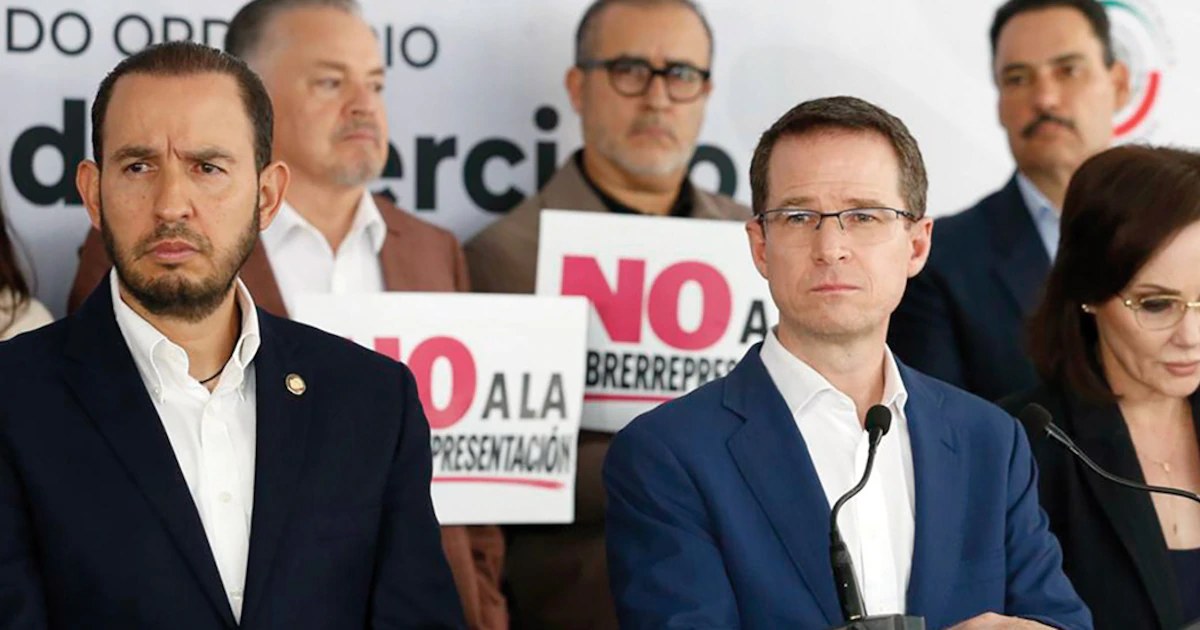
🗳️ Mexico's opposition party PAN has threatened to stay out of the 2027 midterm elections. Ricardo Anaya, who leads the PAN senators, wants the National Electoral Institute (INE) to change how it allocates the proportional-representation seats in the Chamber of Deputies. The INE's council is due to discuss the rule on Monday; the PAN says it will announce its position afterwards. In a column for El Financiero on 27 November, Alejo Sánchez Cano weighs the threat. His thesis: the problem is serious, the boycott is the wrong tool. In 2024, he writes, Morena, the Green Party and the Labour Party won about 55 percent of the vote together but ended up with about 73 percent of the seats, enough for a two-thirds majority to amend the constitution that they did not win at the ballot box. 📊 The reason is that the INE applies the eight-point cap on overrepresentation to each party separately, not to the coalition as a whole. Even so, the columnist calls a PAN withdrawal a political contradiction: without the party, millions of voters would have one alternative fewer, and the governing bloc could find it easier to win a supermajority again. For now he reads Anaya's warning as a means of pressure. ⚖️ He asks the INE for full transparency on the 2027 criteria, while a lasting fix may need a change to the law or the constitution.
🏛️ **What the legal dispute is about.** Sánchez Cano describes the core of the conflict as a question of interpretation. Article 54 of the Mexican constitution caps overrepresentation at eight percentage points, and it does so per party. In 2024 the INE applied that cap to each party of the governing coalition on its own, and the federal electoral court (TEPJF) upheld it. The opposition argues from the effect: parties that run as a coalition and then vote as one bloc in Congress can together grow far beyond the cap. The columnist grants each side its point: the wording speaks of parties, but the result runs against the purpose of the rule.
📜 **Why he sees a fundamental question.** For Sánchez Cano this is not about the PAN's interests but about whether votes and seats still match, above all when the majority can amend the constitution. He points to the many constitutional changes of the governing movement that calls itself the Fourth Transformation (4T): the judicial reform, the abolition of autonomous constitutional bodies and the reshuffling of powers between institutions. From the opposition's view, he writes, the constitution risks turning from a limit on power into a tool of whoever governs. His own counterpoint: a government's democratic legitimacy does not replace checks. A constitutional democracy needs more than elections; it needs independent courts, pluralism and guarantees for those outside the majority.
🔄 **An argument beyond Morena.** The author warns against turning the dispute into a fight between left and right. A rule that helps Morena today could help any other force tomorrow, so electoral rules must give everyone the same guarantees, whoever governs. His closing line: winning an election is something very different from treating the constitution as if it belonged to the ruling party.
🎙️ **What Anaya actually said.** The threat came on Wednesday, 25 November, at a press conference of the PAN senators. According to La Razón, Anaya said that "everything is on the table"; if the INE again "gives" Morena 19 percent of deputies that citizens did not give it, the INE would be "dead" for the PAN. His figures differ slightly from the columnist's: Anaya speaks of 54 percent of the vote and 73 percent of the seats, a gap of 19 points, Sánchez Cano of about 55 percent and roughly 18 points. If the INE corrects course, the PAN will acknowledge it, Anaya said; otherwise it will take its protest "to the last consequences". Senators Marko Cortés and Lilly Téllez backed him.
💬 **The reactions.** At her morning press conference on Thursday, President Claudia Sheinbaum denied any overrepresentation: the same rules applied in 2015, 2018, 2021 and 2024, and the PAN and the PRI helped write them. "If they don't want to take part, let them not take part," she said, according to La Política Online. PAN chairman Jorge Romero then struck a different note from his own Senate leader in a video: the PAN will compete in 2027. Senate president Higinio Martínez said the election is guaranteed and that parties can challenge INE decisions at the electoral court. Ignacio Mier, Morena's coordinator in the Senate, called the threat "a great political irresponsibility". Clemente Castañeda of Movimiento Ciudadano demanded a fairer translation of votes into seats but left the boycott question open.
🏛️ **What the INE says.** Electoral councillors Carla Humphrey and Arturo Castillo rejected the pressure, Excélsior reports. Humphrey said the councillors must decide far from any political pressure. Castillo recalled that parties have a constitutional duty to promote participation and that the model has stood for more than 30 years without any governing party changing it. At the same time he called it the most important issue of this election; the council is aware of the distortion, he said, and is exploring options, such as the actual party membership of candidates.
🔍 **Reading it.** The column is an opinion: Sánchez Cano judges Anaya's threat as leverage, not as a decided strategy. Romero's statement supports that reading, but nothing is settled yet. The next step is the INE council's session on Monday, after which the PAN wants to state its position. According to Senate president Martínez, the vote is on 6 June 2027.
Sources
- Alejo Sánchez Cano: Amenaza el PAN con retirarse de las elecciones (El Financiero)
- Rechazan Humphrey y Castillo presiones del PAN por plurinominales (Excélsior)
- Sheinbaum contestó al PAN: "Si no quieren, que no participen" (La Política Online)
- PAN amaga con no ir a las elecciones de 2027 (La Razón de México)