😨 "I am afraid, Caballero": Pablo Ortúzar fears the MIT economist's optimistic AI scenario
In brief
- 📰 In La Tercera, Pablo Ortúzar calls an AI talk by MIT economist Ricardo Caballero a horror experience.
- 📈 Per the column, Caballero expects a correction but sees a real technological leap as likelier than a burst bubble.
- ⚠️ That is what frightens Ortúzar: a K-shaped economy in which the richest gain and human work loses value.
- 🏛️ Ortúzar calls for a redistributing state, which neither Chile's right nor its left offers, the column says.
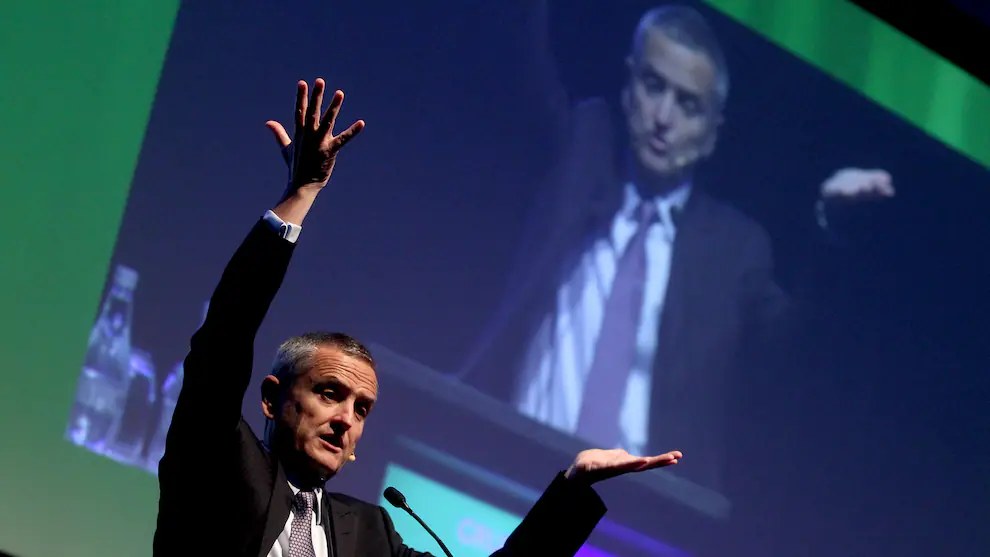
😨 Pablo Ortúzar has published a column in the Chilean newspaper [La Tercera](https://www.latercera.com/opinion/noticia/tengo-miedo-caballero/) titled "Tengo miedo, Caballero" (I am afraid, Caballero). It was prompted by a talk that the Chilean MIT economist Ricardo Caballero gave at a Banco Bice seminar in Santiago on what artificial intelligence will do to the economy. 📈 Ortúzar recounts the talk like this: the bet on AI has been extremely capital-intensive and is above all a race between the United States and China. Despite the huge investment, no large productivity effect is visible yet; everything points to overinvestment and a coming correction. That correction could be a burst bubble with a deep recession, or an adjustment within a real technological leap. Caballero considers the second more likely and believes the world is already entering it. ⚠️ It is this "optimistic" scenario that frightens Ortúzar. Caballero calls it "creative destruction on steroids" shaped like a K: the AI ecosystem grows, the rest of the economy suffers under high interest rates, the richest ten per cent get much richer and employment decouples from growth. Ortúzar sees a recipe for social conflict and argues that the transition needs a strong state with predistribution and redistribution, an idea the column calls foreign to both Chile's governing right and its bureaucratic left. It is an opinion, not a forecast of this newsroom.
🎤 How the column opens. Ortúzar writes that no horror film has caused real fear in decades, but the Banco Bice "Puentes" seminar at the Hotel W on the Wednesday before the column appeared did. The room was full, the mood convivial, there was coffee and pineapple skewers, and nothing hinted at what was coming. Ortúzar admits to describing the slides from memory and hopes not to get them wrong. Everything said here about Caballero's views is therefore Ortúzar's account, not a recording of the talk.
🔀 Two ways out of overinvestment. According to the column, Caballero describes a world of excess demand, inflationary pressure and high interest rates. The correction could first be the end of a cycle: AI fails to deliver a high-impact technological leap and a recession returns everything to where it was. Or it could be an adjustment in mid-transition: AI works, the leap happens, but the distortions of this phase of exploration and expansion are corrected. Unlike fellow MIT economist Daron Acemoglu, Caballero is convinced the second scenario is the more likely one. Ortúzar's translation: the choice is between a bursting bubble and an accelerated technological transition, and the second is only the lesser evil.
📉 The K. In the second scenario, the AI "ecosystem", every industry tied to its growth, expands; that is the rising arm of the K. The rest of the economy competes with that ecosystem for expensive money and forms the falling arm. Whole countries end up on one arm or the other. The richest ten per cent, the owners of capital, become much richer while almost everything becomes more expensive for everyone else. Growth takes off, employment decouples from it and the value of human work sinks. One does not have to be the Marxist theorist John Roemer, Ortúzar writes, to see a scenario of class struggle and social conflict.
🇨🇱 Caballero's advice to Chile. In Ortúzar's account, Caballero closed with a recommendation: Chile should chain itself to the part of the economy that will rise, adopt AI as fast as it can and produce the inputs the AI ecosystem needs. The main enemies of that adaptation, according to the talk, are permitting bureaucracy, project delays and rigid labour markets. Ortúzar asks in brackets whether that is a point for Science Minister Ximena Lincolao.
🏛️ Ortúzar's own thesis. Ortúzar left the room with goosebumps, the column says. In Ortúzar's view the "optimistic" scenario requires intense, subsidiary intervention by the state so that the social contract does not founder before the other shore is reached, a shore that could indeed hold opportunity and progress. That would take predistributive and redistributive ideas and a degree of planned exploration. Such a recipe, the column says, is as far from the imagination of the governing right as from the bureaucratic, rent-seeking left within the state. The column closes with its title: "I am afraid, Caballero."
📚 Caballero's research in the background. The column cites no paper, but Caballero has published on exactly this in 2026. In the abstract of his talk "Speculative-Growth and the AI 'Bubble'" at the [Luohan Academy](https://www.luohanacademy.com/en//webinar/1123/), Caballero describes AI valuations as rational but fragile equilibria: high valuations sustain rapid capital accumulation but last only as long as investors' beliefs stay coordinated. Because AI capital is labour-like, the gains accrue disproportionately to capitalists, whose saving rate rises with wealth, and a loss of confidence can set off a self-fulfilling crash. That work explains how Caballero can speak of bubble risk and of a real transition at once, and it underpins the part of the talk Ortúzar fears most: who gets the gains.
⚖️ Where this stands. The column is an opinion. It reconstructs a talk from memory and draws a political conclusion from it. Whether the K-shaped path materialises, whether Chile follows Caballero's advice and what role the state should play remain open; as far as we could find, Caballero has not responded to Ortúzar's reading.