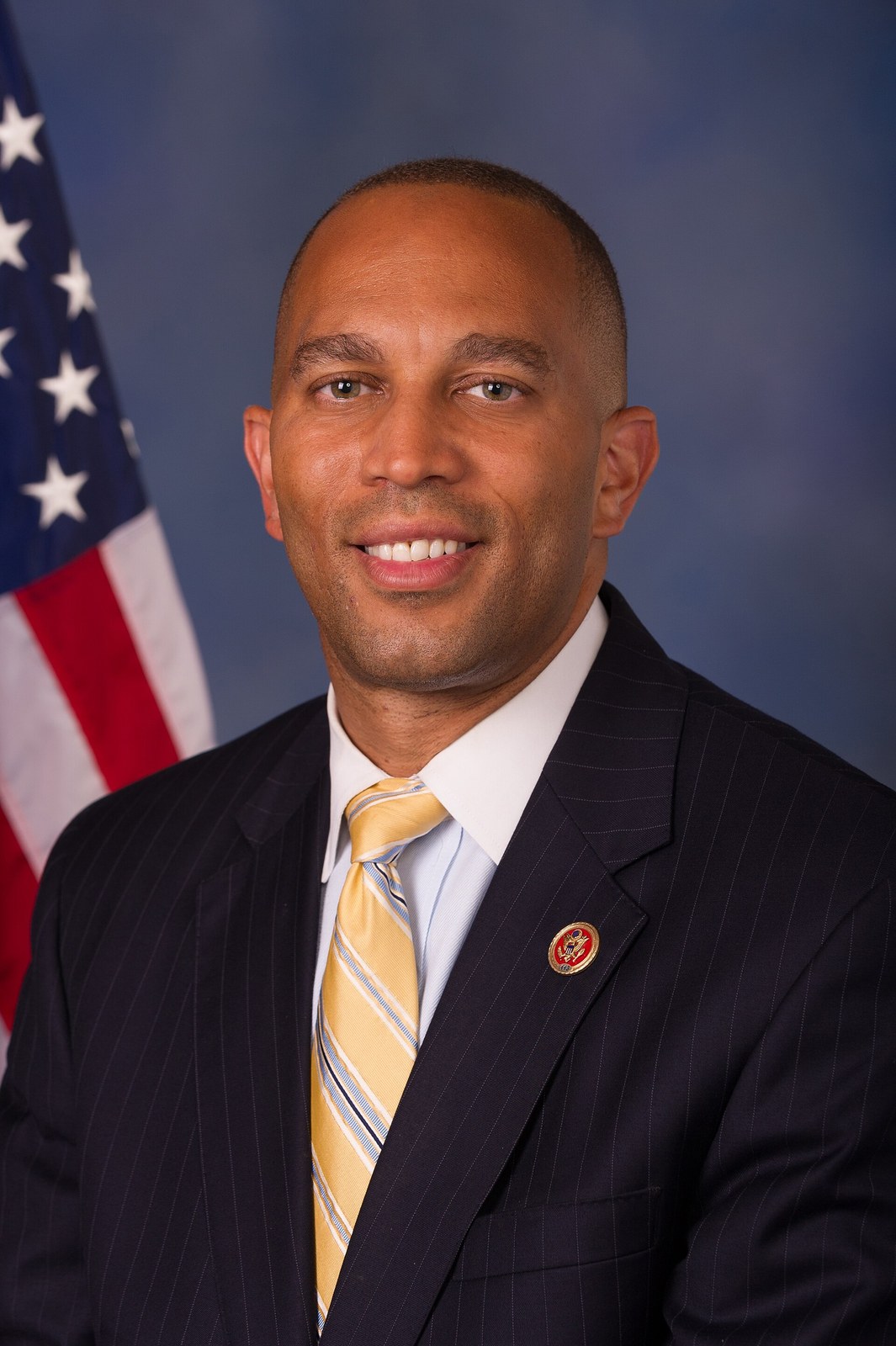
🏛️ US Democrats nominate Hakeem Jeffries to be the first Black speaker of the House
In brief
- 🗳️ House Democrats picked Hakeem Jeffries as their speaker candidate on November 18 by 251 votes, with 11 against.
- 📅 The vote of the full House on January 3 is seen as a formality given the Democratic majority.
- 💬 Several newly elected progressives withheld support and want commitments on Gaza, campaign finance and health care.
📰 House Democrats chose Hakeem Jeffries as their candidate for speaker on November 18 in a secret ballot behind closed doors. He received 251 votes, with 11 members voting against. The 56-year-old New Yorker would become the first Black politician in the job when the full House votes as the new Congress convenes on January 3, which is seen as a formality given the large Democratic majority. Democrats retook the House and the Senate in the November midterms. Some newly elected progressives refused to back Jeffries and want commitments, for example on policy toward Israel and campaign-finance reform.
House Democrats chose Jeffries in 2022 to succeed Nancy Pelosi, making him the first Black politician to lead a party in either chamber of Congress. Pelosi was the first female speaker, serving eight years in two separate terms, and is leaving Congress. Pelosi congratulated the "Speaker-designate" with a photo of her holding Jeffries's hand. He grew up in Brooklyn's Crown Heights, worked as a lawyer, sat in the New York state legislature from 2007 and was elected to Congress in 2012. In 2020 he served as a House prosecutor in Donald Trump's first impeachment trial.
Wednesday's vote was a secret ballot within the caucus. Jeffries had deliberately asked for a recorded vote instead of nomination by acclamation, as some allies had hoped, pointing to the precedent set when the party last took control of the House in 2018. The individual ballots stayed secret; only the total was made public, 251 yes and 11 no. Jeffries had no declared challenger. When the full chamber votes on January 3, he is expected to replace current Republican speaker Mike Johnson. The speaker is second in the line of presidential succession after the vice president.
Opposition came from newly elected progressive members. According to Al Jazeera, they said in a joint statement that they had received no commitments on Medicare for All, stopping what they call "ICE terror," getting money out of politics or ending the war in Gaza, and that conversations were ongoing. Congressman-elect Don Leonard of Ohio made his vote conditional on commitments such as halting US military aid to Israel and reforming campaign finance after the Citizens United ruling. Jeffries has faced criticism in parts of the party over his record on Israel and ties to the lobbying group AIPAC. In an interview with The Atlantic he called for "dramatic change" in the Middle East and a two-state solution. Another incoming member, Frederick Haynes of Texas, was initially listed among the opponents but said he narrowly missed the vote because of illness.
Politically, Jeffries wants to turn the election victory into governing. Voters handed Republicans a crushing defeat, partly out of anger over the Iran war and soaring fuel costs. "Folks are drowning in this Republican economy," he said on Tuesday, adding that House Democrats would start working on it "on day one." With the majority, Democrats can block Republican legislation and investigate the administration, which should make Jeffries one of the president's chief opponents in the final two years of Trump's term.