💊 FDA approves Rinvoq as first systemic vitiligo therapy
In brief
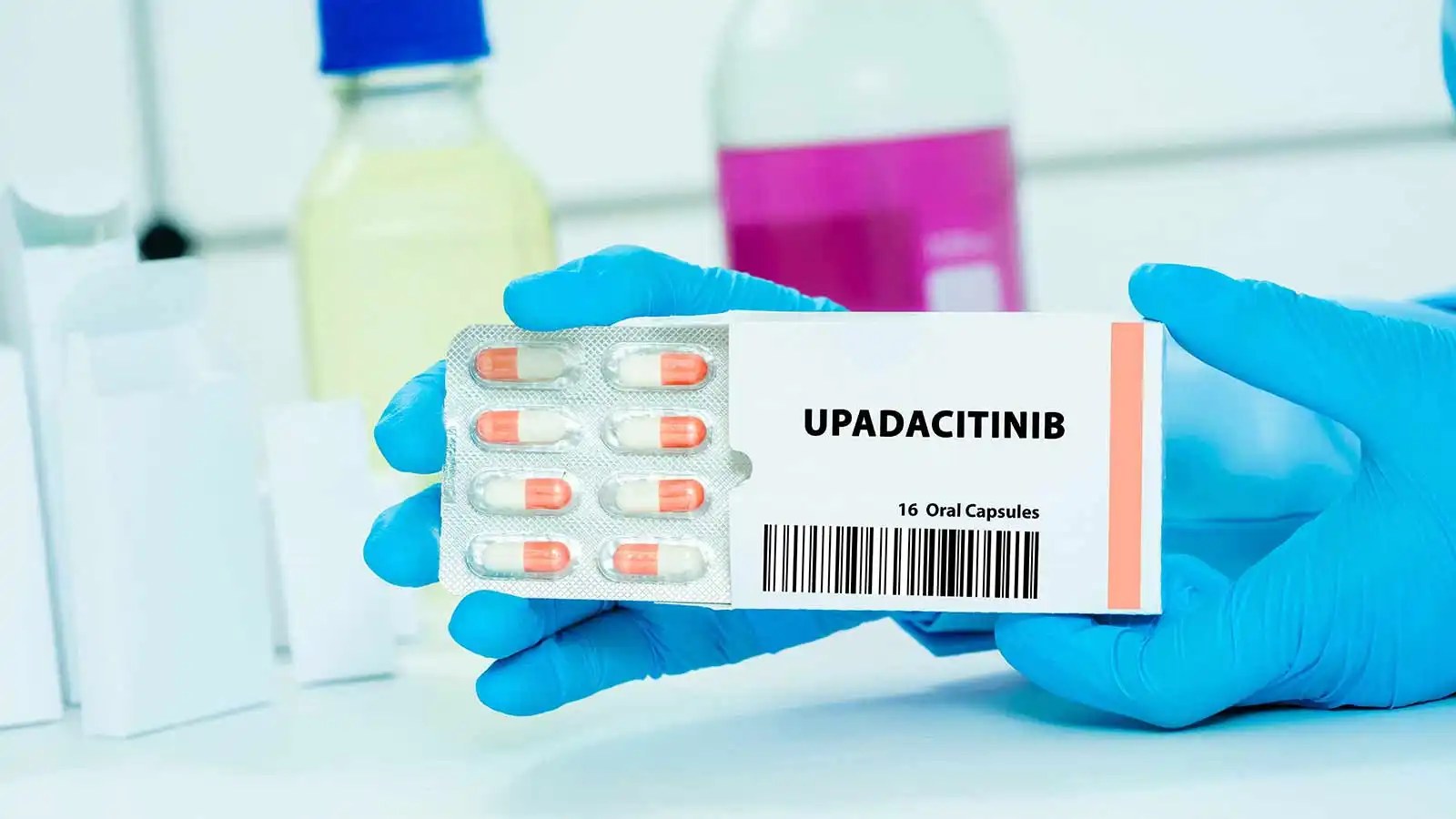
- 💊 The US FDA approved Rinvoq (upadacitinib) for nonsegmental vitiligo in patients 12 and older, the first systemic therapy for it according to AbbVie.
- 🧪 At 48 weeks about a quarter reached at least 75% facial repigmentation, versus 6% to 7% on placebo.
- 📅 At 76 weeks about half of treated patients met that mark, per the trial data.
- 🛡️ Safety matched the known profile; the dose is a 15 mg tablet once daily.
💊 The US Food and Drug Administration has approved AbbVie's Rinvoq (upadacitinib) for nonsegmental vitiligo, the most common form of the skin condition. Patients 12 and older can take it as a tablet. According to AbbVie it is the first systemic therapy for the disease; earlier treatments, including JAK inhibitors, are applied to the skin and aimed at specific areas. 🧪 The approval rests on two phase III trials called Viti-Up. At 48 weeks, 23% to 25% of patients on Rinvoq had regained at least 75% of facial pigmentation, against 6% to 7% on placebo. For the whole body (at least 50%) the figures were 19% to 21% versus 6%. Safety matched the drug's known profile.
Vitiligo is an autoimmune disease in which the immune system attacks the pigment-producing cells of the skin. The nonsegmental form typically shows as symmetrical patches of lighter skin and can progress unpredictably. Until now, people who wanted treatment were limited to creams and other products that work on specific areas of skin.
The approval is based on the Viti-Up (NCT06118411) program: two identically designed, randomized, placebo-controlled trials, Viti-Up-1 and Viti-Up-2, in adults and adolescents. A 48-week placebo-controlled phase was followed by a 112-week open-label extension. The co-primary endpoints were facial repigmentation of at least 75% (F-VASI 75) and total body repigmentation of at least 50% (T-VASI 50).
In Viti-Up-1, 25% of Rinvoq patients reached F-VASI 75, in Viti-Up-2 23%; on placebo it was 6% and 7%. T-VASI 50 was reached by 19% and 21% versus 6% in both placebo groups. At least 90% facial repigmentation (F-VASI 90) was reached by 16% and 12% versus 2% and 3%. Among patients who continued treatment, the week-76 rates were 55% and 47% for F-VASI 75 and 43% and 40% for T-VASI 50; these are descriptive findings without a placebo comparison.
Seemal Desai, an investigator and president of the Global Vitiligo Foundation, told MedPage Today that repigmentation takes time and that response rates doubling or nearly doubling between weeks 48 and 76 are especially encouraging. AbbVie's chief scientific officer Roopal Thakkar said Rinvoq targets an underlying immune pathway of the disease.
On safety, MedPage Today reports that neither trial recorded major adverse cardiovascular events, venous thromboembolism, gastrointestinal perforations, active tuberculosis, lymphoma, non-melanoma skin cancer or opportunistic infections other than herpes zoster. Overall safety was consistent with upadacitinib's known profile. The recommended vitiligo dose is 15 mg once daily.
According to Pharmaceutical Technology, vitiligo is Rinvoq's tenth US indication; it is already approved for conditions including rheumatoid arthritis, atopic dermatitis, psoriatic arthritis, ulcerative colitis and Crohn's disease. AbbVie is also testing it in phase III trials for alopecia areata, hidradenitis suppurativa, systemic lupus erythematosus and Takayasu arteritis. The reports read give no information on approval outside the US.