🗳️ Puigdemont to return to Catalonia on 12 December, four days before Spain's election
In brief
- 📅 Carles Puigdemont announced in Brussels that he will return to Spain on 12 December, nine years after he left for Belgium.
- ⚖️ The Supreme Court closed the criminal case against him under the amnesty law this week.
- 🗳️ The announcement comes four days before the general election on 29 November.
- He says he will return "without asking for permission or forgiveness" and go straight to the Catalan parliament.
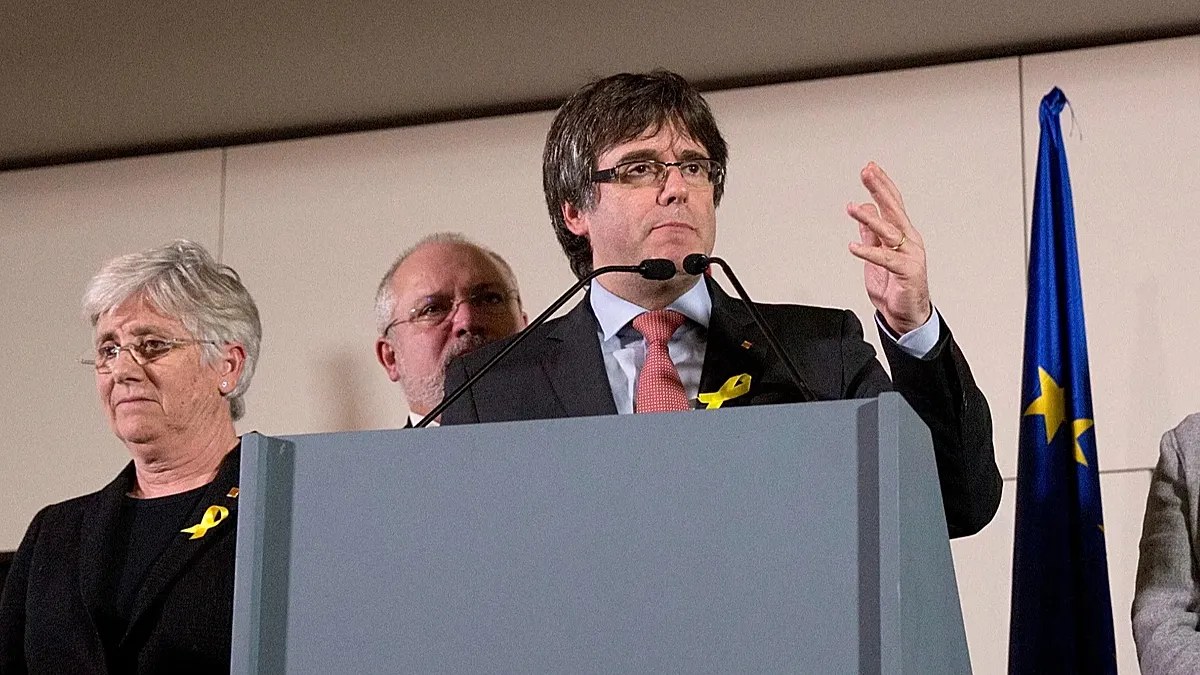
🗳️ Carles Puigdemont, the former president of Catalonia, announced at a press conference in Brussels on Wednesday that he will return to Spain on Saturday 12 December, nine years after he left for Belgium following the failed independence bid of 2017. He said he would come back "without asking for permission or forgiveness" and fly directly from Brussels to Barcelona-El Prat airport, then go to the Catalan parliament. The announcement follows the decision of Spain's Supreme Court, made public on Monday, to close the criminal case against him under the 2024 amnesty law, and it falls four days before Spain's general election on 29 November. He also said he would present a proposal for a renewed push for Catalan independence on 17 December.
**The press conference.** Puigdemont spoke at the Press Club Brussels Europe, the same place where he gave his first press conference in Belgium on 31 October 2017, after the unilateral declaration of independence and the application of Article 155 of the Spanish constitution, which removed him and his government. It was his first press conference since the amnesty was applied to him. According to DW, he said: "I left as President of the Government of Catalonia, and I will return to the place where Catalan democracy elects or dismisses its presidents: the Parliament of Catalonia." He added that he would arrive at midday and sleep at home with his family that night. He also said that Spain had "failed" in its aim of jailing him, and defended the legal strategy he followed from exile.
**How the way was cleared.** The amnesty law, passed in May 2024 and in force since 11 June 2024, extinguishes criminal, administrative and accounting liability for certain acts linked to the Catalan independence process between November 2011 and November 2023. It was the price the Socialists paid for the votes of Catalan separatist parties in Pedro Sánchez's investiture in 2023. For more than two years its application to Puigdemont was blocked, because the Supreme Court refused to amnesty the embezzlement charge, which it saw as personal enrichment, a case the law excludes. That changed in 2026: on 16 July the Court of Justice of the European Union upheld the law against EU law, and on 6 October the Constitutional Court backed its application to the embezzlement charge. Judge Pablo Llarena then lifted the national arrest warrants against Puigdemont and the former ministers Toni Comín and Lluís Puig. The Supreme Court's ruling dated 20 November, made public on 23 November, closed the case for all three. Puigdemont was never tried.
**Not his first return.** On 8 August 2024 he briefly appeared in Barcelona during the vote that made Salvador Illa president of the Generalitat, gave a speech near the Arc de Triomf and left again without being arrested, although the warrant was still in force then.
**The election context.** The announcement falls in the last stretch of the campaign for the snap election on 29 November. A week earlier Puigdemont had given an interview to the newspaper El Mundo in which he called Sánchez "amoral" with an "excessive thirst for power" and said his party had used that ambition to inflict "certain defeats on Spain". The remarks became a flashpoint in the campaign. Polls cited by DW suggest the Popular Party will win the most seats but fall short of a majority and may depend on the far-right Vox. The Popular Party and Vox opposed the amnesty and challenged it without success in parliament and the courts. Puigdemont's party, Junts per Catalunya, remains an important force in Spanish politics.