🤝 Trump wants a "fair" trade deal with Canada, trade representative Greer says "fairly close"
In brief
- 🗣️ On 20 November Trump said Canada feels "emboldened", but his administration is working on a fair deal.
- 🤝 On 22 November Greer told Fox News the sides are "fairly close" to a landing zone.
- 🚗 Per sources, the biggest open issue is the 25 per cent US tariff on Canadian cars.
- 🇨🇳 Washington is uneasy about Canada's trade deals with China.
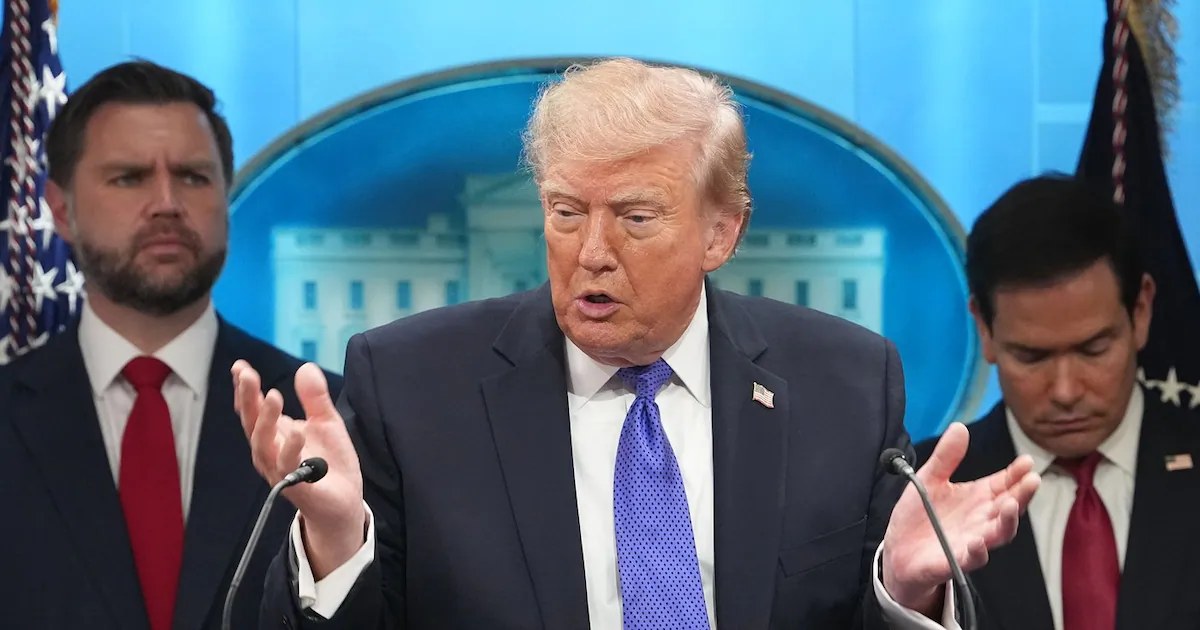
🤝 The US-Canada trade dispute may be heading towards a settlement, but it is not over. At a White House news conference on 20 November, President Donald Trump said Canada feels "emboldened", that the US cannot let them feel that way any more, and that his administration is working on a deal "that's fair". Two days later US Trade Representative Jamieson Greer told Fox News the sides had "made a lot of progress" and were "fairly close" to a landing zone. Since talks collapsed in August, the US has applied 50 per cent tariffs on most Canadian goods, and Canada has answered with retaliatory tariffs. 📊
**Trump's remarks.** Trump said he spoke with Prime Minister Mark Carney at the sidelines of the Asia-Pacific summit in Shenzhen and called him "very nice". His line "for some reason they feel emboldened and we can't let them feel that way anymore" stayed unclear. The Canadian Press notes it was not evident whether he meant the close relationship of the two countries or the midterm elections, in which American voters clearly rejected his tariff policy. He repeated that he will talk once Canada's trade surplus with the US is down to zero; that surplus is driven by US purchases of oil and energy. He also repeated the claim that Carney wants to build a Keystone pipeline for the US, probably a reference to the Prairie Connector line.
**The negotiations.** In August Canada walked away after the US put last-minute terms on the table, including limits on new trade deals with other countries, according to Global News. Trump then imposed 50 per cent tariffs; Carney answered in September with matching countermeasures. Since the November elections both sides are back at the table, Global News reports. Canada's chief trade negotiator Janice Charette told a parliamentary trade committee that Canada must prepare for a world in which a tariff-free arrangement may no longer be possible; the goal is the lowest tariff rate on the narrowest basket of goods with the best access.
**The sticking points.** Greer named auto, steel and aluminium policy and voiced "concern" about Canada's new deal with China, which, according to Global News, lets 49,000 Chinese electric cars a year in at a lower tariff. He called it going "a little backwards". The biggest unresolved issue, per sources cited by Global News, is the 25 per cent US tariff on Canadian vehicles. Carney said at a New York Times event: "We'd like to do a deal. If the U.S. doesn't want to do a deal, we're busy." Ontario Premier Doug Ford says he will not back a deal that ignores the auto, steel and manufacturing sectors.