🌍 Nearly 1,600 migrants reach the Canary Islands in one day, most on El Hierro
In brief
- About 1,580 migrants arrived in the Canary Islands on Saturday, nearly all on El Hierro in 15 wooden boats.
- Within two days it was nearly 2,200 to more than 2,300; authorities had declared a migration emergency earlier this week.
- 📊 Overall, arrivals from January to October are down 5.5% on last year.
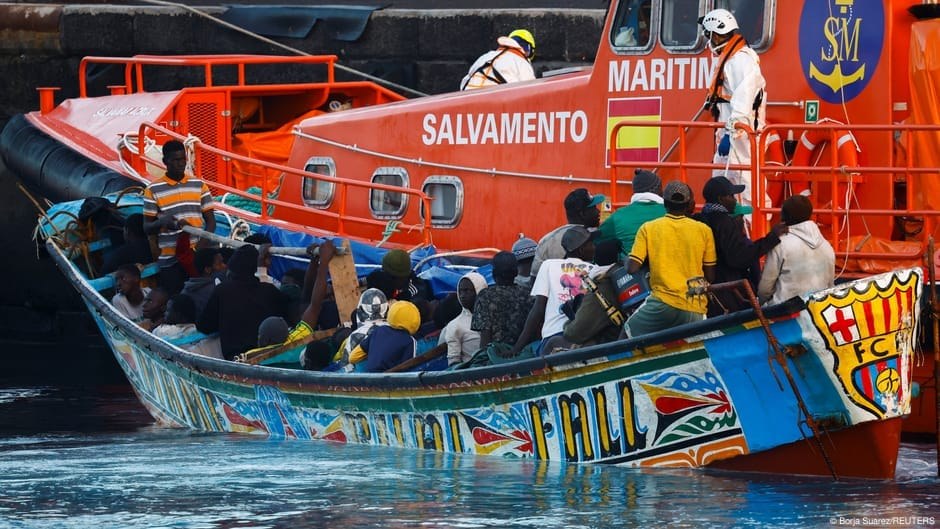
About 1,580 migrants arrived in the Canary Islands on Saturday, November 14, 2026, most of them on the island of El Hierro, which has a population of nearly 12,000. The news agency EFE reported the figure, citing Spain's maritime rescue service; the migrants came in 15 wooden fishing boats, mostly from West African countries such as Senegal, Gambia and Guinea. Between Friday and Saturday, authorities counted more than 2,300, while other outlets reported nearly 2,200. The authorities had declared a migration emergency earlier in the week. Over the whole year, arrivals from January to October 31 are 5.5 percent lower than in the same period last year.
The figures differ slightly by source. According to EFE, citing the maritime rescue society, 1,580 people arrived on Saturday; other reports gave nearly 1,500. For Friday to Saturday, Deutsche Welle gives more than 2,300 arrivals, while France 24 reports nearly 2,200 over two days, citing Spain's coastguard. Most people landed on El Hierro, the smallest and westernmost of the inhabited Canary Islands, aboard 15 boats.
🏝️ El Hierro has a population of nearly 12,000. On Sunday, Spain's Territorial Policy Minister Ángel Víctor Torres visited the town of La Restinga at the island's southern tip and thanked residents for their "solidarity and commitment." The government is working to manage the surge "with humanity and with the island's residents in mind," he wrote on X. The shortest gap between the Canary Islands and Africa is about 100 kilometers; most boats depart from Mauritania.
Deutsche Welle adds two points of context. First, arrivals in the Canary Islands from January to October 31 are down 5.5% from the same period last year, so the weekend's surge is a spike in an otherwise declining year. Second, it follows a migration crisis in Spain's exclave of Ceuta in late July, when an estimated 80,000 people, mostly young Moroccan men, crossed in from Morocco. Prime Minister Pedro Sánchez has faced opposition criticism over his handling of it.