🐕 Sony's Aibo robot dogs get a second life in Japanese hospitals
In brief
- 🐕 Owners who part with their Aibo can donate it to Sony, which repairs and upgrades the robot dogs.
- 🏥 The robots then move to hospitals and other facilities, such as an ear, nose and throat ward near Tokyo with many young patients.
- 🩺 A doctor there says Aibo helps with long waits and has persuaded reluctant children to be examined.
- 🛒 AP reports Aibo is sold out; in June Sony announced the end of sales in Japan, while support continues.
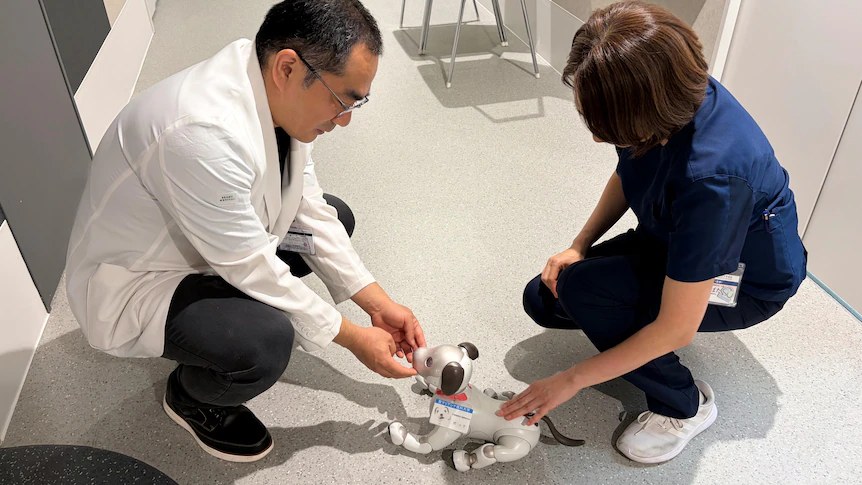
🐕 Sony's robot dog Aibo cannot do chores, but it offers companionship, and that is what its second life is built on. Owners who have to part with their Aibo can donate it to the Japanese company for an "adoption program". Sony repairs and upgrades the robots and places them in hospitals and other facilities to cheer up patients and staff, the Associated Press reports. 🏥 At St. Marianna University School of Medicine in Kawasaki, outside Tokyo, an Aibo works in the ear, nose and throat department, which treats many children. According to Dr Manabu Komori, it has helped with the long waits and persuaded reluctant children to get examined. The programme comes at a time of change: according to AP, Aibo is sold out and no longer in production. In June Sony said it would stop selling the current model in Japan once stock runs out, while keeping support, spare parts and cloud plans. Sony does not disclose how many Aibos it has sold or what they cost.
🤖 **What the robot does.** Aibo is packed with sensors and cameras and programmed to remember its name, its owner's face and its surroundings. It barks, cocks its head, moves its ears, waddles towards people, acts happy when petted and goes to "sleep". In short it simulates a puppy, except that it can also take snapshots and monitors its own mechanical faults. People at Sony do not call it a "product", AP notes.
💬 **What Sony hopes for.** Yoshiyuki Katsuno, the Sony official who oversees the programme, describes how owners feel when they hand theirs over: as though they were sending off something that had become like their own child. Aibo gets people talking to each other and can give tired people a lift to keep going, he said, adding that Sony hopes to spread the emotional healing and human interaction Aibo offers.
🏥 **On the ward.** During a recent visit in Kawasaki a nurse first had to go looking for the wandering Aibo. "It helps motivate the kids," Komori said, noting that going to a hospital is basically not very pleasant. The hospital also uses real dogs to help patients feel better, but they need care and food and can be temperamental. That gives a robot dog some advantages, although Komori was careful not to say it was better than a real dog.
🌸 **Why it has to be cute.** In Japanese culture cuteness, "kawaii", is not seen as weakness but as an endearing trait that encourages harmony and communication. If you want emotional attachment, you want a cute shape, said Jerry Wang, executive chairman of FF EAI Robotics Ecosystem, a US company that itself sells more forbidding-looking four-legged patrol robots.
📜 **The background.** The donation scheme dates from September 2023, when Sony Japan launched an "Aibo Foster Parent" programme for ERS-1000 units whose owners had cancelled their basic plans. Depending on their condition, some donated units serve only as spare parts for other Aibos, and the receiving facilities pay an undisclosed service fee, Engadget reported at the time. Sony launched the first Aibo in 1999 and sold more than 150,000 units until it ended the line in 2006, according to the news agency AFP. The comeback model ERS-1000 arrived in 2018 and sold 20,000 units in its first six months.
🛒 **What comes next.** In June 2026 Sony said it would end Japanese sales of the ERS-1000 once stock was gone. Sales were to continue in the United States, where Aibo costs more than 3,000 dollars according to AFP; it is not sold in other countries. Asked about a new generation, Sony said only that the Aibo business would continue, without giving details of future products.
Sources
- Sony's dog robot can't do chores but offers companionship (ABC News (AP))
- Sony's dog robot, Aibo, gets rehomed to hospitals to offer companionship (ABC News (Australia))
- Sony discontinues Japan sales of robot puppy 'aibo' (CP24 (AFP))
- Sony will repair aging Aibo robot dogs to help them find their forever homes (Engadget)