🎨 Van Gogh's “Chestnut Trees in Blossom” sells for a record $190.4 million after Nazi-era claim is settled
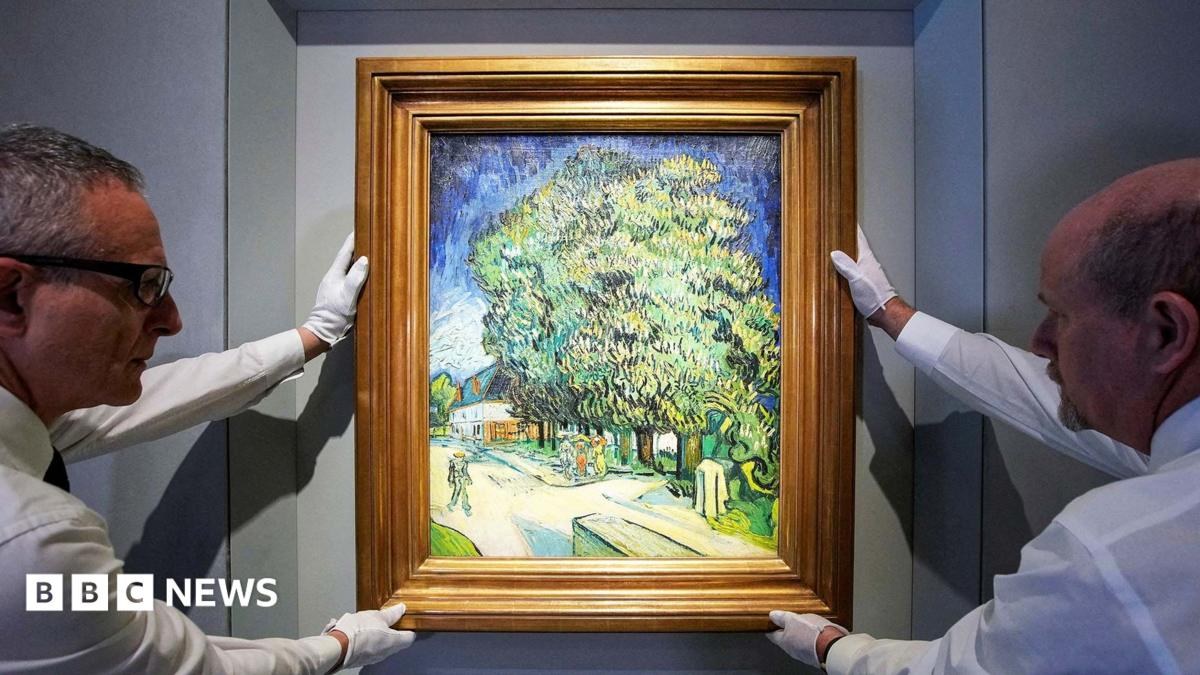
In brief
- 💶 Van Gogh's Chestnut Trees in Blossom (1890) sold at Sotheby's in New York for a record $190.4m including fees.
- ⚖️ A last-minute settlement with heirs of earlier owners from the Nazi era cleared the sale.
- 📉 The evening was uneven: the collection fell short of its estimate.
🖼️ Vincent van Gogh's painting Chestnut Trees in Blossom (Châtaigniers en fleurs), painted in 1890 in the last two months of his life, sold at Sotheby's in New York on Wednesday 18 November for $190.4 million including fees, on a hammer price of $165 million. It is a record for the artist, whose previous high was $117.2 million, set in 2022. The buyer in the room was the dealer William Acquavella. The sale went ahead after a settlement shortly before the auction: heirs of the German publisher Samuel Fischer, the painting's earlier owner, had questioned whether it was sold under duress in the Nazi era, and Sotheby's said the family of the current owners and the Fischer heirs had reached an agreement. The terms were not disclosed. The hammer price fell short of the estimate of about $180 million, and the evening was uneven in other respects too.
📜 The painting's provenance made the sale delicate. According to Sotheby's, Samuel Fischer, a well-known German publisher, acquired the painting in 1909, and after his death in 1934 it passed down in his family. In 1932 or 1933 it was deposited with Paul Cassirer in Amsterdam and in 1936 it went to Henriette and Marcel Kapferer in Paris. A lawyer for the heirs reportedly wrote to Sotheby's, according to the BBC, that the painting was sold in Amsterdam before the Second World War because the family's publishing company had suffered financial losses under the Nazis. Sotheby's spoke of a “mutually satisfactory resolution” and acknowledged the work's complex Nazi-era history and the suffering of the Fischer family during the Holocaust. When exactly the settlement was announced is described differently, as “hours” or “a day” before the sale.
🔨 The hammer fell on $165 million to Acquavella after nearly five minutes of bidding. According to The Art Newspaper it is the second most valuable object ever sold at Sotheby's, after Gustav Klimt's Portrait of Elisabeth Lederer at $236.4 million last November, and the fourth most valuable painting ever sold at auction. The work was guaranteed by Sotheby's and is described by the house as one of the most important works from that period still in private hands. The old record of $117.2 million was set by Orchard with Cypresses (1888), sold at Christie's in 2022 from the Paul Allen collection.
🗂️ The painting came from the Blaquier-Arrieta collection, built by the Argentine sugar heiress Nelly Arrieta de Blaquier and her husband Carlos Pedro Blaquier, who was president of Argentina's largest sugar producer. It had been out of public view for decades. The 12 lots brought $358 million ($412 million with fees), short of the estimate of about $450 million. Six lots hammered below their low estimates. Cézanne's Arlequin made $99 million ($111 million with fees) against an estimate of $120 million and became the most valuable painting from the Harlequin series sold at auction. Camille Pissarro's snow scene beat its estimate of $0.7 to 0.9 million with $1.62 million.
📈 The Modern Evening sale that followed took $305.21 million ($365.8 million with fees). The top lot was René Magritte's L'Ami de l'ordre (1964) at $39 million ($45.5 million with fees), above its estimate. Aaron Douglas's Harriet Tubman (1931) made $12 million ($14.48 million with fees) after seven minutes of bidding, against an estimate of $2.5 to 3.5 million, a record for the Harlem Renaissance artist; proceeds benefit Bennett College, one of only two historically Black women's colleges in the US. Mary Cassatt's Summertime (1894-95) also set a record at $11 million ($13.3 million with fees).
🧾 Together the two sales made $777.8 million with fees ($663.26 million hammer total). A little over a third of the works sold below estimate. One lot went unsold, Remedios Varo's El vagabundo, which passed at $1.5 million; three more works, by Matisse, Cézanne and Magritte, were withdrawn during the sale.