📚 80 years of the Biblioteca de México: how Vasconcelos's library moved into an old arsenal
In brief
- 📚 The Biblioteca de México in Mexico City opened on 27 November 1946 in La Ciudadela, a former military building.
- 🏛️ A column in El Universal tells how a grand new-build plan from 1941 shrank into a modest conversion.
- 🔫 The building had been an arms factory, the prison of Morelos and a battleground in 1913.
- 📖 Today the library holds almost a million volumes and 14 personal libraries, the column says.
📚 Eighty years ago, on 27 November 1946, the Biblioteca de México opened in Mexico City, inside La Ciudadela, a former barracks and arms factory in the city centre. For the anniversary, Liza Luna tells in El Universal's history column "Mochilazo en el tiempo", drawing on the paper's own archive, how the project of the scholar José Vasconcelos came about. Her image: a place of blood and gunpowder became a place of culture and books. 🏛️ In 1941 President Manuel Ávila Camacho's government planned a 12-million-peso new building for the National Library, the music conservatory and the archaeology museum. After several changes it became a conversion of half the Ciudadela, and the library opened with 151,000 volumes, many from old convents. It only opened to the public on a regular basis in March 1948, with three reading rooms. The column also shows what did not work out: of four murals planned by the painter Ángel Zárraga, only one was painted. Today the library holds almost a million volumes, the column says.
📜 **The grand plan and the doubts.** On 5 November 1941 El Universal announced on its front page the plan for a colonial-style building that would also house an exhibition hall and a planetarium besides the library, conservatory and museum. The idea came from a commission of education secretary Octavio Véjar Vázquez, the architects Alfonso Palladares and Mario Pani, and Vasconcelos, the new director of the National Library. The paper praised the project at the time but asked what the three institutions had in common; the money could build three buildings. It would have been the first building in Mexico raised specifically for books; until then libraries mostly sat in former churches. The National Library in the former convent of San Agustín was, a 1943 report said, in an indescribable state, without a single new book for two decades.
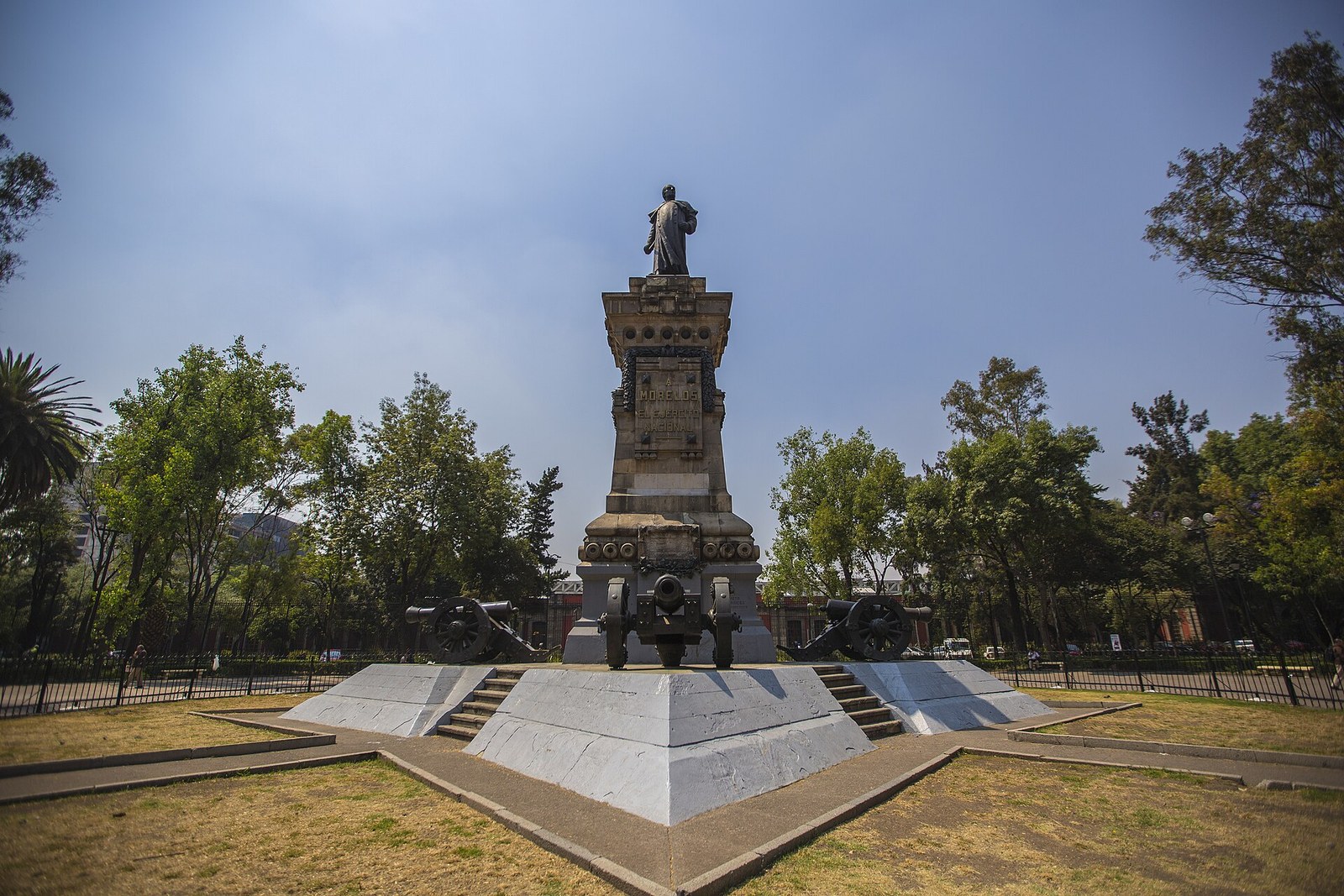
🔫 **A building with a past.** In 1943 the reporter Jacobo Dalevuelta wrote that blood had flowed inside and outside the Ciudadela's walls. The building had been an arms factory and powder store, in 1815 the prison of the independence leader José María Morelos; in 1871, during a coup attempt against Benito Juárez, 1,500 rifles were stolen there; and in 1913 it was the scene of the Decena Trágica, the ten bloody days in Mexico City. Dalevuelta hoped a library might in time fade those marks.
🏗️ **From new build to conversion.** In 1944 education secretary Jaime Torres Bodet announced that the Ciudadela would stay standing: one half would go to the Biblioteca de México, the other to the National Archive, with 300,000 pesos for construction and 100,000 for books; in 1946 the budget rose to half a million. The museum and conservatory dropped out of the plan, and later the National Archive too. A line in El Universal from 1949 sums it up: Vasconcelos had planned a superb building but got only part of the old Ciudadela.
🎨 **One mural instead of four.** Vasconcelos commissioned four murals from the painter Ángel Zárraga. Only "La Voluntad de Construir" (The Will to Build) was finished: twelve figures, with a man supporting a woman who raises a child. Zárraga died on 22 September 1946 and the other three were never painted.
📅 **The opening.** Vasconcelos, Ávila Camacho and Torres Bodet attended the ceremony on 27 November 1946; it was one of Ávila Camacho's last public acts as president before he handed over to Miguel Alemán. Eight rooms held 151,000 volumes, among them the Sala Palafox with incunabula and writings collected by Bishop Juan de Palafox y Mendoza in the 17th century, and the 6,000 volumes of the philosopher Antonio Caso, bought for 100,000 pesos. A reading courtyard seated 400 researchers, with a sound-damping floor and a glass roof.
🕰️ **The bumpy start and what followed.** Regular opening came only on 1 March 1948, with three rooms open from 9 am to 2 pm. The same year 91,000 pesos went into a microfilm laboratory, so that rare books could be copied rather than worn out. In 1951 Vasconcelos brought a UNESCO science exhibition to the Ciudadela, and in February 1952 the library and UNESCO opened a scientific and technical documentation centre for Latin America. Luna closes with the arc of her column: where gunpowder was once stored, almost a million books now stand. ✍️