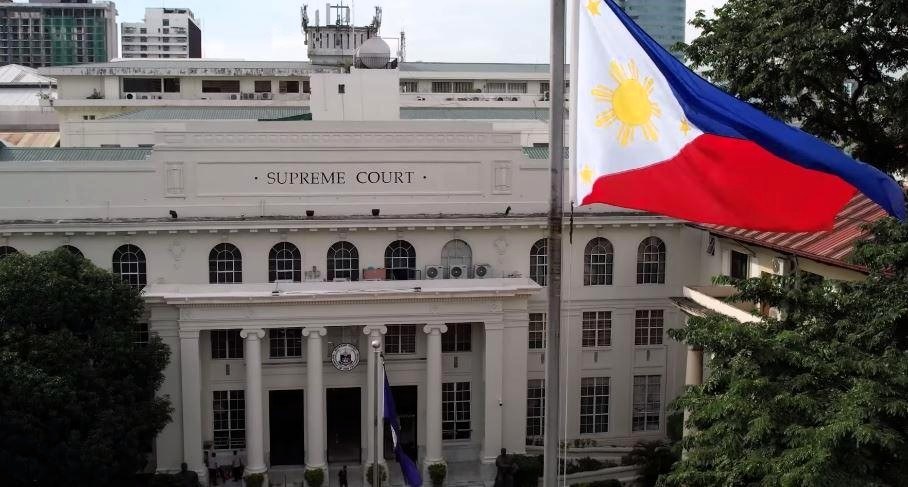
⚖️ Philippine Supreme Court dismisses petitions against Duterte's arrest
In brief
- ⚖️ The Supreme Court of the Philippines has dismissed the habeas corpus petitions against former President Rodrigo Duterte's arrest as moot.
- Nine justices voted to dismiss, four dissented; the ruling is dated November 11 and became public on November 24.
- Reason: Philippine courts cannot enforce the writ while Duterte is held in The Hague by the International Criminal Court (ICC).
- The Court stresses that dismissal does not mean the arrest was lawful.
⚖️ The Supreme Court of the Philippines has dismissed the consolidated habeas corpus petitions challenging the arrest of former President Rodrigo Duterte. His children Sebastian, Veronica and Paolo Duterte filed them after the arrest in March 2025. The Court holds them moot: a writ of habeas corpus works only inside the country and cannot be enforced because Duterte is in the custody of the International Criminal Court in The Hague. Nine justices voted to dismiss, four dissented. The Court says it did not decide whether the arrest and transfer were lawful; any violation of his rights must be pursued in other proceedings. The presidential palace said the government respects the decision.
The decision was promulgated on November 11, 2026 under Chief Justice Rodil Zalameda and written by Associate Justice Japar Dimaampao. It became public on Tuesday, November 24, through a press release of the Court, reported by GMA News and Rappler.
The government, represented by the Office of the Solicitor General, had argued that the petitions were moot because a writ issued by Philippine courts cannot be enforced abroad, and that the arrest met the country's international obligations. The Court followed the core of that argument: habeas corpus is a domestic remedy. Duterte is not only beyond the Court's coercive powers but also stands accused before an international tribunal that has taken jurisdiction over his person, so issuing the writ would "serve no practical purpose." According to Rappler, the ruling adds that Duterte is taking part in ICC proceedings and using the remedies available there, and that his children knew the basis of his detention and were challenging it before the ICC.
The Court leaves open whether it is proper for Duterte to seek relief before the ICC; related issues belong in a separate pending case (G.R. No. 278747).
**Dissents.** According to the Court's spokesperson, Ramon Paul Hernando, the now-retired Amy Lazaro-Javier, Henri Jean Paul Inting and Antonio Kho Jr. voted against dismissal; Samuel Gaerlan was absent on official business. Hernando wrote that the surrender to the ICC violated Duterte's constitutional rights, including due process, protection against unreasonable searches and seizures, and freedom of travel, and called dismissal as moot "a pedestrian expediency." Senior Associate Justice Marvic Leonen voted to dismiss but criticised the majority for not addressing what he called "unresolved, grave and serious" constitutional questions, warning that silence could be read as complicity in a violation of the Constitution.
**Reactions.** Palace Press Officer Claire Castro said the administration of President Ferdinand Marcos Jr. respects the ruling and that the Court did not declare any human rights violation by the administration. She said the government was complying with Republic Act No. 9851 on crimes against international humanitarian law and had taken into account the Court's earlier statement that the ICC keeps jurisdiction over acts committed before the Philippines left on March 17, 2019. Vice President Sara Duterte criticised the ruling on November 25: no court should lightly dismiss a petition as moot when national sovereignty and every Filipino's liberty are at stake.
**What comes next.** Rappler notes that Duterte's ICC trial is scheduled for November 30. He faces three counts of crimes against humanity (murder and attempted murder) linked to the drug war and the Davao Death Squad.