🧠 Neuralink gets FDA approval to start its first pivotal study of the brain implant
In brief
- 🧠 The FDA has approved Neuralink's LINK study, which the company calls the first pivotal trial of an implantable brain-computer interface in the US.
- 🩺 It is for adults with severe paralysis from ALS; enrolment is open.
- 💻 It tests whether participants can control devices by thought, and how safe the implant is in the long run.
- ⚠️ The device is not approved; Neuralink gives no participant number or timeline.
🧠 Neuralink, Elon Musk's brain-computer interface company, has received approval from the US Food and Drug Administration (FDA) to launch the LINK Pivotal Study. The company announced it on 25 November on its website and on X. According to Neuralink, it is the first pivotal trial of an implantable brain-computer interface in the United States. 🩺 The study is for people with severe paralysis caused by amyotrophic lateral sclerosis (ALS). It will test whether participants can use the implant to control digital devices through thought alone, with a focus on outcomes that make daily life more independent, and how safe and reliable the system is over a long period. Enrolment is already open, Neuralink says, and the study is to run at several clinical sites in the US. ⚠️ The approval has limits: the implant remains an investigational device and is not cleared for treatment. Only if a pivotal study produces enough evidence of safety and benefit can a maker apply for marketing approval, and the FDA then decides afresh. Neuralink has not said how many people will take part or how long the study will last.
🔬 From feasibility to evidence. So far Neuralink has tested its system in early feasibility studies: PRIME in the US and sister studies in Canada and the United Kingdom. The company says more than 30 people have been implanted and together have logged thousands of hours of real-world use. Participants have used the implant to study, make art, play video games and talk to their families, it says. A pivotal study is the next, far more demanding step: it is meant to produce, for one specific use, the data on which a later approval application can rest.
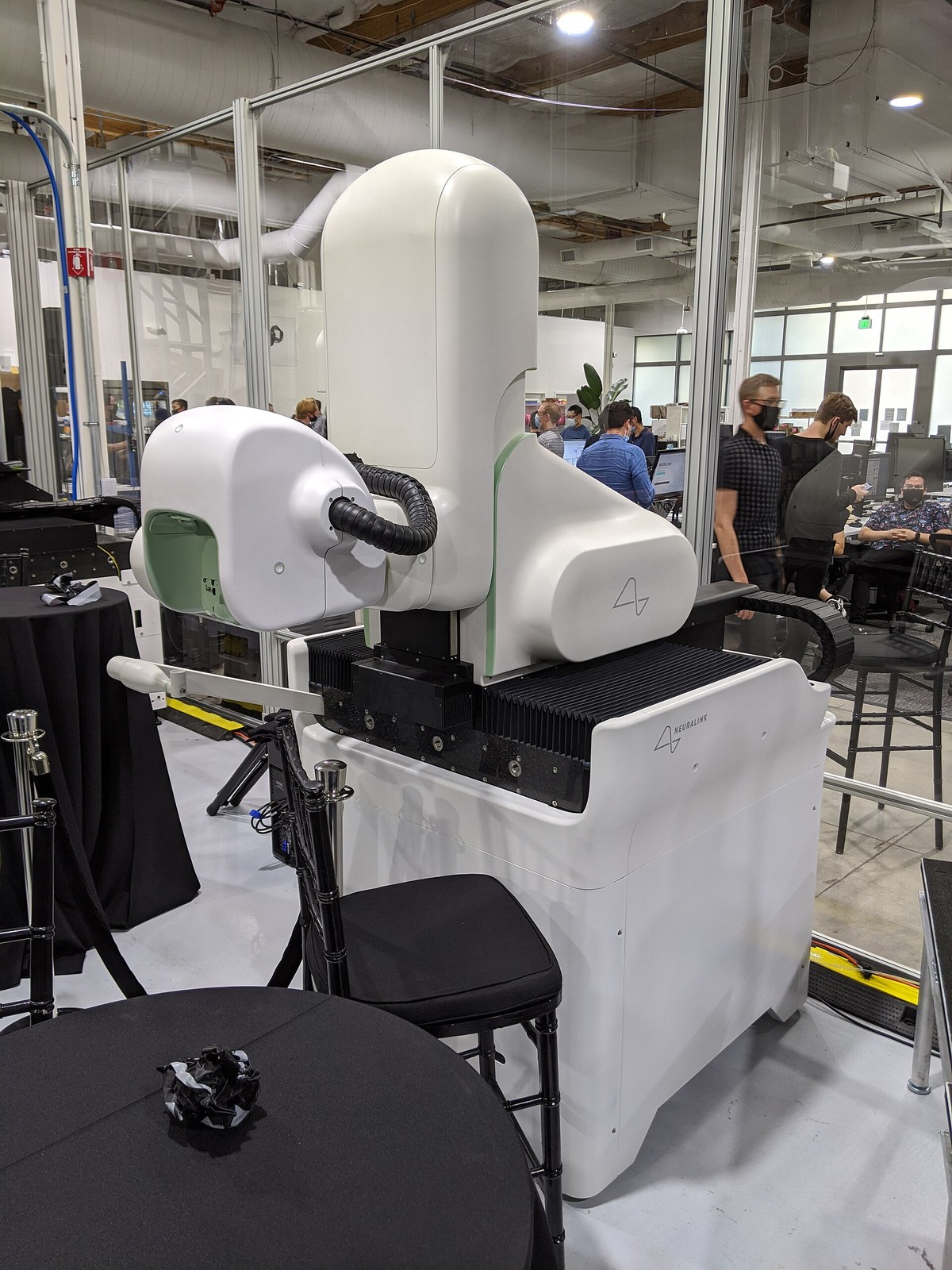
🤖 How the system works. At its core is the N1 implant, set into the skull with no external wires or battery pack; it talks to a computer wirelessly and is charged through the scalp. The surgery is partly done by the R1 robot, which places fine, flexible electrode threads into the motor cortex, the brain region for movement. Software reads the electrical signals tied to an intended movement and turns them into commands, so users learn, for example, to move a cursor by imagining moving a hand. In the Telepathy programme, participants have already made left, right and middle clicks, written messages, browsed the web and written code, according to Interesting Engineering.
🗣️ A known example. In 2025 Neuralink reported that its first participant with ALS, Bradford Smith, could type and communicate with brain signals alone. The technology has clear limits: it cures neither ALS nor paralysis and does not restore movement, sensation or natural speech. It offers another way to operate digital devices.
📋 Who can take part. Neuralink's study information names adults living with ALS as eligible, with recruitment in the US only. The company has not published the full inclusion and exclusion criteria, and a diagnosis alone does not guarantee a place. The published pathway includes health screening, brain imaging, surgery under general anaesthesia, device training and follow-up assessments up to 24 months after implantation. Neuralink points those interested to the patient registry on its trials page.
❓ What is still open. Neuralink names neither the planned number of participants nor the list of sites nor a timeline. The reports we read carried no FDA statement, and the claim that this is the first study of its kind in the US is the company's own. In the end, LINK has to show that the implant works reliably over a long time with an acceptable safety profile. Only then could Neuralink move its technology from research into care.
Sources
- Neuralink receives FDA approval for 'pivotal' brain implant trial in ALS patients (Engadget)
- Grünes Licht für Musks Hirnchip: FDA erlaubt Neuralink die entscheidende Studie (HNA)
- Neuralink gets FDA approval for first pivotal brain implant trial (Interesting Engineering)
- Neuralink Receives FDA Approval to Launch LINK Pivotal Study