⚖️ US jury convicts Huawei of conspiracy to steal trade secrets and of bank fraud
In brief
- ⚖️ A US jury in New York found Huawei guilty of conspiracy to steal trade secrets and of bank fraud.
- Jurors acquitted the company of the most serious charge, a racketeering conspiracy.
- Huawei says it will appeal and sees the acquittal as vindication.
- The trial ran more than two months; the effect on Huawei's business is unclear.
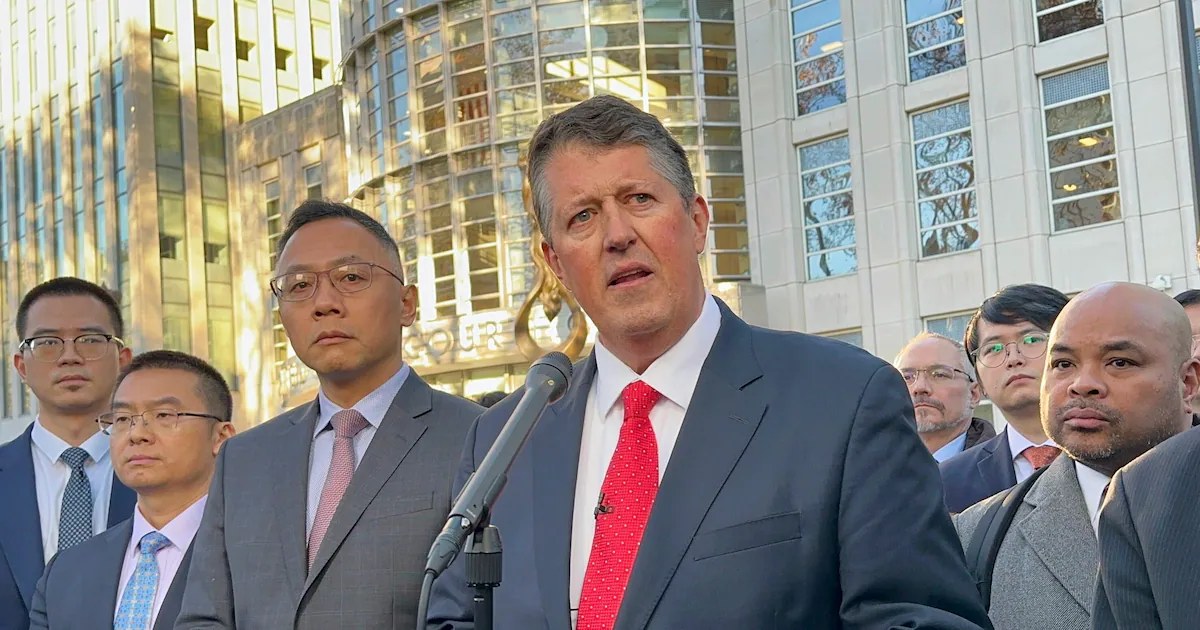
⚖️ A US jury in New York on Tuesday convicted the Chinese technology group Huawei of conspiring to steal trade secrets and of bank fraud. It acquitted the company of the most serious charge, a criminal racketeering conspiracy, a law normally used against organised crime. Huawei lawyer Brian Heberlig said the company will appeal and that the acquittal on that count "repudiated the central government narrative". How the verdict will affect Huawei's business around the world is unclear. 📡
**The charges.** Huawei and three affiliates faced 12 counts, among them racketeering conspiracy, bank fraud, wire fraud, sanctions violations, and conspiracy to steal trade secrets and to obstruct justice. Prosecutors said the company stole technology from competitors and partners for two decades, did business in countries under US sanctions such as Iran and North Korea, and lied to US officials and banks to hide it.
**The evidence.** According to trial reports, prosecutors said Huawei once sold routers containing source code copied from a competitor. A worker was said to have slipped into a rival's booth at a Chicago trade show to photograph the circuits inside a networking device, and another to have taken a robotic arm from a competitor's lab so it could be photographed and measured. Court records name Cisco Systems, Motorola Solutions, T-Mobile, Quintel USA and Fujitsu as victims. Jurors watched a video that prosecutors said showed a Huawei employee putting part of a T-Mobile testing robot into his backpack. Prosecutor Meredith Arfa told the jury that the tone was set at the top, by executives who lied to Congress and to banks, violated sanctions and tried to interfere with the investigation.
**The defence.** Heberlig argued that investigators took isolated episodes involving a few of Huawei's more than 200,000 employees and turned them into a grand conspiracy that did not exist. "You can't steal a secret that isn't a secret," he said, noting that much of the material was already public. Huawei, he said, paid billions in licensing fees, 75 percent of it to US companies, and reprimanded or fired staff who broke the rules. On the Cisco code, found in Huawei software more than two decades ago, he said Huawei recalled the routers and offered Cisco replacements. The racketeering count, he said, was the only one that tied all the allegations together.
**The bank fraud strand.** It goes back to the 2018 indictment, which accused Huawei of misleading HSBC, Standard Chartered and BNP Paribas about its business in Iran so that dollar transactions could continue despite sanctions. Chief financial officer Meng Wanzhou, the founder's daughter, was arrested in Canada that year and fought extradition for almost three years. In 2021 she flew home to China under a deferred prosecution agreement, and the US dropped its case against her. Prosecutors showed jurors a statement from that agreement in which Meng acknowledged that the company had conducted business in Iran illegally. The defence countered that the banks knew about the Iran business and were competing for Huawei's custom.
**What it means.** Huawei has not been allowed to sell equipment to US carriers for years, and Canada and Britain have also blacklisted it over security concerns. Elsewhere the business goes on: phones and network gear are sold globally, and with the AI boom Huawei has become an important alternative in China to chips from companies such as Nvidia. Chinese officials have accused the US of "economic bullying" and of using national security as a pretext. The trial overlapped with a summit of Donald Trump, Xi Jinping and Vladimir Putin in Shenzhen. No sentence has been reported.