🩺 Gaza health ministry declares meningitis epidemic alert as infant cases surge
In brief
- 🩺 Gaza's health ministry reports at least 272 meningitis cases in October.
- 📈 That is more than eight times the usual monthly level of 30 to 50.
- 👶 According to the WHO, children under one account for 71 percent of cases.
- 💧 Broken treatment plants, sewage and crowded shelters raise the risk.
Gaza's health ministry declared an epidemic alert on Tuesday after a sharp rise in meningitis infections. 🩺 At least 272 cases were recorded in October alone, more than eight times the usual monthly figure of 30 to 50. The youngest are hit hardest: according to a World Health Organization spokesperson, children under one year old account for 71 percent of cases, and newborns for 13 percent. 👶 The ministry says 15 people have died since the start of the year. It wants an emergency response from the WHO and Unicef and blames destroyed infrastructure and Israeli restrictions. Israel, for its part, has said medical and sanitation supplies are entering the territory daily.
The figures were presented at a press conference by Nidal Ghunaim, a senior ministry official responsible for public health in primary care. Five of the 15 deaths, he said, occurred during the surge from August to October. Ghunaim warned that the spread threatens thousands of people, mostly children. The ministry belongs to the territory's de facto authorities, and these counts are its own.
**What is thought to be behind the surge** 🧪
According to [The Telegraph](https://www.telegraph.co.uk/global-health/terror-and-security/meningitis-outbreak-triggers-epidemic-alert-in-gaza/), enteroviruses are thought to be driving most cases. They are the leading cause of viral meningitis, are shed in faeces and spread quickly between people in unsanitary surroundings. The picture does not appear to be settled: RT reports the WHO saying that shortages of laboratory supplies make it harder to tell viral from bacterial infections. The distinction matters because bacterial meningitis needs urgent antibiotics.
The disease inflames the membranes around the brain and spinal cord. The viral form often starts with a sore throat and cough before symptoms such as nausea, vomiting, drowsiness, confusion or seizures set in. Babies under one month are most at risk of severe illness. Without quick treatment it can leave lasting harm, including loss of hearing or sight, paralysis and developmental delay.
**Water, sewage and winter** 💧
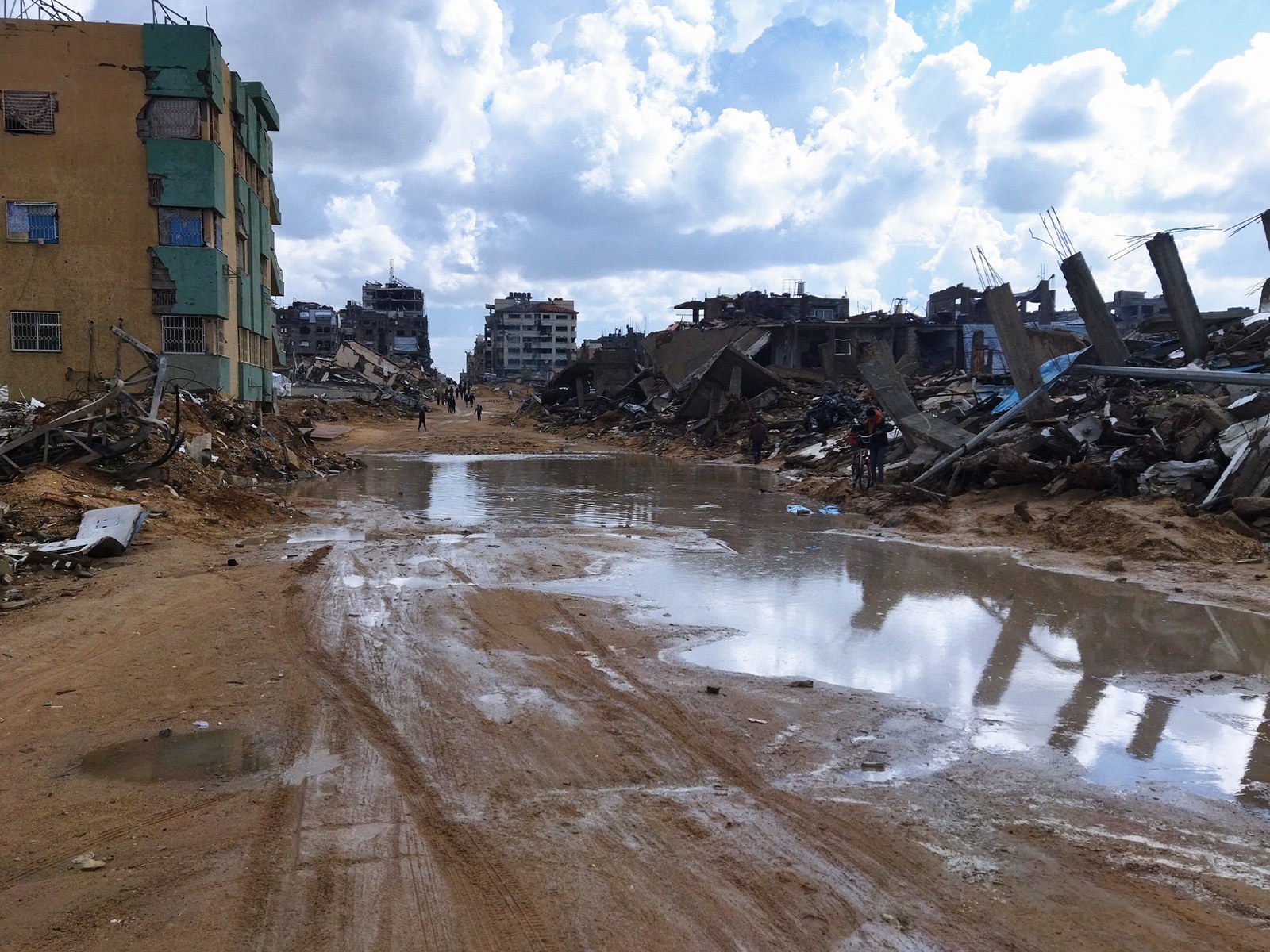
Citing the UN humanitarian office OCHA, the Telegraph reports that none of the six wastewater treatment plants is operating, so an estimated 150,000 cubic metres of untreated sewage reach the environment every day. About 1.4 million people, around 65 percent of the population, are living in tents. An [OCHA situation report](https://www.ochaopt.org/content/humanitarian-situation-report-18-november-2026) notes that in an October survey 45 percent of assessed households reported sewage or sludge within ten metres of their shelter, before the heavy rain of early November. Preliminary estimates after those storms put the number of households possibly affected at about 46,000. On 13 November the WHO warned that flooding, overflowing sewage and overcrowding could worsen respiratory and waterborne diseases. 🌧️
Besides destroyed networks and packed shelters, the ministry names drinking water mixing with sewage as a cause and accuses Israel of restricting the materials needed for repairs. The Israeli coordination body COGAT, as quoted by RT, said last week that medical and sanitation supplies were arriving every day. The health system is badly weakened: figures from the British Red Cross cited by the Telegraph show 16 of Gaza's 36 hospitals remaining, none of them working at full capacity.