🏛️ Bundestag passes Germany's record 2027 budget: 556 billion euros in spending, 123 billion in new debt
In brief
- 🗳️ Germany's Bundestag passed the 2027 federal budget on 27 November: 317 votes for, 260 against, no abstentions.
- 💶 The government may spend 555.94 billion euros, about six percent more than in 2026 and more than ever before.
- 📈 Net borrowing in the core budget rises from 98 to 123 billion euros, over 210 billion including special funds.
- 🛡️ Biggest items: labour and social affairs, and defence at almost 140 billion euros.
- ⚠️ Finance Minister Klingbeil warns that 2028 will be harder still.
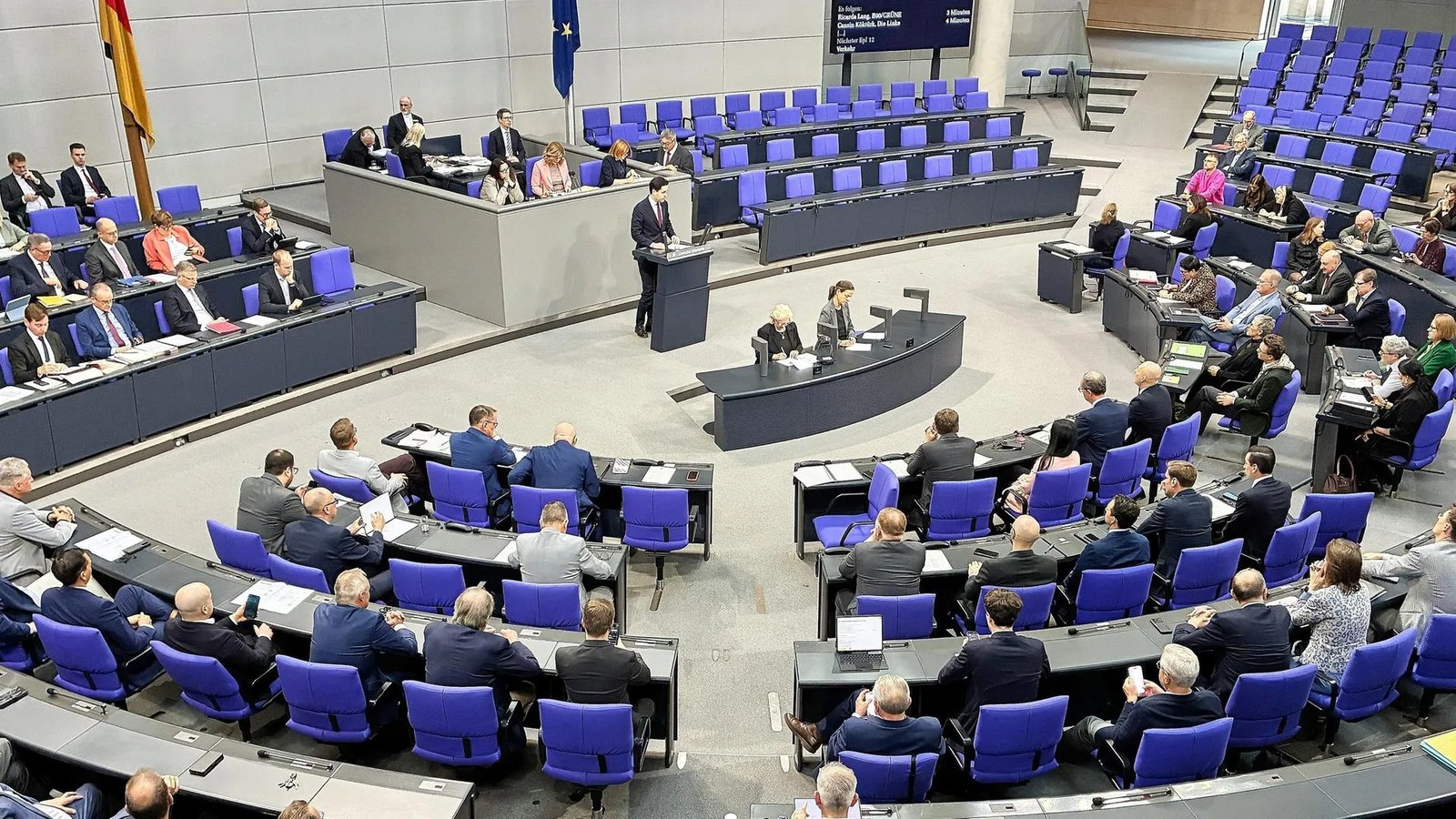
🏛️ Germany's Bundestag passed the federal budget for 2027 on Friday, 27 November 2026. In a roll-call vote 317 members voted for it and 260 against; the governing coalition of CDU/CSU and SPD backed it, while the AfD, the Greens and the Left voted no. The budget of Finance Minister Lars Klingbeil (SPD) allows spending of 555.94 billion euros, 31.4 billion more than in 2026 and the most ever in a single year. 💶 Much of it is financed with credit. Net borrowing in the core budget rises from about 98 to 123 billion euros. Together with the two special funds for infrastructure and the armed forces, the federal government takes on more than 210 billion euros in new debt. More than a third of the money goes to the labour and social affairs budget, for example as a subsidy to the pension system. Defence spending, including the special fund, climbs to almost 140 billion euros, and Ukraine receives twelve billion euros. Alongside the budget, parliament passed an accompanying law: the electricity tax falls to the European minimum for all consumers in 2027, and basic income support rates are frozen until mid-2028. Klingbeil said the 2028 budget will be even harder; the finance ministry currently sees a gap of about 25 billion euros there. ⚠️
🗳️ **How the vote went.** In the second reading the Bundestag approved the budget law without debate, in the version the budget committee agreed in its final marathon session on 13 November, where it dealt with around 2,000 motions. The final vote in the third reading was taken by roll call. Parliament took note of the federal financial plan up to 2030 with the votes of the Union, the SPD and the Greens, while the AfD and the Left abstained.
📊 **The figures in detail.** According to the Bundestag, total spending is slightly above the government draft from the summer (555.43 billion euros). Investment is set at 61.85 billion euros, 5.58 billion more than in the draft (2026: 58.35 billion). Tax revenue is estimated at 391.26 billion euros, 3.53 billion less than the government first assumed. For later years the federal government enters commitments of 377.77 billion euros.
🧮 **What counts under the debt brake.** According to the budget committee's figures, 84.55 billion euros of the borrowing fall under the exemption for defence and security-related spending that the constitution has allowed since 2025. The borrowing that counts under the debt rule is 38.43 billion euros, exactly at the permitted ceiling. On top come the special funds with their own borrowing powers: around 54.9 billion euros of loans are planned for the infrastructure and climate neutrality fund in 2027, and the armed forces fund is to be used up by the end of 2027 with spending of around 30 billion euros. According to n-tv, the federal government borrowed more only in the pandemic year 2021, when new debt reached 215.4 billion euros.
🛡️ **Where the money goes.** The largest single budget remains the labour and social affairs ministry with 203.29 billion euros; the committee raised the loan to the Federal Employment Agency to 8.2 billion euros and lowered the amounts for basic income support and pension subsidies. The defence ministry receives 109.75 billion euros plus the special fund; ZDF calls this the highest level since the end of the Cold War. The transport budget falls below the draft to 25.35 billion euros, mainly through cuts at the federal motorway company, while commitments for rail expansion rise by 4.34 billion euros. Health (15.12 billion) and education and family (15.93 billion) received slightly more than planned.
⚡ **What changes for citizens.** The accompanying law also cuts the federal subsidy to the pension system by three billion euros in 2027. The tax on spirits rises at the start of 2027, and a tax on sugary drinks follows on 1 January 2028. Repayment of the armed forces fund's loans will only start in 2033.
📈 **The view to 2028.** In the closing debate Klingbeil said people would have to accept some burdens, and what mattered was that this happened fairly. He said 2027 must become "the year of private investment". The gap of about 25 billion euros for 2028 grows to around 30 billion if the electricity tax cut is extended, n-tv reports. SPD budget expert Thorsten Rudolph called for cutting subsidies and tax breaks worth ten billion euros, starting with those that harm the climate. Klingbeil pressed for the agreed income tax reform, meant to relieve low and middle incomes and families by ten billion euros; the Union wants to tie it to labour law reforms. The financial plan expects interest costs to rise to 55.2 billion euros in 2028 and 80.7 billion in 2030.
🗣️ **Criticism.** Left Party leader Ines Schwerdtner accused the government of constantly talking about a war emergency while for millions of people the emergency comes every month when money runs short. Economist Gabriel Felbermayr told Reuters that the budget plugs short-term gaps but lacks a long-term perspective, which risks undermining trust in Germany as the anchor country of the eurozone.