🛡️ TikTok takes Likeness Detection global so politicians and public figures can find deepfakes of themselves
In brief
- 🛡️ TikTok is rolling out Likeness Detection worldwide, an opt-in tool for finding AI content that uses a person's likeness without consent.
- 🗳️ Eligible are creators and public figures, including government, politician and party accounts, ahead of Europe's 2027 elections.
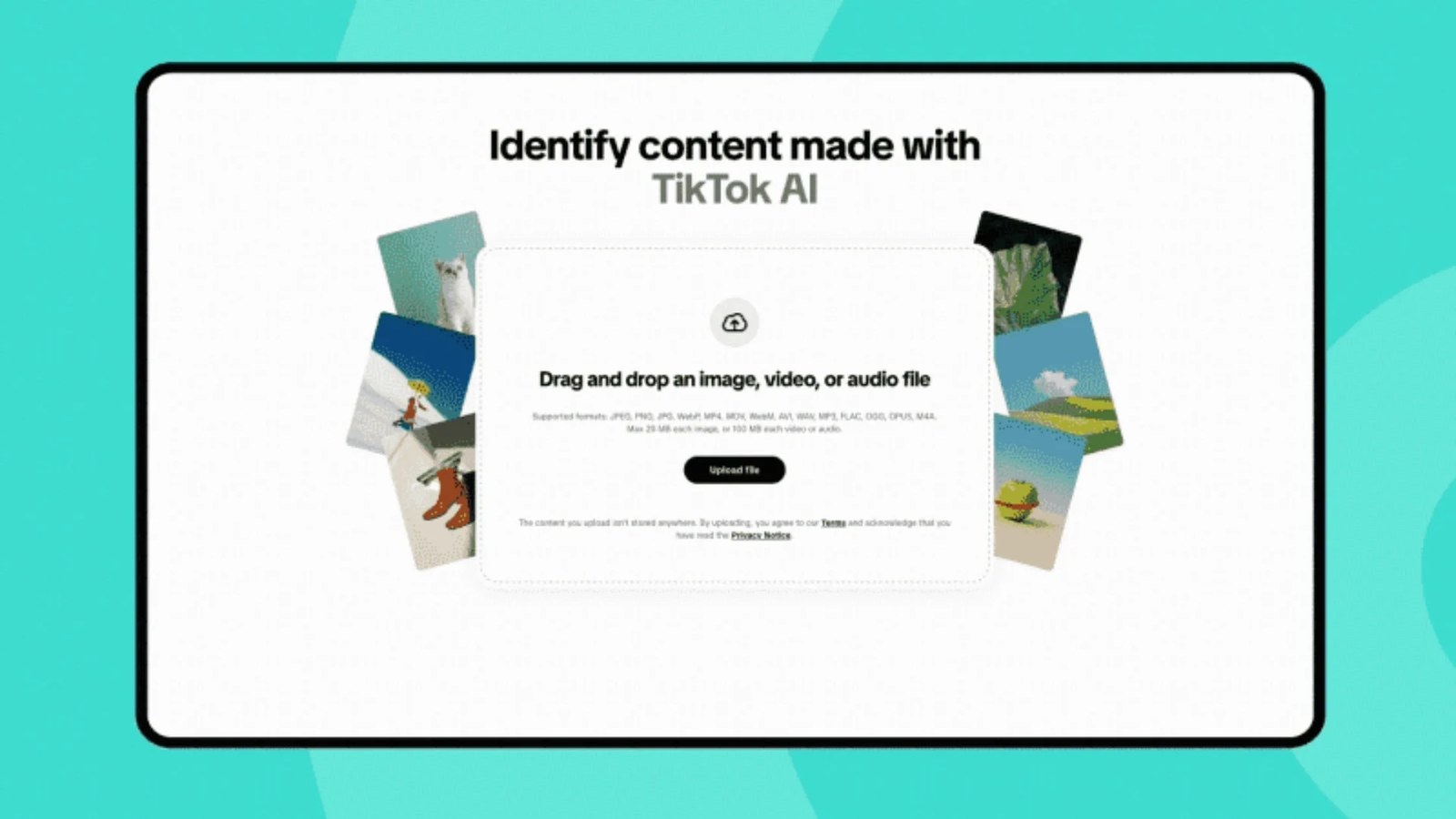
- 🔎 A second tool lets anyone check whether TikTok's own AI made or edited an image, video or audio file.
🛡️ TikTok has announced a global rollout of Likeness Detection, a tool that lets politicians and other public figures find AI-generated content that uses their likeness without their consent. It is opt-in: eligible users first verify their identity with a third-party partner, then get alerts about posts and accounts that may show their likeness, review them in the tool and can report them to TikTok's safety teams. TikTok presented it at its Safety and Innovation Forum in London as part of protecting Europe's 2027 elections, including in Italy, France and Greece, and says the rollout is gradual. At the same event it added a second tool open to anyone, with or without a TikTok account, that checks whether an image, video or audio file was made or edited with TikTok's AI features. 🗳️
🔎 **How the tool works.** TikTok began testing Likeness Detection in July with a small group of creators in the United States; the identity check then ran through the verification company Jumio, using a live selfie and a government ID. For the global rollout TikTok names only "a third-party partner". The alerts cover content and accounts on TikTok that may use a person's likeness; reports go straight to the safety teams. Content that breaks the rules against harmful, misleading or non-consensual depiction of private individuals is removed, TikTok says, and anyone, whether or not they use TikTok, can report non-consensual AI content through a privacy form. The tool is designed to collect as little data as possible and does not keep ID documents. The reports do not say how the matching works, how reliable it is or how many politicians are eligible at the start.
🗳️ **Why now.** Francesca Scapolo, TikTok's government relations lead for European elections, called protecting the integrity of elections one of the company's most critical responsibilities and said the tool should help politicians and governments spot AI content shared without their consent. AFP lists Italy, France and Greece among the 2027 votes. The European Union began applying sweeping transparency rules for AI in August, including a duty to label deepfakes and other AI-generated content, and TikTok has required creators to label realistic AI-generated images, audio and video for several years.
🧾 **The second tool.** The public checker accepts images, videos and audio files without an account (audio up to 100 MB, including WAV, MP3 and FLAC). It looks for Content Credentials, the provenance standard of the Coalition for Content Provenance and Authenticity (C2PA), and for VeraDura, TikTok's own invisible watermark, which the company calls more durable and harder to remove. It recognises content from TikTok itself and from four further ByteDance apps: CapCut, Dreamina, Hypic and Pippit. TikTok stresses that it is not a general AI detector: content from other tools is not flagged. By TikTok's count its labelling has now covered more than 5 billion AI-generated videos, up from more than 3 billion in July and 1.3 billion a year ago, and its in-app AI literacy hub has taught more than 4 million people to spot AI content.
📺 **Context.** TikTok is not the first: YouTube began rolling out its own likeness detection in October 2025 to a limited set of creators, added a pilot group of officials, journalists and political candidates in March 2026 and opened it to all users aged 18 and over by May, Music Business Worldwide recounts. AFP, whose report is the basis of the coverage, discloses that TikTok pays it, like more than a dozen other organisations, to check videos in several countries.