🏛️ EU and UK agree on fewer food checks, linked carbon markets and youth mobility at Brussels summit
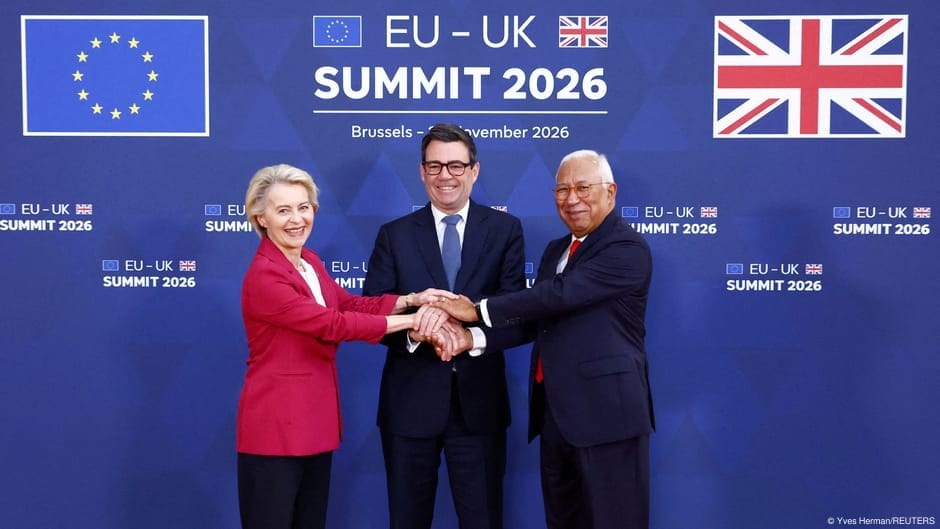
In brief
- 🤝 At a Brussels summit the two sides signed three deals: fewer food checks, linked carbon markets and a youth scheme for under-30s.
- 💷 Britain estimates the food deal adds up to £5.1bn a year; most checks on goods going to Northern Ireland end.
- 🎓 University fees for EU students are unresolved: six months to agree, and the EU holds the deals back until then.
- 📅 Start planned from 2028.
Britain and the European Union signed three agreements at a summit in Brussels on Friday 20 November that ease food trade, link their emissions trading systems and open a youth mobility scheme. UK Prime Minister Andy Burnham called it “a good day for Britain and a good day for Europe”, and Commission President Ursula von der Leyen spoke of a “turning point”. The core is a shared area for food safety and animal and plant health (SPS): animals, plants and products such as sausages or seeds should cross the border without the certificates and checks required today. Britain estimates the benefit at up to £5.1 billion (about €6 billion) a year, and most checks on food going from Britain to Northern Ireland fall away. The two emissions trading systems are to be linked, which exempts goods such as steel from the other side's carbon border levy. People under 30 will be able to live, work or study on the other side for up to three years. The two sides did not agree on university fees for EU students in Britain, which the EU insists on. They have six months to settle it, and until then the EU holds back the food, carbon-market and youth deals. The agreements are to apply from 2028.
🛂 On the number of participants the sides started far apart. Britain, mindful that immigration was a factor in the Brexit vote, had proposed admitting only 50,000 people and agreed to 100,000, according to EU diplomats; the scheme as presented lets 100,000 people under 30 from each side take part. The first young people are to benefit by 2030. Von der Leyen added that Britain will rejoin the Erasmus+ exchange programme: “We miss them so much.”
🏫 The dispute over fees explains why implementation is stuck. EU students in Britain currently pay full international fees, several times the rate for UK nationals. The EU wants reciprocity: students from member states would pay what Britons pay, and the other way round. Britain has resisted so far. Irish students are not affected, because the Common Travel Area between the two countries already gives them the UK rate. The EU names 1 March 2028 as its target date for starting the three agreements.
🚚 Politically, the food agreement matters most for Northern Ireland. The special regime of the Windsor Framework, which required checks on food arriving from Britain so that the open border with the Republic of Ireland could stay, is abolished for the most part; the most intrusive elements of the so-called Irish Sea border end. Customs paperwork for firms that import and export food and drink remains. Irish Taoiseach Micheál Martin welcomed the summit, and trade minister Helen McEntee called it a positive moment for Northern Ireland. Sinn Féin called the step welcome if it cuts paperwork, checks and delays.
🚗 A core British demand concerns the car industry: it wants special status under the EU's “Made in Europe” rules. The EU has signalled it is willing, but only if Britain aligns with EU policies that limit imports of Chinese electric cars. The joint statement says that in sectors where cooperation is agreed, Britain will “ensure outcomes consistent with relevant EU measures”. That appears to allude to a Franco-German proposal under which EU public money could be spent on British cars, through procurement or subsidies, if London follows EU trade protection dynamically. London has so far been reluctant to act against Chinese-built hybrid and electric cars.
💬 Burnham tempered expectations: what was announced is “probably the limit of what we can achieve in this parliament”, because implementation takes time; the next election is due by mid-2029. He has said Britain should consider options for the future relationship, up to rejoining the EU, and said on Monday that Britain had lost more than it gained from Brexit. European Council President António Costa joked that the two sides may drive on opposite sides of the road but are heading in the same direction. The backdrop is Russia's full-scale invasion of Ukraine, US tariffs, China's dominance of critical minerals and the war in Iran. The summit comes ten years after the referendum and six years after the exit took effect.