⚖️ Australia sanctions two men over Iran-directed arson attacks on Jewish targets
In brief
- ⚖️ Australia placed counter-terrorism financing sanctions on Zohair Hassib and Kazem Hamad.
- 📍 The government says they orchestrated the 2024 arson attacks on a Melbourne synagogue and a Sydney kosher restaurant for Iran's Revolutionary Guard.
- 💶 Dealing with their assets or making funds available to them is now a crime.
- 📋 A day earlier the national auditor criticised how sanctions are enforced.
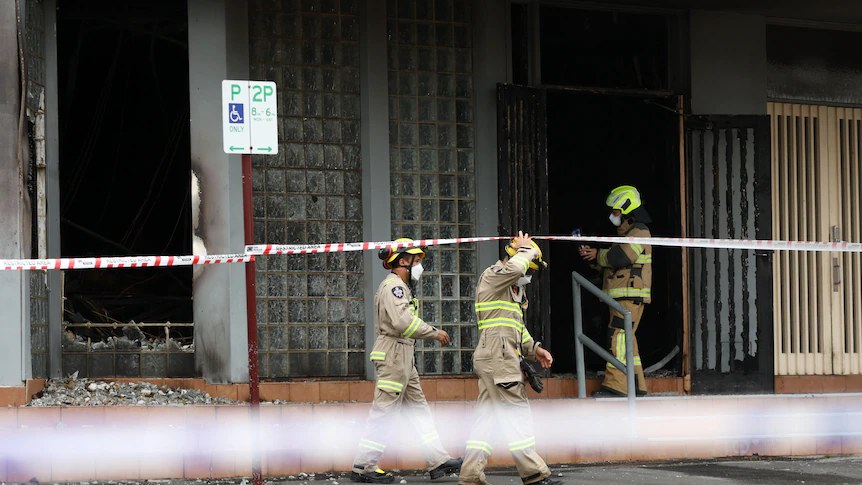
⚖️ Australia on Friday publicly named and sanctioned two men who, according to the government, organised two antisemitic arson attacks in 2024 on behalf of Iran: on the Adass Israel Synagogue in Melbourne and on the kosher restaurant Lewis Continental Kitchen in Sydney. They are Zohair Hassib and Kazem Hamad. Foreign Minister Penny Wong said the pair used a "complex chain of proxies". The counter-terrorism financing sanctions make it a criminal offence to use or deal with their assets or to make assets available to them. Wong said they would restrict the men's access to funds and disrupt their ability to recruit, plan and carry out attacks. 🌍 In August 2025 Australia expelled Iran's ambassador after the intelligence agency ASIO concluded that the Islamic Revolutionary Guard Corps (IRGC) had directed the attacks. Iran denies the accusations. 📋 The move came less than a day after a critical audit: none of the 12 sanctions matters referred to law enforcement since 2022 has led to a prosecution.
🕵️ **Who the two men are.** According to the Australian broadcaster ABC, Hassib is an Australian-Afghan dual citizen and a senior IRGC agent who remains in Iran. Hamad is an Iraqi citizen and former Australian resident with extensive ties to organised crime and the illicit tobacco trade; he was deported to Iraq in 2023 and is in prison there for drug trafficking. It is the first time either has been publicly linked to the attacks.
🌍 **The background.** In August 2025 Australia expelled Ambassador Ahmad Sadeghi and three other diplomats, the first expulsion of an ambassador since the Second World War. Canberra also suspended operations at its embassy in Tehran and later listed the Revolutionary Guard as a terrorist organisation. Announcing the new designations, Wong said Australia now lists 102 individuals and entities under counter-terrorism financing sanctions, alongside 30 terrorist organisations and one state sponsor of terrorism.
📋 **Criticism of enforcement.** The timing coincides with a performance audit by the Australian National Audit Office of the Australian Sanctions Office inside the Department of Foreign Affairs and Trade. It found that none of the 12 matters referred to law enforcement agencies since 2022 resulted in a prosecution. Warning letters make up 80 per cent of regulatory actions, but the department did not follow up on whether they worked, and serious cases were tracked in "uncontrolled spreadsheets" instead of a case management system. The department had privately warned that contraventions were "occurring with impunity" and received an extra 23.2 million Australian dollars in the May budget.
💬 **The minister's answer.** Pressed on Friday, Wong conceded the government needed "to do more" but said the sanctions still sent a strong diplomatic signal. The previous government had set up the sanctions office but underfunded it, she said, and her government had added about 26 million dollars. The department has accepted all six of the auditor's recommendations and is building a new case management system and a compliance and enforcement strategy.
🔎 **What remains open.** Whether the sanctions bite in practice is unclear: according to the ABC, Hassib is in Iran and Hamad is in prison in Iraq. The government presents the listing mainly as a way to choke off the money behind IRGC networks targeting Australians.